

#1 Winners and Losers: How the 14th Finance Commission Recommendations Impacted State Revenues

In February 2015, the Union Government accepted the recommendations of the 14th Finance Commission (FFC) and set the stage for a radical overhaul of India’s fiscal architecture. The recommendations were designed to enhance the fiscal autonomy of states by increasing the proportion of funds transferred to states from the divisible pool[1] of taxes from 32% to 42%. Other major changes included: a change in the formula for determining inter-state tax shares and a decrease in state-specific Finance Commission (FC) grants from those with conditionalities towards more untied block grants for certain areas.

The acceptance of the FFC had two major consequences. On the one hand, it led to the Ministry of Finance (MoF) allocating Rs 5.06 lakh crore as tax devolution in the FY 2015-16 (Revised Estimate (RE)), significantly higher than the Rs. 3.38 lakh crore in FY 2014-15 Actuals.[2] On the other, it led to a decrease in the funding through Centrally Sponsored Schemes (CSSs) – the Union Government’s primary vehicle for financing social sector investments in the country. Specifically, Budget 2015 saw a discontinuation of some CSSs, reduction in allocations for others and the change in the fund-sharing ratios for CSSs putting greater onus on state governments. These changes led many to believe that the increase in tax devolution was offset by cuts in CSSs. For instance, the state of Andhra Pradesh noted,

The reduction of the Central share for key schemes such as SSA, National Health Mission, ICDS etc, will have adverse effect on the State development indicators.”[3]

It is important to note that this was a period of transition leading to a significant amount of chaos and confusion. Many state governments had passed their budgets prior to the announcement of acceptance of FFC recommendations in February 2015. Their budgets thus, did not reflect the changed union assistance. The changed fund sharing ratios of CSSs was also announced only in October 2015.

In order to shed some light into the implications of these changes on state budgets, my colleagues and I set out to collect state budget data for 19 states. A complete analysis of the impact of the FFC would require Actuals for FY 2014-15 and FY 2015-16. However, Actuals have a two-year lag period and are thus currently available only for FY 2014-15. We have thus used REs for FY 2015-16 as the most realistic current estimate of government expenditure.

Click here for full summary

So have states received more resources from the Union post the FFC?

The answer is Yes. All the 19 states studied received at least 20% more funds from the Union government in FY 2015-16 RE compared to FY 2014-15 Actuals. There is however some state variation in the quantum of increases. Haryana, Telangana, Himachal Pradesh, Jharkhand and Chhattisgarh received the highest increase at over 60%. In contrast, Tamil Nadu and Punjab received less than 25% more from the Union.

But a simple analysis of increases in Union receipt does not tell us a complete picture. For one, 2014 was a year of expenditure contraction across all sectors. Consequently, less money was received by states in FY 2014-15 Actuals compared to Budget Estimates (BE) for FY 2014-15. Moreover, accurate estimates of CSS funds received and spent by states are not available in real time. Traditionally, we have seen that states receive a significantly lower proportion of approved allocations. For instance, in FY 2014-15 of the total Rs. 56,529 crore approved for Sarva Shiksha Abhiyan (SSA), only 62% was released[1].

Moreover, whilst the FFC had recommended a shift in the composition of expenditure from tied scheme based funding to more untied block grants, states show a mixed picture. Through much of FY 2015-16, the Union Government introduced a number of supplementary budgets that significantly enhanced the overall pool of CSS monies available to state governments in key schemes. In aggregate, CSSs and similar schemes categorized as Central Assistance to State Plans increased by over Rs. 11,000 crore between the BEs and REs. As a result, the share of tied funding increased in some states. For instance, in Tamil Nadu, share of tied funds in total union transfers increased from 40% in FY 2014-15 Actuals to 47% in FY 2015-16 RE. Haryana too saw a 13 percentage point increase.

What does this mean going forward for state autonomy? 

First, the increase in fund sharing ratios for states may mean a further decrease in untied funding as states will be expected to put a greater share of their resources for CSSs. Moreover, the acceptance of the 7th Pay Commission could further impact state revenues.

However, there is some positive news. On the 3rd of August 2016, the Cabinet approved the recommendations of the Chief Ministers Report on Restructuring CSSs which argued for states to have flexibility in choosing between different activities within a CSS according to their own priorities. This would at least give states some flexibility to prioritise their limited resources.

It will be interesting to track how states respond to these changes and how they will utilise the increased tax devolution from the Union. We will continue tracking this – so do watch this space. The next blog in this series will focus more on impact on CSSs in FY 2015-16.


[1] RTI filed by Accountability Initiative


[1]  The divisible pool can be thought of as the sum of all Union taxes and duties, excluding collection costs, surcharges, and specific-purpose cesses. For a more precise definition see Arts. 268 through 271 of the Constitution of India

[2]  Ministry of Finance (2016). Union Budget. Budget at a Glance, “Resources Transferred to State and U.T. Governments”. Accessed on 6 May 2016.

[3] NITI Aayog (2015). Report of the Sub-Group of Chief Ministers on Rationalisation of Centrally Sponsored Schemes. October 2015. Accessed on 25 May 2016


#2 What has changed for Centrally Sponsored Schemes (CSS) in 2015 – 16?

In December 2013, my colleagues and I were about to embark on a new project in Bihar.

In April that year, the Government of Bihar had announced the launch of an ambitious, innovative scheme called Mission Gunvatta. The mission was aimed at improving learning levels in Bihar’s government primary schools. One critical intervention under the mission was the roll out of a Pratham led intervention called teaching at the right level (TARL). Under TARL, for two hours a day, schools would be organized according to student learning levels and taught using specifically designed materials.

The program, in its design was path breaking. For the first time a state government had chosen to explicitly commit itself to improving learning outcomes, at scale and chosen to move away from the prescribed curriculum to ensure that children would be able to improve their learning levels. The classes were to begin in July and run through the academic year. So when my colleagues and I arrived in the state to start our research work, we were expecting to find things moving full speed. To our surprise nothing had really moved. And when we dug deep we discovered that the Sarva Shiksha Abhiyaan(SSA), the Government of India’s (GoI), centrally sponsored scheme and key to the state’s education money (60% of the state’s budget is funded through the SSA) had not yet released money to the state education department to print the relevant materials.

The wait ended in late December when the state department found money through sources other than SSA to print text books but by then the school year was nearing completion and the mission never quite took off. This played havoc for our research project but more importantly, it offers an interesting insight in to the complex world of social policy funding in India.

Constitutionally, the bulk of what we can loosely define as social policy related programs lie within the domain of state governments. Ideally, money for these programs ought to be transferred through the finance commission directly to state governments, leaving state’s to determine their investment strategies. However, the fiscal transfer system also allows for specific purpose fiscal transfers through the center to states called Centrally Sponsored Schemes (CSS).

Over the years, and especially the last decade, CSS became rather popular. By 2012-13, fiscal transfers through CSS came to rival constitutionally designed routes, like grants under Article 275 or revenue sharing arrangements. In 2012-13, fiscal transfers through CSS and the Additional Central Assistance exceeded Rs 3,08,000 crore, while transfers through revenue share arrangements and grants in aid, amounted to Rs 3,66,000 crore.[1]

But there were many problems with this model. First, CSS were designed to privilege a top down, one-size fit all model where states were given relatively little flexibility in implementing programs. All budgets had to be negotiated with the center and if the center didn’t approve of what states where asking for, they went unfunded.

For instance, in education, a state government needed money to restructure its teacher-training model. To access SSA money, it had to seek GoI approvals through the state SSA authorities. GoI, however, refused to provide money because the re-structuring wasn’t aligned with the prescribed framework, leaving the state with no resources. Second, states had no authority to move funds across schemes. Thus if a state wanted to spend more money on health care over employment guarantee, it didn’t have the flexibility to draw on money received from the center to buttress its healthcare expenditures. Third, CSS mandated that state governments add a share of funds to the CSS from their plan budgets. This served to ring fence money available with states to finance programs as they saw fit. Finally, many of these CSS created a parallel implementation structure through specially created societies that were tasked with implementing the central program. And as funds to SSA increased, so did the power of these societies’. This served to create turf wars like we saw in Bihar between the SSA and state departments and in the end many good ideas never saw the light of day.

States were well aware of this problem and complained bitterly about the over-centralisation in India’s fiscal transfer system. It was to address this fundamental weakness in our financing system and realign the balance between constitutionally aligned functions and financial resources that the 14th Finance Commission increased the state share of tax devolution from 32% to 42% in 2015. [2]

So how have things changed? In her blog yesterday Avani highlighted the fiscal story pointing to the changes (and lack of changes) in CSS funding and its impact on state budgets. Avani suggests that the status quo is likely to be maintained, despite the efforts by the FFC to increase state autonomy.

I want to point readers to a possible explanation for this, based on my reading of the political economy of social policy financing. As I mentioned, over the last decade GoI rapidly expanded its role in financing key social programs through one-size fit all, tightly designed CSS. Implementing these schemes required the center to tightly control and monitor state budgets thus casting GoI officials in the role of headmaster’s wrapping states on the knuckles if they didn’t follow guidelines.

State’s on their part, while they disliked the centralised approach, saw in CSSs an important source of money which they aren’t happy to give up. This explains why almost every state politician and bureaucrat, having complained to the FFC about these schemes is now crying hoarse about the lack of funds, paying scant attention to the more pressing question of how best to use the untied funds. But CSS also played an important role in ring fencing money for social programs at the state level.

I have been surprised at how many state level politicians and bureaucrats have argued with me about the importance of CSS in ensuring social sector investments because of the proclivity to invest money in big-ticket infrastructure programs where the kickbacks are higher. Given this, there is some sense of comfort with the continued funding of social policy through CSS going forward.

But we do need to address the challenge of the one-size fit all model of CSS that state’s protested against in the first place. Watch out for my next blog on how I propose this can be achieved.


[2] State of Social Sector Expenditure in 2015-16, Accountability Initiative. Click here to view.

PAISA 2016: A New Era in Fiscal Devolution in India?

Tracking fiscal devolution to State governments and Panchayats in India.

On June 3rd 2016, Accountability Initiative (AI) released two research papers on the dynamics of decentralisation between the union and state governments and from state government to local governments in India. One, State of Social Sector Expenditure 2015-16 and second, PAISA for Panchayats 2016, at the India International Centre, New Delhi.

The first report focused on analysing trends in state budgets in the context of the implementation of the recommendations of the Fourteenth Finance Commission (FFC) that mandated enhanced devolution of the divisible pool of taxes between the Union and state governments. The second report studied trends in devolution to local governments in Karnataka.

The event drew insight from an audience of policy practitioners, government officials and interested public, to further understand and debate India’s efforts at decentralising public expenditure and enhancing the role of state and local governments in the delivery of core public services.

Ms. Yamini Aiyar, Director of AI began the event by setting the context of the research papers by reflecting on the importance of the FFC and the changing architecture of spending public money for social sector programs. Ms. Aiyar also highlighted the importance of studying local government financing as a critical component of the decentralisation narrative in India.

This was followed with remarks by Mr. Arvind Subramanian, the Chief Economic Advisor to the Government of India. Mr. Subramanian spoke about the present scenario of social spending in India as well as reflected on the complexities of pursuing decentralization in a political and administrative context designed to privilege hierarchy and centralization.

THE REPORTS

State of Social Sector Expenditure in 2015-2016

This report looked closely at the effects of the FFC recommendations on state finances, with a particular focus on effects on social sector investments in 19 states in India. Dr Pinaki Chakraborty, Professor at the National Institute of Public Finance was invited to respond to the findings of this report and Mr. MK Venu, Founding Editor of thewire.in played the role of the moderator.

This report asks two key questions:

  • Did increased tax devolution result in enhancing fiscal space for states?
  • Has the changed fiscal structure resulted in any visible shifts in social sector investments at the state level?

Through an analysis of 19 state budgets, the report found that there has been an increase of at least 20% in the overall pool of union government funds received by state governments in 2015-16 when compared with the previous financial year. Moreover, the overall pool of funds made available to centrally Sponsored Schemes (CSS) also increased despite budgetary cuts in the 2015-16 budget.

The key headline finding from this report is that social sector spending increased significantly in 2015-16, when compared with 2014-15. The overall share of expenditure on social services increased from 36.1% in 2014-15 to 38.2% in 2015-16.

ReportState of Social Sector Expenditure 2015-16

During the discussion, Dr Chakrobarty expanded on the key findings of the report by bringing attention to the study on CSSs in particular. He argued that devolution needs to be studied not only from the perspective of increasing central resources for state level implementation, but also from the lens of central intervention in improving the structure of CSSs.

During the Q&A Mr. Sumit Bose, former Secretary, Thirteenth Finance Commission, added to the conversation by connecting state investment on the social sector to infrastructure priorities. He speculated that state governments are increasingly prioritising infrastructure related expenditure over social sector financing. This is an area for further investigation.

PAISA for Panchayats 2016

The panel that discussed this report included Dr. Indira Rajaraman, retired professor of economics and member of the Thirteenth Finance Commission of India and Dr. Santosh Mathew, Joint Secretary in Ministry of Rural Development and it was moderated by Mr. MK Venu.

This study looked at trends in devolution to rural local governments through a case study of fund flows to 30 Gram Panchayats (GPs) in Kolar district in Karnataka.

The study asked two key questions:

  • What are the overall trends in fiscal devolution to Panchayati Raj Institutions (PRI) in Karnataka?
  • How much money do Gram Panchayats actually receive?.

Our research showed that despite the state’s pioneering efforts in improving intergovernmental fiscal transfers, the system clearly falls short of the state’s vision for effective devolution to Panchayats. The 30 GPs in Mulbagal spent only 3 percent of all the money spent in their jurisdiction and are unaware of the nature or extent of expenditure made by other entities (like state line departments, parastatals, District and Taluk panchayats) in their jurisdiction. Further, these other entities themselves do not track or maintain records of their fund flows at a GP level leading to inefficient non-transparent and non-accountable expenditures.

Policy BriefPAISA for Panchayats Policy Brief

Dr. Rajaraman begins her remarks by assessing the value of the study in informing the dialogue on devolution in the country. She also brings to focus the function of language in looking at the decentralisation process. Further, she dissects the methodology used, and suggests an alternate use of data collected as a result of the study.

The second panelist Mr. Santosh Mathew began his opening remarks by echoing Dr. Chakrabaorty’s concerns about the continued focus on CSSs and its impact on devolution of finances to state governments. He concluded with suggestions on how to build a transparent, real-time fund flow and tracking system within the government.

During the Q&A session, special invitee Mr. Arvind Srivastava, Secretary to the Government of Karnataka, spoke on his experience as a state government official with the present systems of decentralisation and devolution. His remarks offered an important window in to the practical experiences of devolution in the country.

Bringing the education administration back in to the classroom

This piece was written based on the ASER report released in 2014, and was published in January 2015 and still holds relevance to the state of education bureaucracy today.

In the last year, Accountability Initiative’s crew of researchers has interviewed over 60 local education administrators in Bihar (district, block, cluster and school officials in charge of actual implementation) to capture their perspectives on the constraints to children’s learning in elementary schools. Administrators viewed the challenge of learning primarily as a consequence of circumstances outside their control. These included poor policy – the Right to Education’s no detention policy was frequently cited; poor administration from above – dual pay scales for teachers, poor allocation of tasks that took time away from teaching and the mid day meal were common reasons that took away attention from quality teaching in schools; parents who had little interest in what their children did in school; and students who rarely attended schools.  

And expectedly, the solutions to this challenge too lay outside of the administrator’s domain of influence.  “Agar sarkar chahe to bahut kuch ho sakta hai” sums up how most administrators viewed the learning problem.   As we pressed on with our interviews, we discovered that most local level administrators viewed themselves as mere cogs in a wheel over which they had no control. In fact when pushed, most interviewees referred to themselves as  “post officers” and “reporting machines” with little role to play in decision-making. As one block official said “Humari awaaz kaun sunta hai”. No surprise then that education administrators consider the solution to the greatest challenge that they face every day when they get to work as something they can do precious little about. And, this is not a problem unique to Bihar. As we discovered when conducting similar interviews in other states, education administrators across the country have a similar perspective. 

How does such as atmosphere prevail? In a recently completed paper with my co-author Shrayana Bhattacharya, I explore this question through what we have described as the “post office phenomenon” amongst block education officers (BEO).  Our analysis is based on a time-use study and a series of interviews that we conducted between December 2012 and May 2013 with block education officers in one block each in Andhra Pradesh, Himachal Pradesh, Maharashtra and Bihar. 

By design, the BEO is expected to manage multiple tasks from monitoring compliance, to managing human resources, providing academic support to schools and engaging the community in school related functions. Unsurprisingly therefore, given the range of activities expected, the block is a place of frenzied activity. BEOs spend much of their day in routine tasks – visiting schools, attending meetings, completing paper work and dealing with visitors. 

Seems reasonable? Except that these daily tasks are rarely planned. BEOs usually start their day with phone calls from their district bosses informing them of new “government orders” received and the tasks they have to perform. As a result each day is spent executing unplanned tasks rather than fulfilling the tasks they were hired for. During our study, Bihar’s BEOs were busy implementing orders to organize camps for uniform and scholarship distribution. In Himachal Pradesh, BEOs were busy managing exams while Andhra Pradesh’s BEOs were implementing teacher recruitment orders. During this time, none of the officers found any time to respond to reports received or needs expressed by those who visited the blocks. In fact, it was common for HMs and village elders who visited the block officers to raise concerns about their schools to be asked to wait while BEOs completed their district specified tasks. 

In responding to these orders, the entire block office appeared to be geared toward implementing schemes rather than responding to the needs of the school. In fact “learning” related activities found almost no place in the daily activities of the block office for the time period of this study. And BEOs appear to have shaped their roles as being mere rule followers and data gatherers rather than active agents of administration. In other words, they are no more than “post officers”. In 2014, Accountability Initiative’s researcher started a similar exercise with cluster resource officers and headmasters in Bihar. Preliminary results suggest a very similar pattern in their time use. No surprise then, that local administrators consider the learning challenge as something that can be resolved only if someone other than themselves takes action. 

In our analysis, Bhattacharya and I trace the persistence of this “post officer” syndrome to the organizational design of the education administration, which has served to entrench a culture where hierarchy dominates understandings of performance. This in turn further entrenches a sense of powerlessness and apathy within the local administration. 

To explain, as the PAISA surveys have repeatedly highlighted, decision-making systems within the education system are concentrated within the higher levels of the administration leaving local level administrators little by way of actual authority. This creates a sense of powerlessness amongst officers. As one interviewee said, “ The Prabhari or HM comes here and I have no answer on what has happened to their request or problem. I have to send them to the district office or ask them to wait till I hear anything. I feel bad. I have no power to give them anything, but I don’t know what happened to their case either”.  The hierarchical culture that this top-down decision making system creates also ensures that higher levels of authority rarely provide block officers with information on progress over decisions and feedback on information provided by them. Nor do they consult lower authorities when allocating tasks. Thus local officers rarely fully comprehend the reasons why they are expected to perform tasks and inevitably reduce even the most complex of tasks to rules and orders received.  For instance, when block officials were asked to describe their role vis-a-vis school committees, most described their role as that of communicating new rules and guidelines to HMs. Ensuring that committees function in a manner that enables effective parental engagement with the school is simply not on their agenda.
In this hierarchical, order driven work culture, officials understand “performance” entirely on the basis of responsiveness to orders rather than responding to school level needs. As one respondent in Bihar said “As long as you keep sending data and as many forms as possible, you are a good worker here”. Mandal level staff in Andhra Pradesh agreed. “Our job is focused on filing performa well, we honestly don’t know what happens after we collect this information”. 

Consequently, the entire local bureaucracy waits for orders to be received and as for the rest, they view their jobs, in the words of a cluster resource center coordinator, as “complete rest in comfortable conditions”. After all, why work when the system doesn’t demand it! And in this world, focusing on school needs and identifying solutions to the learning problem is simply not something that local administrators can do. 
Those skeptical of an average administrator’s intent to do their job would suggest that such claims of apathy and powerlessness are an excuse — yet another strategy to shirk effort and responsibility. Those sympathetic to the burdens of last mile work conditions would suggest that we are witnessing how hierarchical organizations predicated on rule-following norms stimulate and sustain an atmosphere of administrative apathy, thereby legitimizing unresponsiveness administration. Irrespective, as Bhattacharya and I argue, it is our contention that effective governance is incumbent on the extent to which training and management of local state administration tackles how administrative line agents understand their roles and make meaning of their own identity as block “officers”. And any effort at implementing policy aimed at improving learning must necessarily confront this everyday reality of India’s local education administration.

As the policy debate on improving learning outcomes in India gathers pace, the issue of the how the local administration is organized, motivated and incentivized to do its job is going to matter significantly. Back in 2005, when ASER first made headlines, the challenge was to push India’s education policy toward acknowledging the problem of outcome failures. This has changed. The 12th Five Year Plan adopted in December 2012 and recent policy documents of the Ministry of Human Resource Development recognize the outcomes problem and explicitly articulate learning improvements as the stated goal for education policy. Between 2013 and 2014 many state governments introduced experimental programs aimed at improving learning in schools. The government of India too launched the nationwide quality focused Padho Bharat Badho Bharat in 2014 along with a number of state level learning assessment programs. But for all of these efforts to be sustained and scaled up, they need to be embedded in the day-to-day functioning of the local administration– after all, it is these administrators who ultimately implement reforms. India’s learning challenge is as much a challenge of governance as it is of pedagogy. We need to bring governance back into the debate and ensure that every education administrator is incentivized to place her gaze firmly within the four walls of the classroom. 

Related Paper: The Post Office Paradox: A Case Study of the Education Block Level Bureaucracy, Accountability Initiative Working Paper Series
 

Debating the role of India’s frontline education bureaucracy

What does it take to build an administrative eco-system that substantially shifts frontline behavior to focus entirely on the conundrum of learning in India’s classroom? This is the question that I posed in my blog post on Monday, where I drew on several years of research to outline the many complex reasons why the average education bureaucrat’s “account” of herself is embedded in the vocabulary of rules and hierarchy. And it is this “account” that ends up divorcing the education bureaucracy from the classroom and the process of teaching and learning. So how do we break this cycle?

Earlier this week, we at Accountability Initiative along with our thought partner Central Square Foundation, brought together a range of education practitioners to debate precisely this question. The interesting discovery, for me was to learn about the range and scale of work that is underway to engage and empower education bureaucrats in different settings. Since this was the first time that practitioners working on education management and governance had come together, we spent much of the day discussing different interpretations of the challenge and learning about the approaches and tools that are being developed.  While listening to colleagues, I was able to crystalize some thoughts on what needs to be done next. Here are my two bits:

Any effort to work with education bureaucrats must necessarily begin with involving them directly with the core of what an education system is supposed to deliver: learning. This is essential if we are to transform the account of the education bureaucracy so that they see themselves as directly accountable for delivering learning to India’s children. In the course of our study with education frontline officers in Bihar we found that the process of engaging with Cluster Resource Officers directly in the classroom, actually teaching them how to “teach” through practice classes, providing them with tools to measure learning made a significant difference to how they understood their role as “Academic Support” agents in schools. This brief success in Bihar has also been proven in different sites and JPAL has documented this in numerous process studies they have done of experiments with changing teaching-learning processes in different parts of the country (they presented these findings at our recent workshop).  Engaging the frontline in the process of learning, as these studies have shown, is critical. But how do we sustain these efforts?

In recent weeks, my colleagues at AI, have spent a lot of their time trying to collect and collate information on the kind of training that frontline education bureaucrats receive. While we are still in the process of doing a systematic review, our early assessment is that these officers are given very little by way of training from the moment they are recruited through their entire career on the process, methods and different approaches to teaching and learning. Of course, they do receive training on pedagogy and many frontline officers are recruited from the teaching community. But the training they receive once they become administrators is entirely about the nuts and bolts of administration with discussion and training on teaching-learning limited to new practices being pushed from their bosses. These trainings are about following orders on how to teach as prescribed by their bosses. At no point is the focus on building a professional identity of education frontline officers based on the core objective of what it takes to ensure children learn: what does it mean to be a teacher mentor? What are the best methods to engage students? How to work with teachers to facilitate and support them in the task of teaching? Engaging with these questions at the point of recruitment and during in-service trainings, is I believe the first and perhaps most important foundational step toward building a culture of administration that focuses on learning.

But there is a second important issue here, one that emerged during the discussions at the meeting. Are there deep failures in the process of recruitment that result in a gap between skills and job expectations within the bureaucracy? Put another way does the recruitment process as it exists today, serve to reinforce the current system failures? Most at the meeting agreed that this is part of the problem. It is instructive that most recruitment processes, as we have observed, have been based on very “thin” quantifiable characteristics such as professional qualifications and examinations. But facilitating learning requires a range of softer or “thicker” tasks such as mentoring and facilitating peer-learning so that classroom transactions improve. None of these skills are easily discernible through qualifications and examinations. So how does one match skills to recruitment processes? Colleagues from Kaivalya Education foundation described a successful intervention in Rajasthan that attempted to do just this. And one possible outcome from this meeting is the creation of a working group that will grapple with this difficult question. But restructuring the hiring process so that there is greater alignment between skills need and those recruited  is made all the more difficult because many of the “academic” focused skills expected of cluster officers are not easily quantifiable. They need careful, close observation. And it isn’t clear what the appropriate criterion for objective hiring could be. After all, a good teacher may not be a good mentor and vice versa. These are some of the key challenges that will need to be resolved in any discussion on changing recruitment processes.

But we may be getting ahead of ourselves. At present, there is no clear consensus in India about what it will take to improve learning in India and thus what role education administrators might have in achieving the goal of learning improvement. As Pratham’s Rukmini Banerji commented in the opening panel of the day, everyone agrees that India’s education system suffers from a learning crisis but there are very different views on how this is to be resolved. Some believe that more infrastructure, more teachers, more inputs are the answer. Others believe that the system needs to be better governed (or what I have often characterized as better disciplined) still others feel that more teaching support – better training, improved testing of teachers at the recruitment stage is the answer and finally there is the view that system failures aside, learning is about the classroom – aligning pedagogy and curriculum to what children know and can learn. On this view any debate on the role and form of the education bureaucracy needs to start with what is needed to enable this alignment between curriculum and pedagogy.

The role that India’s frontline ought to play will depend on what specific view one takes on how to solve the learning crisis. If it’s a matter of inputs, infrastructure and more discipline, perhaps the current recruitment and training processes with tweaks to make sure it functions better is appropriate. But if we want to focus on the classroom, we need a completely new paradigm in which to think about education management. I firmly stand in the latter camp and believe that some of the ideas outlined here may help us as we move toward creating an education system that stays firmly inside India’s classrooms.


टाइम यूज़ स्टडी

एकाउंटेबिलिटी इनिशिएटिव द्वारा श्टाइम यूज़ स्टडीश् बिहारए महाराष्ट्रए मध्यप्रदेशए हिमाचलप्रदेश और राजस्थान में शुरू किया गया द्य स्टडी का मुख्य उद्देश्य जनशिक्षक के दैनदिन कार्य को समझना था द्य इसी कार्य हेतु जिला स्तर के अधिकारियो को सूचित कर इस कार्य को किया गया द्य इस स्टडी को हमारे द्वारा तीन भाग में किया गया द्य ताकि जनशिक्षक के अलग अलग कार्य को अच्छे से समझ सके द्य इसके लिए जनशिक्षक को पहले से सूचित नहीं किया जाता था द्य

जनशिक्षक को समन्वयक के नाम से जाना जाता हैए जिसका मतलब हैए की सबके साथ समन्वय स्थापित कर अपने कार्य को करना द्य जनशिक्षक के जो वर्तमान में कार्य हैए उनमे से कई कार्य ऐसे है जोए वरिष्ट अधिकारियो द्वारा अपने स्तर पर आदेश जारी कर करवाए जा रहे है द्य शासन के जनशिक्षा अधिनियम और आरटीई में जो जनशिक्षक के कार्य है वो स्पष्ट हैए शासन को चाहिए की वह उन कार्यो को ही जनशिक्षक से करवाए तभी शाला स्तर पर कुछ सुधार देखने को मिल सकता है वर्तमान के जनशिक्षक मात्र डाकिया बनकर रह गया है द्य हमारे स्टडी के दौरान देखा गया कीए जनशिक्षक अपने कार्य की योजना तो बना लेते हैएपर वह उसे पूरा नहीं कर पाते द्य इसके पीछे कारन हैए अधिकारियो द्वारा तत्काल में प्राप्त होनेवाला कार्य जिसका टाइम लिमिट बहुत कम होता हैए और उसे तुरंत पूरा करना हैए ऐसे समय में जनशिक्षक अपने बनाये गये कार्य पर काम नहीं कर सकता द्य हर दुसरे दिन अलग अलग प्रकार के फॉर्मेट भरने हेतु जनशिक्षक को सौपे जाते हैए और वह सभी स्कूलों में वितरित करते है द्य

जनशिक्षक जो पद है उसमे किसी प्रकार का आकर्षण नहीं हैए मतलब अगर कोई जनशिक्षक बने तो क्यों बने घ् उसमे अलग से क्या लाभ है जब कोई किसी विभाग से अन्य किसी विभाग में डेपुटेशन पर जाता है तो उसे अन्य कई सुविधाए दी जाती है इसकारण भी लोग डेपुटेशन पर चले जाते है द्य पर यहाँ पर तो उल्टा हैए जनशिक्षक को डेपुटेशन पर लिया जाता है तो कई शर्ते है द्य जैसे कीए उसका स्वयं का वाहन होना चाहिए फ़ोन होना चाहिए परन्तु इन सब के मेंटेनेंस हेतु शासन कुछ नहीं देता है सिर्फ एक हजार रुपये देती हैए आज पेट्रोल का भाव क्या है घ् दस साल पहले भी इतना ही देती थी अब भी उतना ही देती है द्य फ़ोन का तो कुछ नहीं तो फिर कोई क्यों इस पद पर कार्य करे द्य लोग आते जरुर है पर उनकी अपनी मजबुरिया होती है द्य जैसे कोई कही दूर पद्सत है तो वह जनशिक्षक बन जाता है द्य और जब लोग मजबूरी में आते हैए तो हम सब जानते है की वह किस प्रकार कार्य करते है द्य

जनशिक्षक अपने कार्य के दौरान तत्काल निर्णय नहीं ले सकते द्य जैसे कीए स्कूल भ्रमण के दौरान अगर कोई शिक्षक बिना अर्जी दिए स्कूल में उपस्थित नहीं हैए ऐसे समय में वह शिक्षक के अनुपस्थिति को लेकर कोई करवाई नही कर सकते द्य सिर्फ निरिक्षण पंजी में लिख सकते है और अपने अवलोकन फॉर्म के माध्यम से वरिष्ट अधिकारियो को सूचित करते है द्य जनशिक्षक को अपने संबध शिक्षको के साथ अच्छे रखने होते हैए इसलिए वह किसी भी प्रकार का निर्णय लेने से पहले सोचते हैए क्योंकि उन्हें वापस उन्ही स्कूल में जाना हैए और उन्ही शिक्षको के माध्यम से कार्य करवाना है द्य जनशिक्षक के पास किसी प्रकार का पॉवर नहीं हैए जिसका इस्तेमाल कर कोई निर्णय ले सके द्य सारे अधिकार हाईस्कूल प्राचार्य के पास है द्य जिसके कारणवश जनशिक्षक किसी भी समस्या में पड़ने से घबराते है द्य

अत्तय यदि शासन को वाकई जनशिक्षक से कुछ परिवर्तन की आशा है पहले यह सोचना पड़ेगा की जनशिक्षक से उसका मूल काम ही करवाए या अन्य काम जो उसके है ही नही द्य और इस पद पर अच्छे लोग आये इस हेतु इस पद को अट्रेकटिव बनाना पड़ेगा और कुछ अन्य सुविधाए भी देनी होगी द्य कुछ नियम और शर्ते लागु होना जरुरी हैए जैसे कीए जनशिक्षक का निवास स्थान उनके जनशिक्षा केंद्र के पास होए अभी भी यह नियम हैए पर वास्तविकता में ऐसा नहीं होता है द्य घर से जनशिक्षा केंद्र के अंतर ज्यादा होने की वजह से 6 दिन कार्य 3 दिन में किया जाता है द्य ताकि आने जाने का खर्च बच सके द्य साथ ही निर्णय लेने का अधिकार भी कुछ हद्द तक देना होगा द्य तभी जनशिक्षक का पद वजनदार होगाए और निचले स्तर पर अच्छे से कार्य किया जा सकेगा द्य आज टेक्नोलॉजी का युग हैए सबके पास स्मार्ट फ़ोन हैए इसका प्रयोग कर जनशिक्षक अपने कार्य को आसन कर सकते है द्य पर शासन द्वारा जनशिक्षक के पद को प्रभावशाली बनाने हेतु कुछ अधिकार देने होंगे द्य ताकि समय पर सही निर्णय लेने से बच्चो का शिक्षा स्तर बेहतर हो सके द्य और जनशिक्षक पद का स

No Space at the Top

It is nearing seven years since I quit the cozy confines of the bureaucracy and became a traveling salesperson of decentralisation and anti-corruption. I would be deluding myself if I did not admit that I have on occasions, reflected upon whether leaving was the right thing to do. The other day I spoke to a colleague in the government who poured out her heart to me. She wanted to leave, desperately, and told me how confining, corrupt and unfeeling the government had become. I advised her to stay. I heard myself give her the same reasons to stay on, which I had cheerfully disregarded when I left. ‘We need you there’, I said to her, ending my spiel, weakly and selfishly.

While there is plenty to be said for staying in the government and doing good things of everlasting benefit to people, from the perspective of nursing ambitions and fulfilling them, the last ten years in the higher bureaucracy are nerve wracking.  The higher bureaucracy is full of intelligent people, who have gone through layers of tough competition to gain entry. Prior to cracking the entrance examinations, many of them over the years, have trained themselves to be single-minded in their pursuit of excellence, to compete and win. A collaborative spirit is not welcome in the training of such minds. Indeed, since selection is based on competitive examinations, collaboration is an anathema.

When a set of driven, competitive individuals gain entry to the stratosphere of the bureaucracy, it is too much to expect them to transform themselves into caring, sharing, collaborative teams overnight. Of course, if it suits them, they will passionately advocate team building, but there is an implicit precondition; that they will invariably head the teams that they build.

At the start of their careers, the implications of competition are not so readily apparent. There are plenty of jobs on offer at the lower levels for officers to excel. The initial years following recruitment into the Indian Administrative Services, for instance, follow nearly identical pathways in different States. Everybody starts off with a series of field postings, as sub-divisional magistrates, CEOs of District Panchayats, and that final summit from where they can lord over their empires, as District Collectors. While there is some element of comparison between these positions, it is hard to say that being District Collector of one district is not at par with the same position in another district. True, there are so called ‘prestigious’ districts – for example in Karnataka, being posted as the DC of Mysore is to be savoured more than being the DC of Bidar district; but then then the latter incumbent has the compensation of being the minor sultan of a far flung outpost to console herself.

It is after those first fifteen years, that the field narrows down. The general public, accustomed to seeing all officers as exalted might not discern the difference; everybody is up in their snowy peaks. However, for the insider, the difference between a good post and a bad post, between a side-lined position and a mainstream, plum posting, is stark. If one is pushed to a position of relative unimportance, the effect can be as good as being punished.

How are these hierarchies and inequalities recognised and maintained? There are many ways, which only the insider knows.

In Delhi, an individual knowledgeable of the caste hierarchy of the Union Government’s bureaucracy enlightened me of the criteria used to position officers in social gatherings. ‘Who you are, in Delhi’, he said, ‘depends upon five things; the Ministry in which you work, the colony in which you live, the school to which your children go, the club where you have membership and the breed of your dog’.

By those yardsticks, I reckoned, I lived in the basement of the rankings.  I was Joint Secretary in the Ministry of Panchayati Raj, which ranked low in the pecking order of social sector ministries, particularly when compared with the more prosperous and self-important ministry of Rural Development. I lived in a colony that was centrally located, but in a house that was two levels below the category to which I was entitled. My son did not study in Delhi, so I got zero marks in the school criterion. I did not belong to any club, since, like Groucho Marx, I would not join any club that would deign to admit me. And my dog, bless the rascal, was a Road-Island Retriever, which came off an island on the road. If I looked hard at his silly face, I might recognise a shade of Labrador, but that would be cheating.


PART II – ACCOUNTABILITY INITIATIVE (AI) AND SCHOOL MANAGEMENT COMMITTEES (SMC)

This is the second part of our blog on School Management Committees (SMC)Previously we illustrated the need for intervention with SMCs and the resonance of AIs goals with working with SMCs. This week, we will present the work being undertaken and the challenges in taking this forward.  

Why does AI continue its work with SMCs?

Despite the policy constraints, apathy and challenges in implementation, AI has recently expanded its work with SMCs to address core difficulties in SMCs that we have learned through our experience. Whatever the nature of the policy, we are committed to preparing people to become part of that change. Our interest is in governance. We know that despite the policy or program, the way people engage with the service delivery systems and the management of these services by the frontline resources of the system need support to improve.

Even though fiscal literacy should be central to empowering SMCs, we have found that the preparation to provide this support is wanting. We are in a position to help through practical, user friendly materials and tools.

Similarly, we are well positioned to help build capacities of frontline and block level government personnel and are trying to do it in a way that can seamlessly become part of a change in the way the program is managed and how the community participates in program.

We know sharing information and mentoring skills that can process it to knowledge and practice, works.

In Nalanda (2011-13), of the 32% of schools that requested for at least 1 infrastructure activity, 11% of them were able to pull funds for it towards their schools.

The policy recommendations that emerge from our work are as follows: 

  • Schools will be better equipped to meet their outcomes if they are clear on what to spend on, how much and when. Hence if policy could move towards providing untied block grants to SMCs and move away from the norm driven system, it would create the space for more fiscal efficiency.
  • The fourteenth Finance Commission’s (FFC) recommendations have changed the way funds will be devolved. We are keen to see how states interpret and implement in the new context.
  • Better capacity building at all levels – leading to more empowered community bodies.
  • Focus on frontline Government officials and their preparedness to expect, want, facilitate and absorb participation (spend community mobilization money).
  • The reconstitution of what is incentivised and not in the way implementation is governed such that the intent required for participation is embedded in the system in the way it conducts itself. (6) The links between Panchayats and SMCs need strengthening. This may be the only way that policy can hope to reorient decision making processes so that they are genuinely bottom up.
  • Opportunity to explore the functional activity at various levels. As well as look into the nature and design of governance for SMCs. This is because currently it is being asked to deliver something quite different from what it was designed to.

The question becomes: While cascades and instructions have served the purpose till now, are they really equipped to deliver collaboration and informed participation?

  • Focus on HR practices and management. The nature and extent of accountability will be impacted by changes in policy in these aspects.
  • And finally tackling the much simpler and straight forward task to Build a real time MIS to ensure accountability for spending.

We are working both directly as well as through partners in Rajasthan, Madhya Pradesh and Bihar and very closely with the Government structure to potentially contribute to the way SMCs can engage. Our work is now focused on HOW to embed our recommendation with the Government structure, with civil society organizations, PRIs and the community; in a way in which we can make a complete suggestions to the Government to take into account the potential implementation gaps.

Pritha Ghosh is Programme Lead: Strategy and Implementation, at Accountability Initiative. Her role is to develop a strategic implementation vision and plan for Accountability Initiative’s work at the state and district level with a view to ensure that Accountability Initiative’s research translates in to a reform agenda on the ground.

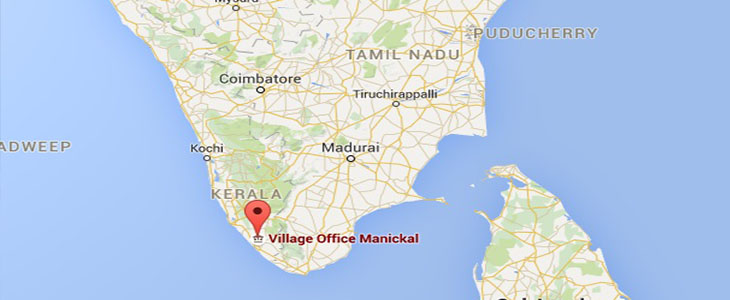
How Jayan transformed Manickal Grama Panchayat

Jayan, the current vice-President of Manickal Panchayat, is an unusual individual. In Kerala’s politically charged society, he has remained politically independent, though he does get outside support from a political party. This is Jayan’s second term in the Panchayat elected body; he was the president of the previous elected body, and he played a major role in pushing for and obtaining the ISO certification for Manickal Panchayat.

Jayan’s political moves on gaining ISO comprised of quite a bit of tightrope walking, as he wooed combative political interests, to assent to the process. He made the whole thing a non-threatening effort – which is a hard act to follow, because suspicion is woven into the warp and weft of Kerala’s democratic practice. However, it was his animated and serious nature, that convinced those that did not agree with his political neutrality to pursue the ISO certification.

But then, Jayan came up against some interesting opposition to most of his innovative moves in the Panchayat.

Auditors.

Mention auditors to Jayan, and he becomes even more animated than usual. He felt that Auditors of local governments come with plenty of paternalistic baggage; often tending to stray away from the core of their enquiry – whether expenditure was incurred in a procedurally correct fashion – to apply value judgments to substantive decisions of the Panchayats. Jayan recalled how on several occasions, the Panchayat dug in its heels and refused to accept auditor’s adverse comments on its actions.

Manickal Panchayat has produced several swimmers of national and international standing and even has a public swimming pool, a rare sight in a village Panchayat. The Panchayat contributed to the preparation of its champion swimmers by providing extra milk and eggs to them. On another occasion, since there were no Drawing, Physical Education and Music teachers appointed by the government in local schools, the Panchayat made its own appointments to fill up these vacancies. Yet again, responding to demands from educated youth, the Panchayat set up a coaching centre for preparing students to appear for competitive examinations for government employment. In all three cases, the Auditor felt that the expenditure was inappropriate, and exceeded the scope of responsibilities of the Panchayat.

Jayan did not relent. He got the Panchayat to pass a resolution disagreeing with the Auditor’s views. Meeting the objections head on, he wrote to the government justifying the Panchayat’s actions. He used his political links – remember, he was friends with everybody in every party – he persuaded the government to accept his explanation. The audit query and the recommendation to disallow the expenditure, was rejected.

What kind of effort does it take, to run a panchayat as good as Manickal? I spoke to Devaki, a second time member of the Panchayat, to get some sense of what she does throughout the day.

Like many others who are immersed in local political activity, Devaki wears many hats. She is an active member of her political party. She climbed the political ladder by first playing a mediating role in local disputes, settling cases, often going back and forth between working with families and groups, as also helping the police in investigations. From there, Devaki graduated to becoming a formal member of the District level legal services authority; she used her political connects to get the position. Devaki has a beat that takes her through her constituency, which she follows scrupulously. She only gets Rs. 3500/- as a monthly honorarium; this amount is grossly inadequate to cover her costs. Therefore, to save money, she increasingly contacts her constituents through phone. Her phone number is given to all shops in her ward so that people can contact her. Furthermore, she has fixed collection points – shops and the office of the women’s collective where she is a member – where citizens can contact her and leave their documents for her to collect and submit to the Panchayat office.

As I left the Panchayat, with my new found friends, Jayan and Devaki waving their goodbyes, I reflected on one aspect completely missing in our conversations.

Nobody mentioned bureaucrats, or the district administration, as being connected with the efforts of the Panchayat.

District Administrators, who think that the entire country will collapse if they are not present to watch over boisterous locals, please note. Nobody really cares at the ground level for what you do, or what you don’t do,

Media persons, please note, people really make things work. But because any of you don’t go down to the ground to see what is happening, you tend to believe that good bureaucrats alone are catalysts for anything good that emerges through local development. Please remember that very often, the district administration is only a messenger, a spokesperson who is not averse to taking the credit for what other, ordinary people do.

The Flowering of Buds

‘You must visit our ‘Buds’ school’, she said.

A group of us, members from India of the Local Governance Initiative and Network, LoGIN, were in Kerala on a three day visit to share our experiences and plan our cooperative activities for the next year. We were hosted by the Kerala Institute of Local Government, which has a sprawling campus in sylvan surroundings in the village of Mulamkunnathukavu, Trissur District. KILA had organised out visit to the Pazhayannur village Panchayat, further north from Mulamkunnathukavu, in Trissur District.

After having given us a comprehensive presentation on the Village Panchayat, the President of the Panchayat was keen that we must visit some of the local initiatives that the Panchayat has initiated.

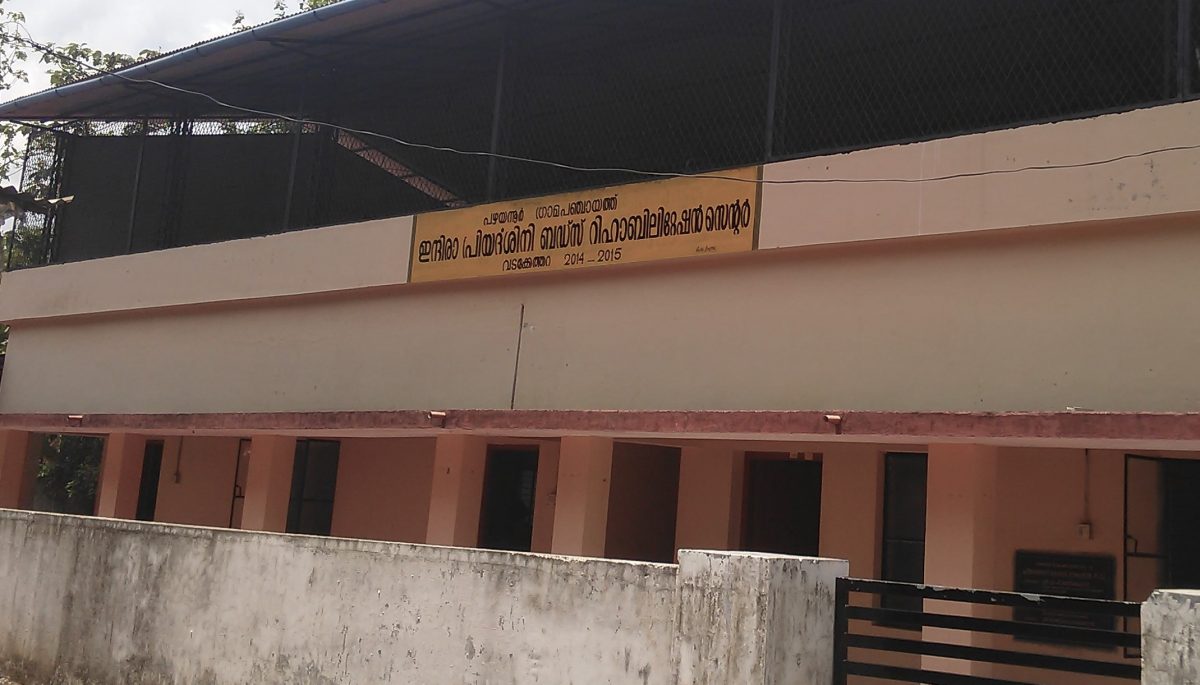
The Buds school was a revelation!

The school ran in an airy, cheerful building. It was a place for care giving to children with special needs, who lived in the Panchayat. There were about twenty such individuals, being provided professional care by a qualified care giver and teacher paid for by the Panchayat. For those who were able to work with their hands, there were several crafts skills to learn, from paper applique to making craft jewellery. To say that the school caters to children alone is a misnomer; the oldest individual in the school was thirty five. Some of the individuals in the school were accompanied by their guardians; parents, brothers and sisters.

The bright eyed professional who looked after the school explained how the Panchayat had found the location for it, and constructed the building. The Panchayat included the capital and running costs for the school in their participative plan and were able to pay for it from its budget, powered by the flexible block grants that were provided to it from the State and the local taxes – mainly property tax – collected by it.  We saw an impressive array of crafts and jewellery produced by the children. Recently, the teacher said, doctors living in the Panchayat had agreed to provide physiotherapy services free of cost, for those in the school.

How did a participative plan prepared by the Panchayat come up with the provisioning for such a unique care-giving institution? Put it down to Kudumbashree, Kerala’s unique model of the creation and networking of women into self-help groups, in close collaboration with the local governments. Unlike in other States, where the SHG movement has been positioned as an alternative to the strengthening of local governments, Kerala recognised early that the two were not incompatible and that they served different needs. The local governments are political institutions of government, just like the State and Central governments. On the other hand, the Kudumbashree movement was positioned as a State- catalysed civil society movement. The promotive efforts for strengthening such peoples’ institutions were themselves decentralised to the local level, with a three tier system of federating the groups from the neighbourhood level upwards, aligned with the local government jurisdictions.

It was in Venganur Village Panchayat, Thiruvananthapuram District, that the Buds idea was conceived and implemented. Every Panchayat prepares an anti-poverty sub plan, and during the process, it was discovered – through the active participation of the Kudumbashree SHGs – that poor families who had mentally and physically challenged children faced huge problems in providing them adequate care. The idea of setting up a special school for providing care and rehabilitation support to such children was born and executed.

Venganur Panchayat’s idea has swiftly spread. Buds schools have now flowered, in a short space of time, to nearly half of Kerala’s 900 plus Gram Panchayats.

A meeting with the Chief Secretary of Kerala, Mr. S.M. Vijayanand confirmed that the rapid spread of Buds schools was in response to Kerala’s unique demographics. As a State that had achieved replacement levels of population growth more than two decades back, it was now faced with the challenge of an aging population and small nuclear families, bereft of family support to look after those who are less fortunate. In such a situation, Vijayanand explained, care giving had emerged as a high priority in local planning. Not only were Panchayats setting up Bbuds schools, but also senior citizens clubs, to enable the older generation to relax and seek escape from crushing loneliness. Vijayanand was quick to point out that such initiatives were born from the Panchayats themselves, and did not require directions from the social welfare line departments.

But then, in Kerala, the Panchayats receive block grants with very few conditionalities, with which they can actualise their visions and dreams.

What of other States? Nope. They receive money in tiny, self contained narrow jets, incapable of being used flexibly. As somebody quipped, the money sent by the department of Khel-kood (sports and games) cannot be diverted. Indeed, the money sent for Khel, cannot be spent on kood and vice versa.