
The Wicked Problem of Global Warming

Over the last four, somewhat intermittent blogs, I had detailed the initiative taken by the Fourteenth Finance Commission in introducing a new factor, namely the extent and conservation value of forest cover, into the horizontal formula for distribution of central revenues to States. I ended by pointing out that while the introduction of this criterion was commendable in itself, it fell upon citizens to keep checking whether States that stood to gain, were using the funds for the protection of forests and not for accelerating their destruction.

However, let’s get real. This allocation represents a tiny fraction of the financial resources that needs to be kept aside for protecting the environment. Besides, the protection of the environment often depends not on budget allocation decisions of this nature, but on the crafting and enforcement of regulatory policies that aim to reduce adverse impacts. Before one begins to examine whether India is on the right policy path, it is necessary to pause and examine the vastness and wickedness of global warming and its impact on us.

First, for all the sceptics who question whether the earth is warming up or not – that included me too – there is now irrefutable evidence that it is. Nine years of the past decade have been the hottest ever in recorded history; that’s proof enough for me.

So, what is the impact that global warming might have on us Indians? Plenty, if one goes by simple statistics. First, is the fact that India depends heavily on regular monsoons for its agriculture, on which 60 percent of the population relies for their sustenance. Global warming will seriously affect the extent and the periodicity of rain. That will particularly affect the semi-arid areas of the country, largely in the western part and on the Deccan plateau. Second, the glaciers in the Himalayas are retreating. They provide life sustaining water to India’s most fertile areas, stretching from Punjab to West Bengal, covering UP and Bihar, India’s most populous States. Third, nearly 300 million people live on the coast. Three of India’s pulsating metropolises, catalysts of economic growth in their own right – Mumbai, Chennai and Kolkata – are coastal cities. They, along with other engines of growth – from Gandhidham to Cuttack, could be flooded out of existence due to rising sea levels.

We have a grim future ahead of us.

So what could we do about this? First, we could start with having fewer Indians on the planet. However, that is not likely to happen in the near future. While India’s birth rates have dropped, the sheer size of our population will ensure that vast numbers of Indians will continue to be born, well into the foreseeable future. While peninsular India has reached, or is likely to shortly reach stable population levels, the northern States have not. Uttar Pradesh and Bihar put together comprises 300 million people, which would make them the fourth most populous country in the world; after China, India sans Bihar and UP and the United States. They have the worst records in reducing of birth rates – Bihar’s birth rate actually increased marginally during the nineties, when in Andhra Pradesh, it dramatically dropped, due to better access to contraceptives and public education. We are therefore expected to surge inexorably to an eye popping level of at least 1.6 billion people – some say 1.72 billion – in the next forty years or so.

Second, we could consume less carbon-burning energy that we are doing at the moment, but that is a hard ask; it would be near impossible, and unfair. While India is a large contributor to greenhouse gases, at a per-capita level, our carbon generation, at 1.6 tons per person per year, is ten times lesser than that of the west. That is because we are poor – we have the largest concentration of poor people in the world – and it’s unfair to expect that we will curb emissions by the simple expedient of doing nothing about our poverty, just to make up for the huge amounts of carbon released by rich people into the atmosphere in the past.

So, our population will grow, and our energy consumption and its downstream carbon emissions must grow, if we are to meet the basic needs of poor Indians and they have to clamber out of poverty. Yet, while reversing our greenhouse gas emissions is near impossible, we must curb them.

I cannot think of a wickeder problem that confronts us today.

In my next blog, I will explore the dimensions of the choices we need to make, and the maze of confronting, often intractable, ideological positions one has to traverse.
How Conservation Payments Ought to be Used

As detailed in last week’s blog, the report on ‘High Conservation Value Forests: An Instrument for Effective Forest Fiscal Federalism in India’ suggested the devising of a horizontal formula that comprises of a ‘High Conservation Value Forests Index’, a ‘Conservation Cost Index’ and a calculation of Opportunity Cost, namely, the revenue foregone by states by not diverting forests for what they consider an economically more remunerative land use. The Fourteenth Finance Commission considered this recommendation and introduced a 7.5 percent weightage for forest cover in its formula for horizontal distribution of the state share of central revenues. However, the question really is whether the devolution of funds on account of forest cover, would go towards protecting it. In this regard, the report contains important recommendations, going beyond the allocating of financial resources alone.

The study saw the creating of an index based on forest cover as the starting point for a more nuanced approach towards forest protection. It recommended that due weightage ought to be provide support to agro-forestry and protect vulnerable ecosystems such as mangroves. It pointed out that although the parameter of corridors has not been included in the High Conservation Value Forest Index, it should be ensured that wildlife corridors ought not to be disrupted due to construction of roads and railway lines and in case, building such constructions is inevitable, then free mobility of animals is enabled through providing under-passes and over-bridges.

The report suggested that by linking grants to the States budgetary allocation for forestry, the latter would be incentivized to conserve and maintain the health of forests. However, the study also cautioned that the allocation of funds to States should not create perverse incentives to them, to seek such allocations as a regular means of budget support. It observed that States should look upon these funds only as an investment opportunity to enhance and maintain the health of forests. Providing restoration allocations should be a one-time act and regular commissioning of such funds should be discouraged, by monitoring the extent of newly added forest areas by treatment of degraded forests.

Finally, the report suggested that further work should be commenced on developing a Sustainable Livelihood Support Index which reflect the number of people deriving livelihoods from forests without taking away from the values of the forests, by ensuring sustainable practices. It suggested that the Index should be based on the number or percentage of people to drive the attention of the policy makers that conservation of these resources has positive implication on numerous people.

The Finance Commission did not put these recommendations into its main report, being as it is, an institution that looks at the sharing of financial resources between the centre, states and local governments. Nevertheless, the importance of these recommendations cannot be overlooked. These are important pointers to those working on wildlife and forest conservation to ensure that the funds given to State on the basis of their forest cover, are used to preserve, protect, enlarge the area and improve its quality.

NGOs working on environment related issues will need to keep a vigilant eye on how governments are using these funds. The best scenario would be that these funds are used to enlarge and fund working plans for forest development. The worst would be that these funds are used for badly conceived and implemented ‘development’ projects, that destroy forest cover. That would be a travesty of this nuanced approach to funding forest conservation and development.

Funding for forest protection – peeping behind the Fourteenth Finance Commission Award.

One good feature of the way India’s Finance Commissions go about their jobs is that once their reports are finalized, they make public the data on which they based their reports, as also the various studies that they commissioned for deeper study of the issues before them. In keeping with that approach, the Fourteenth Finance Commission has placed the report prepared by the Centre for Ecological Services Management at Indian Institute of Forest Management (IIFM), Bhopal, in collaboration with the Forest Survey of India (FSI), Dehradun and Iora Ecological Solutions (IES), New Delhi in the public domain. This report, titled, ‘High Conservation Value Forests: An Instrument for Effective Forest Fiscal Federalism in India’ opens a window into the mind of the Commission, to reveal the rationale that they might have adopted to recommend a special forest cover based component in the horizontal formula for the inter-se sharing of central revenues between States.

The opening paragraphs of the report once again illustrate how, when we consider finding solutions to ‘wicked’ problems, radical differences arise straightaway in the way different stakeholders look at the definition of fundamental terms. For instance, how do different people look at the term “Forests”? As the report points out, for those people who use forests for wood and other non-timber forest produce, it is just a common reservoir into which they can dip and obtain benefits for free. On the other hand, for those who (in the words of the report) understand the criticality of forests for sustaining life on this planet, it is something of unimaginably high importance (and inestimable value).

Ominously, States that have large forest areas and directed by increasingly strict legal regimes and watchful courts to maintain these, might see forests as a disability rather than as a resource; as something that they are prevented from using for something more ‘beneficial’, in their perception.

One of the key problems in assigning a value to forests and similar ‘ecosystem services’, is the tragic fact that no price tag is attached to them. As the report points out, the current National Accounting System of the country reflects only the marketed value of few visible services supplied by forests. Fresh air, clean water, the variety of plant and animal life, does not excite the accountant, the economist, the politician or the bureaucrat in the same way as cubic meters of wood does.

So how does one go beyond counting the marketed benefits of forest ecosystems and assign economic value to the priceless benefits of biodiversity, for instance? The very thought of that might be sacrilege for some, but is a necessary pursuit for more prosaic individuals concerned with how national financial resources are better applied.

This is how the report detailed above goes about this task:

First, the report has computed an index termed the ‘High Conservation Value Forests Index’. This comprises of several indicators that relate to (a) the diversity of the natural endowments of the forests in question (b) the value of actions undertaken to conserve this endowment and (c) other cross-cutting factors. The High Conservation Value Index finally adds up to an evaluation that measures the relative importance of the forests in each state.

Second, the report computes a Conservation Cost Index which accounts for the costs incurred by states to keep their lands under forest cover. These comprise of two items, namely, the cost of maintaining existing forests and the cost of restoration of degraded forests

Finally, the report attempts to calculate the Opportunity Cost, which is the revenue foregone by states by not diverting forests for what they consider an economically more remunerative land use.

How these are in-turn calculated, and whether this leads us anywhere, will be explored in detail in next week’s blog.

The full report referred to above is available at: http://fincomindia.nic.in/ShowContentOne.aspx?id=27&Section=1

Funding environmental services; fundamental questions or process issues?

My apologies for a break from my weekly blog. After five weeks of skipping my schedule, I resume my series on funding of environmental services.

As expected, my blog of five weeks back received some thought provoking responses.

Suraj Kumar, a social media friend, asked me some questions to which I did not have straight answers, except to acknowledge that these were serious questions indeed. His series of unbroken questions were as follows; and I quote from his comment,

 ‘What is ‘economic growth’ really? How is ‘value’ created? And what is the exponential function’s role in ‘growth’? Is it possible to pursue the exponential function forever on a finite planet? What happens to a monetary system based on debt (forget even the massive globalised externalities and link) if growth stops? And if growth stops and money loses meaning, will the proposal work? Anyway, who are we to lay siege to life? What is this extremely speciesistic narrative that humans are more important than nature to destroy it in the name of ‘sustainable development’? Who are we to call the homes of living beings as your ‘resources’? Where is the divinity and sense of reverence and deep connection to everything around us in this pretentious white-man affair?’

These questions stopped me in my tracks, because I had not paused earlier to consider these very fundamental questions; which touch upon not only how we use our public and private moneys better, but force us to reflect upon our position as one amongst many species that lives upon this planet.

So I decided to spend some time thinking about these questions; and whether there can be any final answers to them.

All that I can come up as a response is that the final answer would be that we have to limit our needs as a species, to take care of a planet that has limited means to provide for us. However, even if that final answer is staring us in the face and indeed yelling at us to stop our unsustainable hegemony over the planet, the sheer momentum of our population growth and our energy needs is not likely to stop, much less reverse.

As regards whether there is a divinity or otherwise in this, or any other alternative approach, I hesitate to enter into this area, primarily because, as an atheist, I see the entire world, including ourselves, as nothing more than a random, though elaborate arrangement of chemical, electrical and electromagnetic impulses. To attribute divinity or lack of it to one or the other component of this random arrangement is something that one could discuss endlessly.

In the meantime, there are some practical immediacies to address. India’s population is growing at an alarming rate, and in a skewed fashion. Currently, only Kerala, Karnataka, Andhra Pradesh, Maharashtra and the north eastern states have stabilised, or are close to stabilising their populations.

So, before I get back on track to discuss how public finance policies might, or might not enable environmental protection, I can only quote Robert Persig. He speaks for me as well.

 “The way to solve the conflict between human values and technological needs is not to run away from technology. That’s impossible. The way to resolve the conflict is to break down the barrier of dualistic thought that prevent a real understanding of what technology is – not an exploitation of nature, but a fusion of nature and the human spirit into a new kind of creation that transcends both. When this transcendence occurs in such events as the first airplane flight across the ocean or the first footsteps on the moon, a kind of public recognition of the transcendent nature of technology occurs. But this transcendence should also occur at the individual level, on a personal basis, in one’s own life, in a less dramatic way.” 

― Robert M. PirsigZen and the Art of Motorcycle Maintenance: An Inquiry Into Values

Next week, let’s look at the implications of the recommendation of the 14th Finance Commission to include forest cover as a factor in the distribution of central revenues to States.

Crafting Policy, the V. Ramachandran Style

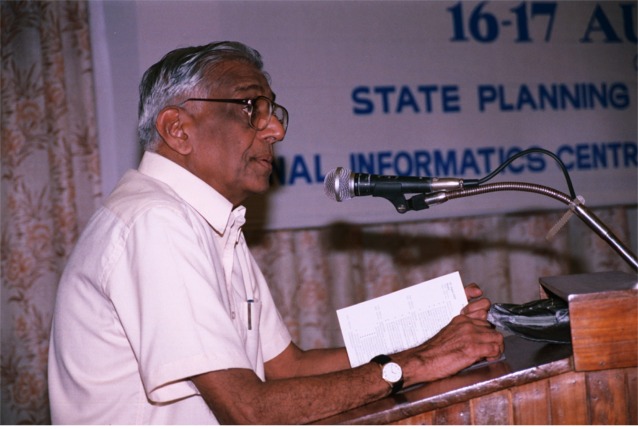
Working with the Expert Group on Participatory Planning chaired by Mr. V. Ramachandran was an object lesson in how to craft policy. The group had a mercurial composition and arguments flew thick and fast between the members. Mr. Ramachandran intervened more by listening carefully and summing up the discussions. At the end of each day’s deliberation, I began to look even more lost than before. I worried at what I would have to write, given that many of the discussions in the group were inconclusive. Mr. Ramachandran noticed my discomfort; by then, I had gotten to know him well enough to confide in him. On one particularly tough day, he told me that as a government officer, I should never forsake an opportunity to write a report on behalf of a Committee. ‘This is the chance for you to put your bright ideas into the mouths of people more influential than you’, he said. That was indeed a revelation.

Reassured by that invaluable piece of advice, I worked double time on the report of the Expert Group. Chapters were prepared and sent to Mr. Ramachandran for his vetting. I knew that he was a meticulous individual, but I marvelled at his keen eye and foresight. He whittled away at the rough block that I sent him, to sculpt a taut and purposive report. By the time we finished, in mid-June, 2006, it was a document of which one could justly be proud. I then saw – it would not be the last time – the humility and generosity that marks a great person. In his foreword to the report, Mr. Ramachandran wrote, ‘The Secretaries to the Ministry of Panchayati Raj… deserve our thanks for assigning Shri T.R. Raghunandan, Joint Secretary to the Ministry, to function as Secretary to the Group in addition to his heavy duties in the Ministry. The Group could not have had, as its Secretary, a more dedicated officer, with a wide and deep knowledge of the subject and a passion for Panchayati Raj.’  I was deeply touched.

With the report ready to be submitted to the Planning Commission, one could have rested on one’s laurels. But that was not in the nature of Mr. Ramachandran. A day after the report was ready, I heard that familiar gravelly voice on the phone. Could I have a couple of copies delivered extra-quick from the printer for him? He had to return to Thiruvananthapuram on the evening of the morrow. I worked double quick to have a few copies printed and bound, ready for Mr. Ramachandran.

The next day, Mr. Ramachandran, quietly and without any fuss, went to call on an old friend and colleague from the early days when he was in the government. He handed over the precious few copies I had printed for him and emphasised the importance of the report to his friend. He suggested that the Planning Commission should be persuaded to act upon the report quickly and prepare guidelines that could provide a framework for the States, to begin a campaign for participatory planning, commencing from all village Panchayats and Municipalities in the country. Mr. Ramachandran’s friend listened avidly and said that he would take up the matter with the Planning Commission.

Dr. Manmohan Singh, Prime Minister of India, acted upon his assurance to Mr. Ramachandran swiftly. He forwarded the report to the Deputy Chairperson of the Planning Commission, with the suggestion that it should prepare and circulate framework guidelines for participative planning and send them to the States.

My master class at how policy ought to be piloted did not end there. A few months later, Mr. Ramachandran and I met in Bhubaneshwar, where we had been invited for a conference. There, along with the member of the Planning Commission, Mr. B.S. Yugandhar, we sat around the breakfast table and prepared a draft guideline for participatory planning based upon the recommendations of the expert group. These guidelines were issued by the Planning Commission in August 2006 – only the second time that such guidelines were issued by the Planning Commission – the last time was in 1969. Mr. Ramachandran had a sense of the occasion; he told me with a smile that the circular of the Planning Commission issued in 1969, had also been drafted by him.

 ‘Never stop with a report,’ Mr. Ramachandran told me, ‘Always work on how you will pilot it; who you will meet, who you will influence, to take action. If someone who is authorised to take action on a report requires a formulation that would go into an official policy, be ready to draft it at a moment’s notice. It does not matter who gets the credit for what you write’.

 Priceless words of advice, indeed.

 The report on participative planning was well received by the States. With the participatory planning guidelines issued by the Planning Commission, we were able to stoke interest in States to rekindle their efforts on strengthening Panchayats. A demand was received from States that had areas where Panchayats did not exist. Large areas of the north-east were government by Tribal Autonomous District Councils. Could we work on guidelines for participatory planning in these States too?

 By then, I was hugely enjoying working with Mr. Ramachandran. We were in business again, traveling to districts and remote villages in the north-east, meeting representatives of tribal councils, governments and village level committees. By 2007, the second V. Ramachandran authored report, applicable to the District Councils in the North-east, was ready.

 An unlikely friendship grew between the two of us. Every once in a while, there would be a phone call from Kerala house; would I be able to join Mr. Ramachandran for dinner? I looked forward to those meetings, when Mr. Ramachandran would regale me with stories from his youth, deep insights into how decisions were taken in the offices of the Prime Ministers he served, and words of advice that ring in my ears even today.

 A few years later, when I was contemplating leaving the government to pursue my passion of working on the subject of local governments, I sought his counsel. For someone who did not stray from the straight and narrow path of the civil service, Mr. Ramachandran’s advice was surprisingly, that of a risk taker. ‘If you are passionate about doing something, better that you follow your heart rather than your head,’ he said. Bolstered by his reassurance, I turned my back on the government and headed out for my next adventure. 

A Role Model Slips Away

It was at a conference in Kerala, probably in 2003 or so, that I first met him.

Vijayanand, my friend and fellow traveller on the road to democratic decentralisation, grabbed me by the arm and took me to the table where the gaunt man was having lunch. ‘This is Raghunandan,’ he introduced me.

Mr. V. Ramachandran was already a legend, as far as I was concerned. He had had a stellar career in the Indian Administrative Service, which he had joined in 1953. Later on in his career, he served under two Prime Ministers of India, Indira Gandhi and Morarji Desai, as Joint Secretary in the Prime Minister’s Secretariat. A few years later, he became the Chief Secretary of Kerala State and served with distinction for several years, handing over, incidentally, to Ms. Padma Ramachandran, the first woman to become Chief Secretary of Kerala. Prior to that, he was known for his work in strengthening the electricity board in Kerala and as the Finance Secretary of the State as well. Any officer with as distinguished a career record as he had, would have rested on his laurels. But that was not in his nature; he was made of sterner stuff. From 1991 to 1996 and later, from 2001 to 2005, Mr. Ramachandran served as vice-Chairperson of the Kerala State Planning Board.

Kerala’s bold experiment in 1996, perhaps the closest that any Indian State has come to truly implementing the constitutional ideal of democratic decentralisation, was anchored by Mr. Ramachandran. True, a bureaucrat can do precious little in furthering the vigour of democracy if there is no political will. Mr. Ramachandran was an ideal foil to E.M.S. Namboodiripad, who provided the vision for Kerala’s bold move. E.M.S., in the evening of his life and as the grandmaster of leftist political thinking in Kerala, pushed for Kerala’s decentralisation. Not all of his party members shared the same enthusiasm, but there were enough of them, to provide the serious political impetus to this decision. As the Deputy-Chairperson during the left front government, Mr. Ramachandran guided the internal process of change, standing by decisions that other bureaucrats considered risky, dismantling budgets, removing constraints and providing the flexibility and money necessary for people to see credibility in local planning. Vijayanand, who worked in that period as the Secretary in the Local self-government department in Kerala, was Mr. Ramachandran’s protégé.

My boss in Delhi, Mr. Wajahat Habibullah, was the one who played a master stroke. Our task in the newly created Ministry of Panchayati Raj was to draft policy that would redraw the lines of engagement between the Union Government and Local Governments. It was a strategy fraught with political and constitutional implications. Under India’s federal constitution, it is the States that are to determine the pattern of decentralisation to local governments and a centralised approach would be misunderstood. Mr. Habibullah, the Secretary of the Ministry, conscious of this sensitivity, needed allies in his task of chivvying the States to make haste in devolving powers and responsibilities to the Panchayats. He looked towards the Planning Commission and suggested that the politically acceptable way to get States to move in this direction, is to promote the idea of decentralised participatory planning; States would not resist this approach.

As Secretary of Rural Development and Panchayati Raj in Karnataka, it was the Kerala experiment that was the gold standard, the model to be emulated. Little doubt therefore, that I was in awe of Mr. Ramachandran. I remember very little about that meeting, except that Mr. Ramachandran fixed me with his stare and told me that he had heard a lot from Vijayanand about me. I mumbled a few words in acknowledgement.

In a few years I was catapulted to the Union Government, to serve as Joint Secretary in the Ministry of Panchayati Raj, an opportunity that I grabbed with both hands. In the tumultuous years from 2001 to 2004, under the tutelage of Mr. M.Y. Ghorpade, I was able to contribute to strengthening Panchayats in Karnataka, taking a leaf from the book of Kerala. I saw the opportunity to serve in Delhi as a way to carry the decentralisation story forward, across the country. It was a time when adrenalin flowed, dreams and hopes ran high.

The vision of participatory planning was a grand one. It was envisaged that India’s visioning and planning would begin with peoples assemblies; Gram Sabhas, in rural areas and Wards Committees in urban areas. Village level Panchayats would prepare plans for their areas in consultation with Gram Sabhas. Municipalities would do likewise in their areas. The District and Intermediate level Panchayats would prepare plans for their functional domains and local government plans would be consolidated into district plans, by the District Planning Committees. These, in turn would form a major component of State Plans and they in turn, would comprise a large part of the national plan. The key to this idea was that each level of government would plan strictly in accordance with the principle of subsidiarity; that everything ought to be done at the lowest level practicable, and at no other level. A high level vision document, capturing and giving shape to this grand vision, was required. Who else but Mr. Ramachandran, to lead this effort?

Following consultations with the Planning Commission, Mr. Habibullah constituted an Expert Group headed by Mr. Ramachandran, to develop the contours of an operational process for turning national planning on its head. The Group has a stellar cast; the other members were Mr. B.N. Yugandhar, Member, Planning Commission, Mr. D. Bandyopadhya, Former Secretary, Government of India, Ministry of Rural Development, Ms. Nirmala Buch, Former Secretary, Government of India, Ministry of Rural Development, Dr. Devaki Jain, Development Economist and Dr. Govinda Rao, Director, National Institute of Public Finance &Policy. I was made the Secretary to the Group.

‘It’s not easy, he is tough, meticulous and demands a high level of commitment and attention to detail,’ said Vijayanand, my friend. I steeled myself for the challenge.

Superheroes in school uniforms

“Didi, who’s your favourite super hero?” asked the six year old as he played with a toy figurine of the Incredible Hulk. “It would have to be Mulan,” I replied after giving it some thought. “But Mulan doesn’t have superpowers!” “But she single handedly saves China.” “Yes, but she doesn’t have alien powers that make her do amazing things! She’s just a human,” he countered.“Well, yes, but by that measure, Batman can’t be called a superhero either. He relies on his gadgets to beat the bad guys.” “He is powerful on his own…he can beat up anyone without relying on his gadgets. Mulan can’t do that.” “She uses the power of her mind to beat the baddies! What is greater? Brute force or mental strength?!…” 

The banter went on for some more time.[1] In the end he seemed to agree with me but I am afraid he wasn’t entirely convinced. It did however spark my imagination regarding the typical notion of a superhero. I had been mulling over the stories I had heard that day, shared by teenaged girls attending a scholarship camp in Araria, Bihar, when this impromptu verbal joust took place.

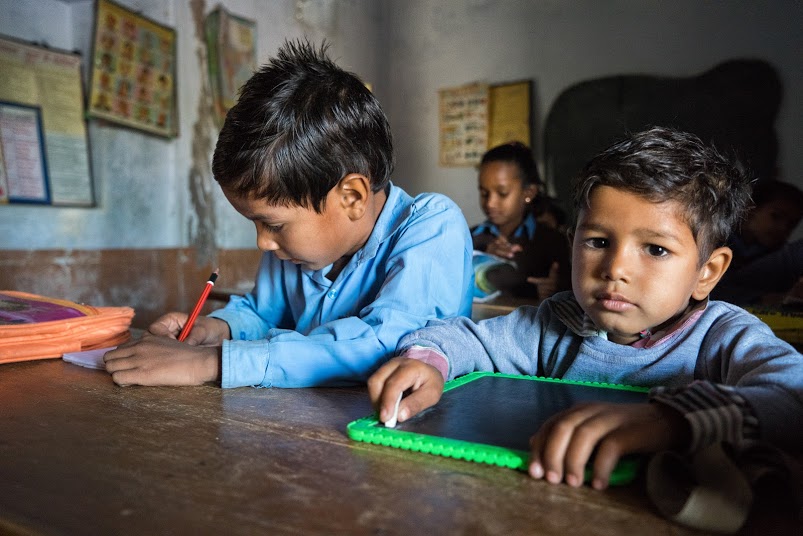
The scholarship programme was launched four years ago by a dear friend to motivate teenaged girls to complete their schooling. Attending these bi-annual workshops was a requirement to attain the scholarship. In these workshops, girls were informed about various things including their body and health, relationships, navigating social inequalities, peoples’ struggles and their rights.  For most girls, this had been the fourth and final camp in the last two years. One of the things we had struggled with during our time with the girls was just getting them to talk. So this time round, we focused on motivating them to share their stories. And I’m so glad we could get all of them to open up. We ended up hearing some truly inspiring stories. Made me realise how the “super-ness” of a person came out in (seemingly) ordinary acts of extraordinary courage. 

There was the story of Jaya[2] who at the age of 16 just wanted to learn something in school. She would cycle, take the train and walk to cover the 22 KM between her home and school. But the teachers refused to teach, even though they were present in school. They would tell her to go back and take up tuitions like the other kids. She persisted. This eventually impressed her headmaster. “But we cannot teach one student alone, Jaya,” the headmaster told her. Jaya ended up motivating around 15 girls including her friends and some seniors from the neighbouring village to accompany her. The teachers could no longer turn the students away. They started teaching but not without making things difficult for them, occasionally. For instance, some teachers would get the students to move all the classroom furniture outside, including the stick used to “discipline” them, so they could teach more comfortably.

Then there was Sonali. The girl who was eyed suspiciously; her motives questioned by her neighbours for attending this residential workshop, twice in a row. She didn’t bow down and ended up holding a session with the village folk, telling them about the activities of the group that was organizing the workshop. She generated enough buzz that the village ended up inviting some of the group’s leaders to resolve issues affecting them. She herself became a full time volunteer with the group, organizing day long camps for kids of her village, playing games, screening movies and informing them about their rights.

And how can I forget Noor. She was one of the quietest girls from the batch of 20 odd girls. She learnt sewing at the age of eight, watching her mother sew blouses. She has been sewing blouses ever since, charging Rs 40 per piece. She shared her ambition to learn sewing suits and opening her own tailoring shop in the near future. “This will secure my family’s future once and for all,” said Noor, eyes agleam;the timidity melting away in front of our eyes.

I looked on as the six year old went back to playing with his toy, my mind wandering off to all those girls who are brave enough to pursue their schooling in a region where underage marriage is still the norm. The average 14 year old in this district spends considerable time cooking up ways to ward off families that might visit her home on any given day to see if she could make for a good wife for their son(s). Whether her own family wishes to marry her off is a question that does not particularly interest anyone outside her immediate family. The constant fear is if a family is turned away for an unsatisfactory reason or a string of families are turned away, any of the rejected parties could spread malicious stories about the girl or the family in the village. Since villages continue to be tightly knit social units, the repercussions might prove too costly for the girl’s family. But having understood the value of education, these girls go on, keeping an eye out for their grades as well as their house guests.

We really need to alter our definition of a superhero. I hope this bright and sensitive six year old grows up in a world that accommodates superheroes possessing all sorts of skills, come in all shapes and genders, and not just lumbering, angry green men. And I hope the girls from Araria are at the forefront, inspiring other young girls and boys to pursue their education, their dreams, and ultimately bring about this change.


[1] The author will be happy to share her take on why she thinks Mulan should be counted as a superhero with interested readers. She can be contacted at [email protected]

[2] Names have been changed.

Functional Assignment: Some (more) Thoughts on the Evolving Subject

(This is part 2 of 2 entries on Functional Assignment by the same author.)

In my previous blog post I initiated a discussion on some of the lessons I learnt from the workshop organised by LOGIN on Functional Assignment. In this post, I will be sharing more of my takeaways from the workshop:

Unbundling” the modalities of decentralisation in light of FA – Conversations centred on the choice of the most appropriate mode of decentralisation were particularly interesting to me as we were made to question the fundamental choices that shape our respective countries. In the Indian context, ‘devolution’ is clearly idealised. Debates are generally carried out on the method/process through which devolution is to be carried out and rarely on whether or not devolution itself is the way to go.

In the 90’s, Local Self-Governments (LSGs) gained national recognition in India through Constitutional amendments. The task of actually devolving functions to the LSGs, however, was left to the states. Since then, functional devolution has been patchy and leaves much to be desired. Moreover, in practice, the Indian administration primarily functions on the principle of deconcentration, preferring to provide the bulk of public services through line departments and parallel agencies. In case of subnational governments, the administration prefers to engage them through delegation of duties in the area of programme implementation.

Undertaking FA in India will force the relevant stakeholders to assess the modes of decentralisation appropriate for different levels of government. It will also be important to address the possibility that multiple modes of decentralisation may be appropriate for different levels. There isn’t much on this topic in the current literature on FA and thus might be worth exploring further.

Lost in translation – One only has to go through the 2014-15 Devolution Report to appreciate the research team’s struggle to rank states on the Devolution Index, owing to the adoption of different definitions of fundamental concepts (such as the 3 Fs themselves) by different states! This lack of consensus on key terms needs to be resolved before a country undertakes FA, unless one wishes to witness turf wars resulting from different definitions. In fact, the term “Functional Assignment” itself can cause confusion since FA doesn’t merely involve assignment of functions, but also of functionaries and funds. Perhaps a more encompassing term could be devised to bind the entire process.

Matching functionaries and funds with the functions “map” – What remains unclear is how functionaries can be meaningfully assigned to functions allocated to the appropriate tiers. This is a question of matching capacity with the task at hand and not just assigning the job to the person with the most qualifications. What are the criteria that should be applied in this context? Whose capacities are we assessing in the first place? Only the officials at the frontline or even the policy makers or members of the steering committee that would guide the FA process? What sort of preparation must these individuals undergo before launching into a dialogue on FA? Similarly, how does one match funds with functions? These are some of the “dilemmas” which were discussed in the workshop but left largely as questions to probe further.

Listening to the discussions on FA concepts and the experiences of other countries in this area, I realized that India has a long way to go before it can truly practice what it preaches. Administrative decentralisation has barely kept pace with the movement on political decentralisation in the country. Moreover, what we peddle in the name of decentralisation itself is quite muddled. When we talk of FA implementation in India, we are talking about a process that could take years to unfold. It could mean undertaking multiple rounds of discussions with stakeholders, pilots to see what works and what does not, and “change management” to contain the effects of structural shifts at an unprecedented scale. Coming to a basic consensus on the abovementioned issues will be essential if we are to even begin having a meaningful conversation on the subject.

Functional Assignment: Some Thoughts on the Evolving Subject

Early in September I attended a workshop on Functional Assignment (FA) led by subject matter experts – Rainer Rohdewohld and Gabrielle Ferrazzi. Organised by LOGIN, the workshop aimed at orienting practitioners of decentralisation in governance to the evolving discourse on FA. Bureaucrats, politicians, researchers and social activists from 10 Asian countries participated in the workshop making the sharing sessions quite rich and engaging. The workshop helped clarify concepts of FA and shed light on areas that are yet to be fully explored, as FA is a relatively new concept.

Simply put, “Functional Assignment” is the process of identifying and allocating responsibilities (Functions), personnel (Functionaries) and resources (Funds) to different tiers of government by applying principles of good management and decentralisation. Substantively, this means:

1.      Undertaking a de jure and de facto assessment of institutional arrangements at all levels

2.      Defining functional domains

3.      Charting a blueprint or undertaking structural corrections (if malfunctioning systems are in place) to ensure that the 3 F’s are rationally assigned

Managing “change management”

At the heart of FA lies the idea that even if a higher tier of government assigns tasks to subnational governments, these subnational governments should have some say on the matter. That is, their agency/capacity to initiate programmes on their own and implement assigned tasks to further the cause of local development should be acknowledged in concrete terms. Thus in the context of FA, ‘devolution’[1] is viewed as the ideal mode for decentralizing. This idea appeared to make many of the participants (especially bureaucrats) uncomfortable, which led to some debate on the level of autonomy and capacity that should be awarded to subnational governments. This was a natural concern since most participants hailed from developing countries, each with their host of social, economic and political issues which made them hesitant about giving subnational governments (what appeared to be) a relatively free reign.

Two concerns appeared to be at the heart of the discomfort displayed during the workshop: First, the belief that subnational governments lack the capacity to perform complex tasks, resulting in an aversion to devolution. (To this Rainer responded by saying, “You can’t learn to swim without getting into the water!”), and second, the belief that FA would lead to a reduction in one’s responsibilities, access to resources and therefore power.

On this note, Rainer and Gabrielle introduced the idea of “change management” – a common concept in management parlance – and its importance when undertaking an exercise as massive as FA. They spoke of the need to have a steering committee that would chalk out a plan to ensure that the people working in the system are able to adapt to the changes in the smoothest possible manner. Since there is a general tendency to resist change, and hesitations about devolution are already clear, it might be worth assessing the way FA is pitched to a new audience/stakeholders that are likely to be a part of the FA process. One gets a clue about this when one looks at the existing literature on FA.

FA as a process is commonly described as an objective exercise in decentralisation while acknowledging the fact that devolving responsibilities “wholesale” may not be ideal since contexts vary. Other popular modes of administrative decentralisation such as ‘deconcentration’[2] or ‘delegation’[3] might be preferable in certain contexts. However, there is a visible bias in the literature towards ‘devolution’ as the ideal mode of decentralisation when carrying out the actual FA process. Perhaps if FA is pitched as a more neutral exercise that aims to rectify governance systems, the concept might become palatable to a wider audience.

What would be the implications of undertaking FA with devolution as the guiding principle in a context where deconcentration is more appropriate? In my next blog post, I will explore this point further and discuss some more thoughts around this subject.    

(This is part 1 of 2 entries on Functional Assignment by the same author.)


[1] Some of the features of “devolved” governments are as follows: 1.The local government units are perceived as autonomous entities over which central authorities have little control; 2, they have clear and legally recognized geographical boundaries where they perform public functions; 3. Have corporate status and authority to raise their own resources. (UNDP, 1997)

[2] Deconcentrated governments display the following features: 1. The central administration has its regional/local offices in sub-state levels; 2. Involves limited transfer of authority. Jurisdictional authority of the central government reigns. (UNDP, 1997)

[3] Governments that adopt “delegation” as their preferred mode of decentralization display the following features: 1. They have semi-autonomous units such as urban or regional development corporations to whom aspects of governance are delegated through legislation or contract; 2. These units are not wholly controlled by the government but are legally accountable to the central administration. (UNDP, 1997)

How data can mislead in analysing social policy

India needs a transformation in how data is measured and analysed to form policy

First published in Business Standard Punditry on August 20, 2015

A visit to the Swachh Vidyalaya website on Independence Day, one is greeted with a congratulatory message on the completion of the Swachh Vidyalaya (SV) campaign (launched to ensure toilets including separate ones for girls in all schools). The message is accompanied with a bar measuring 100% completion rate of a target of constructing 4.17 lakh toilets in 2.61 lakh schools across the country.

Similarly, the launch of the Pradhan Mantri Jan Dhan Yojana (PMJDY) to ensure financial inclusion was accompanied with the creation of the PMJDY portal to track progress. A look at the numbers indicate that in a span of 1 year, over 17 crore accounts were opened, 15 crore debit cards issued and less than 50% of accounts had 0 balance.

Whilst the successful achievement of the targets for PMJDY and SV campaign are indeed significant and should be lauded, their very “success” points to some fault lines in government’s management information systems which should not be ignored in the celebrations.

Let me elaborate what I mean.

The Mission Mode Model

As early as October 2011, the Supreme Court (SC) of India had directed all States and UTs to build toilets, particularly for girls in all government schools by the end of November the same year. At the same time, the annual computerised system to collect school level data including the number of toilet facilities was also already available through District Information System for Education (DISE). In fact, if one was to look at the programme pre and post Swachh Bharat, the only noticeable difference between 2011 and today is that a) there is a lag between DISE data collection and publication (till today, latest DISE data available is for 2013-14) and thus there was no regular portal monitoring real time progress, and b) there was no significant political push for the programme.

The fact that only when the entire machinery was mobilised in mission mode for a specific goal, were results fast-tracked is indicative of systemic weaknesses in the existing planning, implementation and decision-making processes, that need to be addressed.

The Output Model

Another important fault line relates to what we are measuring, or rather, what we are able to measure regularly. As a country, we are relatively good at monitoring targets related to inputs and outputs. And interestingly, by design, both programmes (SV and PMJDY), the focus has been on monitoring progress on number of toilets built or number of accounts opened. Little information is available on whether these toilets are increasing attendance, or whether accounts opened have had an “impact” on easier access to benefits.

Whilst measuring outputs is important, for social policy programmes to succeed in the long run, a regular system for tracking outcomes will also need to be developed.

The Stick Model

The last important fault line ties into the question of incentives and usage of data.  To give an example: a look at data published by DISE suggests that between 2011 and 2012, the proportion of schools with girls’ toilets increased from 72.2% to 88.3%. Interestingly however, during the same period the proportion of boy’s toilets decreased from 81.1% to 67.1% (Remember this was the time the SC was pushing for separate toilets for girls).

An off the record conversation with a state official provided some explanation: “The push to show achievements in girl’s toilets led the state to “convert” all existing toilet facilities into girl’s toilets!”

The problem is a simple one. If data generated by me is used primarily to monitor me, I am incentivised to report positively on it. Or to be less pessimistic – if I know I am being monitored on certain things, I will focus only on those things.

Most social sector schemes emphasize the need and importance of local level planning. Consequently, formats are made for collecting disaggregated data, numerous hours are spent by frontline workers filling formats (anganwadi workers are meant to fill 37 formats across 11 registers!) and computer operators at the block/district have the daunting task of turning 1000s of pages of data into monthly or quarterly reports to be handed over to their supervisors. But then what? What happens with the data? What is it used for?  More often than not it is used only as a tool for monitoring performance. Rarely does it feed effectively to a planning process, or a process for identifying bottlenecks or a tool for the user to diagnose or learn from inefficiencies.

The new government seems keen to use statistics and data and create regular systems for monitoring performance. That is a positive step. However, for India to move towards a sound evidence based policy making system, we need a radical transformation in the manner in which we view and use data. In the words of Dr. Suresh Tendulkar we need a system “involving continuing interaction between data generators and data users so that demand for and supply of data are taken to be realistically inter-dependent and mutually interactive in character.”