

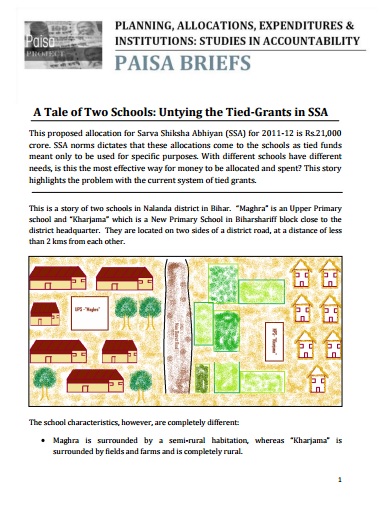
SSA norms dictates that the proposed allocation comes as tied funds meant only for specific purposed. By comparing the needs of two schools in Nalanda District, Bihar, “A Tale of Two Schools” looks at whether this is the best approach for money to be allocated and spent.
Publication Type: Reports
Do Schools Get their Money? PAISA 2010
Do schools get their money? Between October and November 2009, PAISA went to 14,560 government run elementary schools across India to ask the following questions: Did you get your money? When did you get your money? Did you spend the money, if so what was the output of that expenditure? This PAISA survey was conducted as part of the annual ASER survey that tracks learning outcomes. ASER is implemented entirely by citizen volunteers and civil society organizations making PAISA the first and only citizen led effort to track development funds. PAISA is conducted annually. This report “Do Schools get their money?” offers snapshots of findings from the 2009 survey.
Governing Elementary Education Finances in India
This report summarizes the key findings from the PAISA District Studies 2011. Through this analysis it argues for the need to radically alter the current top down model of education finance, moving towards a system which is decentralised, transparent and efficient.
Do GPs get their money?
A Case Study of Gram Panchayat Fund Flows in Birbhum District, West Bengal
Analytical studies on rural local government finance are few and far between in India. The paucity of reliable data and the lack of transparency in Panchayat finances and associated difficulties in accessing data are important reasons for this. These data gaps are well known and successive Finance Commissions have highlighted this problem with little effect. This PAISA Gram Panchayat (GP) study: ‘Do Gram Panchayats Get Their Money?’ is a small step towards filling this analytical gap. This study analyzes GP level finances in Birbhum district of West Bengal by asking the following questions
- Do GP’s get their money?
- If so, do GP’s get all their money? i.e. their entire entitlement?
- When do GP’s receive their funds? i.e. do funds arrive on time?
- Do GP’s spend their money?
- If so, what do GP’s spend their money on? And does this expenditure reflect local needs and priorities?
This PAISA study investigates these questions in the context of untied funds– funds that do not impose any specific rules regarding their utilization on the spending agency. Untied funds typically constitute less than 10% of a GP’s resource pool, but are significant because they have the potential to enable GPs to prioritize activities that reflect local needs and preferences.
The study tracks the fund flow process and expenditures incurred through 3 untied funds in a sample of 20 GPs in Birbhum district over a 5 year period from 2005-06 to 2009-10. In addition, it tracksthe receipt of SRD funds at the GP level. As a point of comparison, the study also tracks receipts and expenditures of tied funds – funds which are to be utilised strictly as per the rules or guidelines framed by the Central or State government, and thus, provides no flexibility to GPs.
Public Expenditure Tracking For Social Sector Programs in India
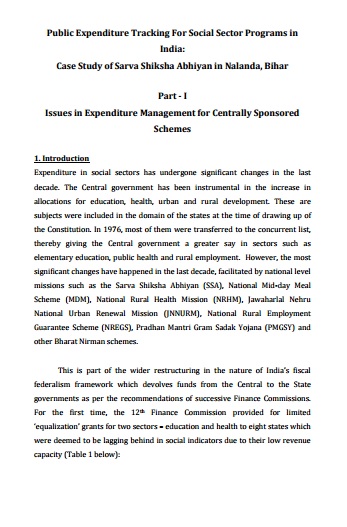
Tracking expenditure through budget documents requires an understanding of the expenditure responsibilities within and across Central and State governments. “Public Expenditure Tracking For Social Sector Programs in India: Case Study of Sarva Shiksha Abhiyan in Nalanda, Bihar” talks about the challenges and the way in which budget can be tracked by using SSA as an example.
PAISA Briefs: Social Sector Expenditures-Trends,Strengths and Weaknesses
This presentation is about the changes in the social sector and whether these changes have resulted in an increase in allocation. It also addresses how allocations are implemented and the structure of transfers.
Public Expenditure Tracking For Social Sector Programs in India-Case Study of Sarva Shiksha Abhiyan
Tracking expenditure through budget documents requires an understanding of the expenditure responsibilities within and across Central and State governments. Public Expenditure Tracking For Social Sector Programs in India: Case Study of Sarva Shiksha Abhiyan in Nalanda, Bihar talks about the challenges and the way in which budget can be tracked by using SSA as an example.
PAISA Briefs: A Tale of Two Schools: Untying Tied-Grants in SSA
SSA norms dictates that the proposed allocation comes as tied funds meant only for specific purposed. By comparing the needs of two schools in Nalanda District, Bihar, A Tale of Two Schools looks at whether this is the best approach for money to be allocated and spent.
PAISA: A conceptual overview
This brief gives an overview of the PAISA project, its aims and its methodology
Social Sector Expenditures: Trends, Strengths and Weaknesses
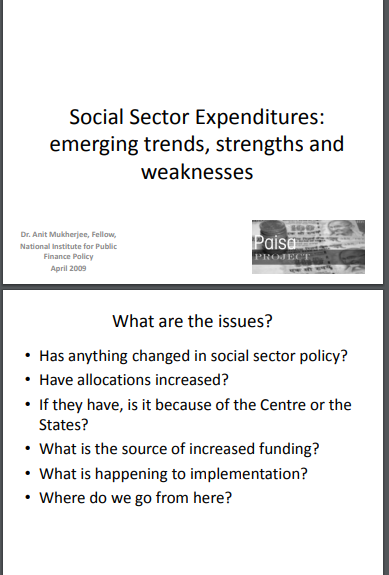
This presentation is about the changes in the social sector and whether these changes have resulted in an increase in allocation. It also addresses how allocations are implemented and the structure of transfers.