In Financial Year (FY) 2021-22, the Government of India (GoI) restructured the Integrated Child Development Services (ICDS), POSHAN (Prime Minister’s Overarching Scheme for Holistic Nourishment) Abhiyaan, and the Scheme for Adolescent Girls (SAG) into Mission Saksham Anganwadi and Poshan 2.0, also known as Poshan 2.0.
This brief uses government data to analyse:
■ Required funds, allocations, and releases;
■ Governance, including human resources;
■ Changes in coverage; and
■ Outcomes.
In Financial Year (FY) 2021-22, Government of India (GoI) restructured the Integrated Child Development Services (ICDS), POSHAN (Prime Minister’s Overarching Scheme for Holistic Nourishment) Abhiyaan, the Scheme for Adolescent Girls, and the National Creche Scheme into Saksham Anganwadi and POSHAN 2.0 to converge nutrition-related initiatives across ministries and strengthen outcomes.
Against the backdrop of the COVID-19 pandemic, this brief uses government data to analyse:
■ Required funds, allocations, and releases;
■ Changes in coverage and service delivery; and
■ Malnutrition status.
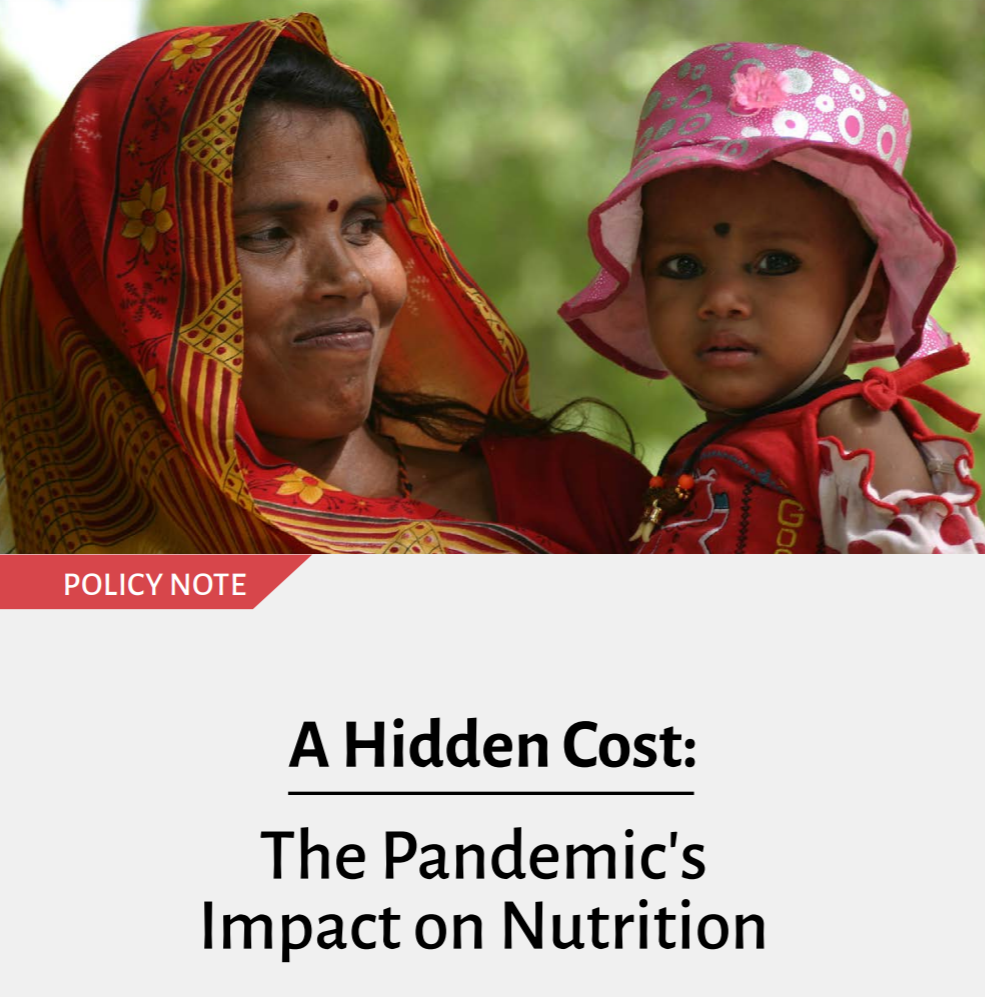
This brief provides an overview of the nutrition sector prior to the pandemic, the changes and impact due to the pandemic, and briefly discusses what can be done to get nutrition interventions back on track.
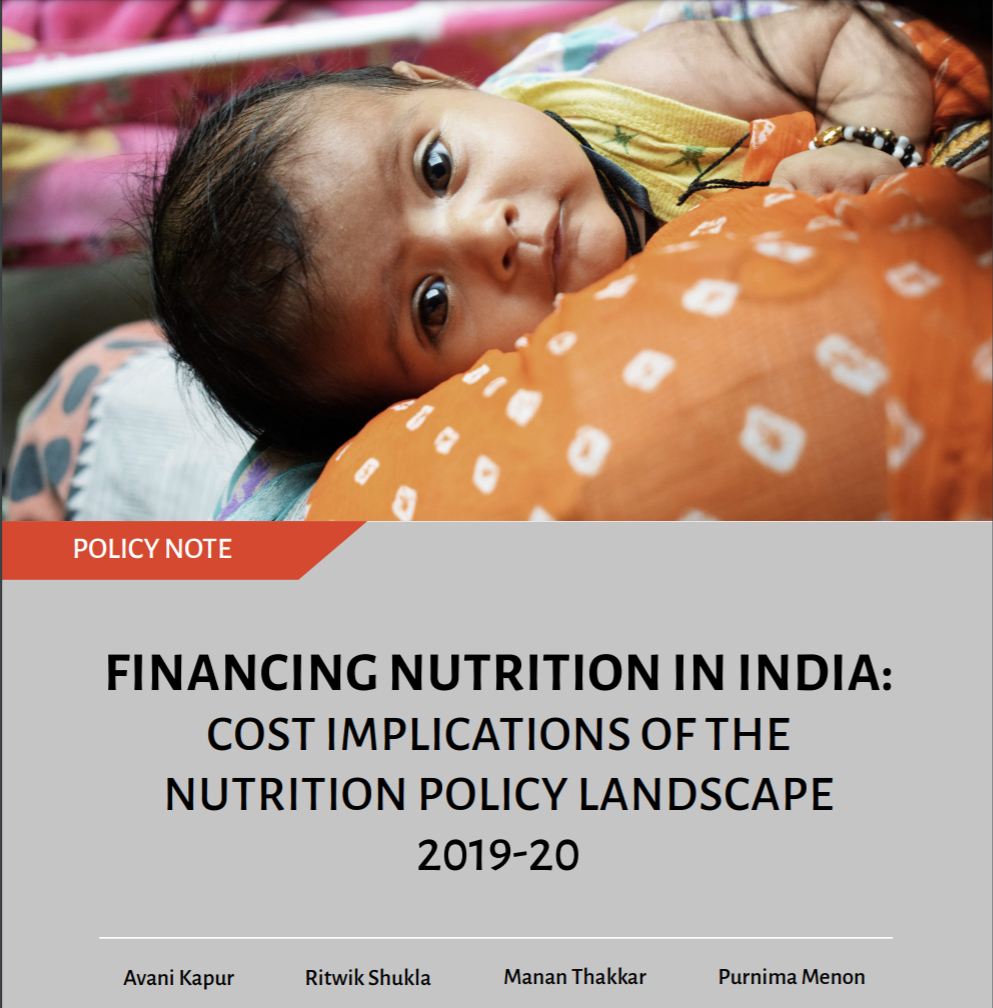
India should have spent at least ₹38,571 crore in 2019-20, across Union government ministries and State government departments to fully finance a set of core direct nutrition interventions (DNIs), at scale.
In this study, you will find information on nutrition costing. It carries forward critical studies that costed for nutrition interventions.
In recent years, we have seen positive developments in policy, funding and outcomes on child nutrition in India. Now, when the Covid-19 pandemic has placed a significant strain on our already vulnerable populations, it is time is institute a far more decentralised, agile and equitable nutrition financing architecture.
The Poshan Abhiyaan earlier known as the National Nutrition Mission is Government of India’s (GoI’s) flagship scheme that aims to holistically address the prevalence of malnutrition in India through the use of technology, convergence, behavioural change, training, and capacity building.
This brief uses government data to report on the following:
■ Trends in GoI allocations, releases and expenditures;
■ Trends in expenditure of selected individual components of Poshan Abhiyaan;
■ Trends in participation by gender and activities conducted under the Mission.
The National Health Mission (NHM) is Government of India’s (GoI’s) largest public health programme. It consists of two sub-missions:
■ National Rural Health Mission (NRHM), and
■ National Urban Health Mission (NUHM).
Using government data, this brief reports on:
■ GoI allocations and releases;
■ Incentives and penalties to states under conditionality framework;
■ NHM approvals and expenditures as per programmatic components; and
■ Outputs and outcomes.
The Integrated Child Development Services is Government of India’s (GoI’s) flagship programme aimed at providing basic education, health, and nutrition services for early childhood development.
This brief uses government data to analyse ICDS performance along the following parameters:
■ Allocations, releases, and expenditures,
■ Component-wise trends,
■ Human and physical resources,
■ Coverage, and
■ Malnutrition status.

Patralekha Chatterjee investigates how the Modi Government has performed on health in the first 100 days of its second term.
Ayushman Bharat, under the aegis of the Ministry of Health and Family Welfare (MoHFW) was launched by Government of India (GoI) on 23 September 2018. The programme consists of two initiatives:
(1) The Pradhan Mantri Jan Arogya Yojana (PMJAY), and
2) The establishment of 1.5 lakh Health and Wellness Centres (HWCs)
Using government data, this brief reports on the following indicators:
■ Trends in allocations and releases
■ Eligibility and claims under PMJAY
■ Number of operational HWCs