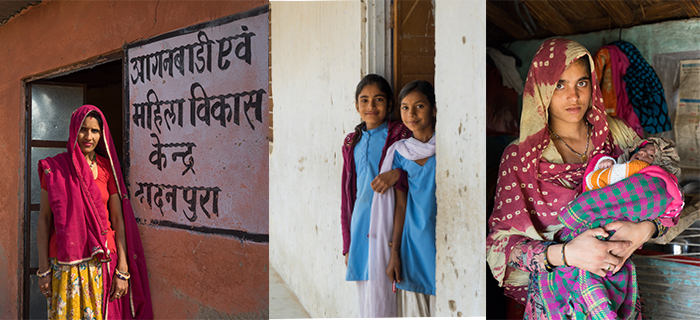
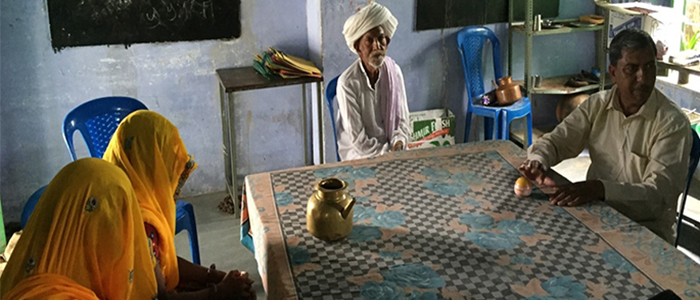
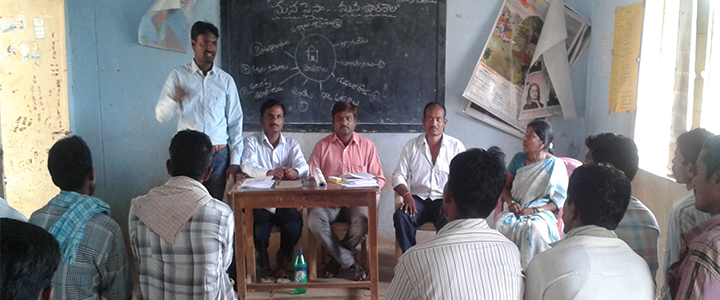
Decentralisation for Dummies

We come across the word ‘decentralisation’ in varied contexts. One place it is commonly used is in governance related literature. In spite of its extensive usage among professionals in the development sector, it is a little understood term. Plus, the literature on this subject is relatively new and continuously evolving. Therefore, we decided to explore this term and its many nuances through a blog series.

What is decentralisation?

Simply put, decentralisation is the transfer of authority and responsibility from the Central government to regional and local authorities.

The United Nations Development Programme (UNDP) has laid out the topic of decentralisation through a systems approach including levels, spheres, sectors and functions. Here they consider the community level as the focal point to determine where the goals of the citizens emerge and where it can be best supported.

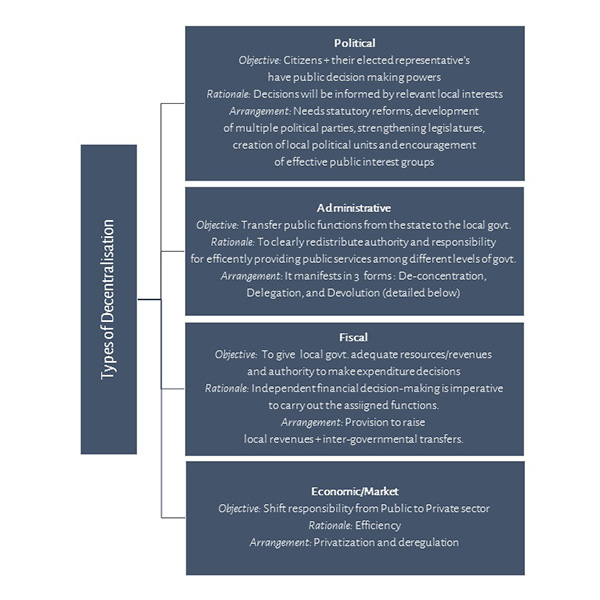
There are 4 broad types of decentralisation – political, administrative (de-concentration, delegation and devolution), fiscal and economic. While there is considerable overlap between them it is not essential that all four forms exist in a country which chooses to decentralise.

For instance, state governments in East Asian countries decentralised administratively and fiscally but not politically.

Image 2_x.jpg

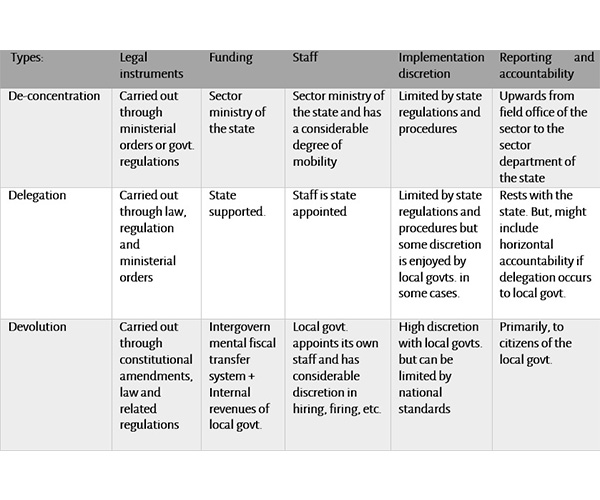
Administrative decentralisation – a critical form that actually redistributes functions and authorities from state to local governments can manifest (as mentioned above) in the following ways:

  • De-concentration: It is the transfer of decision making authority from a sectoral department at the state to its field offices. De-concentration can take place in 2 forms-
  1. The budget of the field office and its staff comes from the sector department of the state or
  2. The sector staff in the field office is entrusted with the role of representing the state and also plays an important role in the local governments.

      Example: In Myanmar, business registration is managed by the Ministry of Commerce which established outreach offices at the local level for company registration to issue documents on behalf of the ministry.

De-concentration can capture significant advantages ascribed to decentralisation like speedy decision making and responsiveness to local needs. But it does not deliver on local participation, democratic decision making and accountability.

  • Delegation: Is the transfer of decision making authority from the state to the local government a special purpose body or even to a non-public sector entity.

      Example: In Nepal, the state government can delegate certain tasks like payment of social security allowances up to the village level through the district development committees.

  • Devolution: The most comprehensive form of decentralisation, it requires political, fiscal and administrative measures. It also involves empowering locally elected political bodies which represent the citizens Vis a Vis the local administration and the state.

     Example: In Indonesia, the Big Bang decentralisation was based on devolution where the local government had complete fiscal and managerial responsibilities over service functions such as education and health care.

Image 3_x.jpg

Padmapriya Janakiraman leads Accountability Initiative’s research in the areas of Panchayat finance and decentralisation. She also works with the public finance team on budget analysis and fund flow tracking. 

Prerananandita Baisnab works in the Public Finance team with a primary focus on budgetary analysis of the Union and the States and tracking fund flows of different centrally sponsored schemes on health, sanitation and education.


A Digression into Ethical Dilemmas

Returning from an annual vacation, I was immediately informed that my blog had to resume forthwith. Apparently, the current blog series on confidential reports had generated much interest, and my adoring reading public was anxious for more. In order to exacerbate my guilt, I was told by the Grand Mufti of the Accountability Initiative website that continuity had been maintained in my absence, by recirculating earlier blogs of mine on leadership in the IAS.  There is nothing more disturbing for a blogger to be told that his blogs are being recycled. It is an open threat to future relevance. It screams out, ‘we’ve got all your best lines already, so you could leave’.

Anyway, I had had plenty of time to think of what to write in my blogs during my month of absence. Holidays are good times to introspect, and I have never been a fan of the ‘get away from it all’ variety of breaks.

Just before I left, a former colleague, Nivedita Raju, pointed out that the system of confidential appraisal had undergone some major changes since I was in the government and that one of the changes introduced was that peers and subordinates would also have an opportunity to comment on the performance of the officer being appraised.

The more I thought about it, the less I thought it would work.

I also realised that that notion of mine is terribly unfair, because I would be pre-judging the change based on my preconceived notions of how hierarchies function in the government.

But let me state out my case.

Have you seen how government officers of a certain level in the government behave when they meet each other, particularly in case they do not have the faintest idea of who the other individual is? This happens quite frequently; government officers are not a close knit tribe where everybody knows everybody else. Particularly when officers come from different backgrounds and States, the chances are more likely than not, that they do not know each other well enough to begin to slap each other’s backs.

When two officers who know not each other, meet, a process is set in motion that would put the mating rituals of Sarus cranes to shame. Through a set of polite enquiries, often so subtle that they do not raise the suspicions of the one who introduces the two, a positioning game is played.

Let me describe how it works. Let us presume that IAS officer ‘A’ meets IAS officer ‘B’ at a wedding. They are introduced to each other by a busy host, with a quick opening statement that merely reveals to the other, that they both belong to the IAS. However, that is akin to a biologist describing an airborne creature as some kind of flying thingie; it does not enable the stickler for detail to conclude whether the said airborne object is a bird, a bat, Superman, or an UFO.

IAS officers are sticklers for detail. They need to find out quickly as to whether the individual opposite them are (a) Senior or (b) Junior to them and/or whether they are (c) Direct Recruits or (d) Promotees into the service. The nub of the matter is to find out the status and seniority of the other. However, a blunt approach is considered unsporting. It is distinctly rude to ask each other ‘what is your batch?’ – referring to the year of recruitment – thereby completing fifty percent of the positioning game in a flash.

No, the approach is far more subtle. A well worked gambit is for one person – usually the person who in appearance seems more decrepit than the other, and therefore, presumably the more senior of the two – to seek from the other the whereabouts of his batch-mates.

Thus for example, if I were to meet someone who is introduced to me as an IAS officer from another State, and who seems to be in a better state of physical preservation than I am, I would casually enquire from him how my batch-mates in his state were doing. That sets in motion a smooth and nearly instantaneous process of positioning. The moment I mention names, the opposite party discovers in an instant, my batch and thereafter, he can determine whether I am senior enough to him to be treated deferentially, or considered a peer, or that, in spite of my aged looks, that I am actually – a ghastly thought – junior to him.

When positioning is all important even in the most informal of contacts between officers, how can positions not interfere with objective, all-round appraisals?

There is one other reason why I think that a peer based appraisal system might be compromised – ambition. Everybody has it. And when the room at the top is restricted, it becomes the prime influencer of any behaviour; it does not recuse itself when 360 degree appraisals are undertaken.

More of how ambition, of both the person being appraised and of the appraiser, might distort reviews of performance by peers and sub-ordinates, in my next blog.

Ambition, Ethical Dilemmas and the Bureaucracy

One of the reasons why I think that peer reviews and 360 degree appraisals won’t work, is nothing more than my cynicism. The performance appraisal system has undergone several changes over the years, all intended, at least on paper, to ensure that the most deserving reach the top. Yet, in my view, the percentage of dunderheads who still make it to stratospheric levels remain the same. Reforms have to be judged not by the effort put into them, but by what they have achieved. By that yardstick, performance appraisal reforms have not worked effectively in the past, they won’t work in the future.

However, cynicism is eventually a weak foundation on which to build up an argument. I would need to give more cogent and well-reasoned points, to bolster my view.

These were my thoughts as I wound up the road to Mussoorie last week. I was to speak to the newly recruited civil servants attending the Foundation Course at the Lal Bahadur Shastri National Academy of Administration, on the somewhat freewheeling subject of ethics, and anti-corruption. Two hours of lectures to a classroom of two hundred listeners and then, a repeat performance before the next batch of officers.

I always feel upbeat about visits to the National Academy. LBSNAA (pronounced as Labaasana by many; I hate that; it conjures up visions of a particularly unaesthetic Yogic pose) is run out of the former Charleville Hotel, a picturesque Victorian pile perched up in the hills, now considerably redesigned and modified to suit the needs of the current century. What is cheerful to note is the busy air it always conveys, of young recruits into the government, eager to learn and to question. The Common Foundation Course is where all officers, regardless of the service to which they are recruited – the police, the revenue service, the foreign service or the administrative service – meet, mingle and are oriented into the ways of functioning of the government.

Whenever the Academy invites me, it has become routine for me to protest that I cannot be expected to cover vast subjects such as anti-corruption, ethics and democratic decentralisation, in lecture sessions spanning a couple of hours. The Academy ignores my protests, and I meekly submit to their discipline, because I would not forsake an opportunity to interact with the Officer Trainees as they are so termed, at any cost.

The first thing to remember when walking into a lecture hall to speak about ethics, is that you cannot teach ethics. Once that insight is gained, things become a lot easier. So, I went about it my way, as I usually do, by asking questions to which there were no definite answers. I ended by reassuring the class that the answers to these questions often change over a lifetime.

What I attempted to convey was that while in every society there might be certain people who are absolute angels or incorrigible devils, the bulk of us are driven by a desire to comply with the predominant ethos of the society in which we live. This society develops its own standards, often illogical, of what is considered ethical behaviour, and builds a basket of incentives, that drive our behaviour in that direction.

image 1.jpg

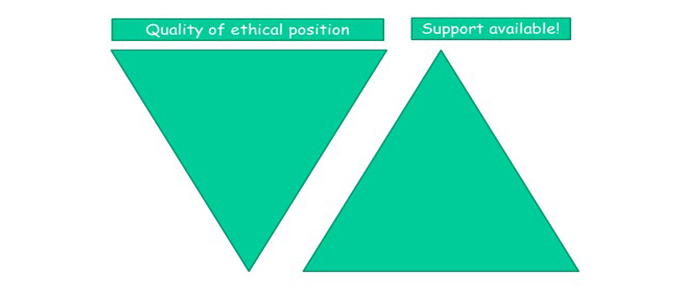
The trouble arises, I explained, when the incentive structures within a society militate against ethical behaviour. This in turn creates an ethical dilemma in peoples’ minds, because engaging in   ethical behavior means going against the grain. On the other hand, one is also faced with the seductive argument urged by the Mr. Hyde lurking in each one of us, that if everybody else is doing something wrong and profiting by it, why not we buckle too, and reap the benefits? I finally explained – and this was my cynicism showing here – that as one climbs up the ethical ladder, the support system on which one can rely becomes considerably weak.

image 2_0.jpg

It is in this environment, that one goes about clarifying to oneself what one’s ethical position is, and then, striving to reach that position.

How do organisations strive to create an ethical culture; one that constantly drives incentives to its people to remain ethical, regardless of the temptations of the opposite path? More of that in my next blog.

How Swachh is Bharat two years on?

The most visible programme remains invisible on the ground, Accountability Initiative finds

October 2 marked the second anniversary of the Swachh Bharat Mission (SBM), the Government of India’s (GoI) flagship programme to achieve the goal of total sanitation by 2019. We bring to you findings from a recent study by Accountability Initiative (AI) at CPR, which analyses what has been achieved over the past two years. AI conducted a household survey of 7500 rural households in 10 districts spread across five states (Bihar, Himachal Pradesh, Madhya Pradesh, Maharashtra and Rajasthan) in December 2015. In the conversation below with Yamini Aiyar, Avani Kapur and Vikram Srinivas, we unpack the reality on the ground.

Where are we after two years of the Swachh Bharat Mission in rural India?

Yamini: Let me start by laying out what we have achieved. I think one of the most important things that we achieved on 2 October 2014 with the photo-ops of the Prime Minister and other senior government officials sweeping the streets of Delhi, and the announcement of making India open defecation free by 2019, is that for the first time the political establishment staked their political capital on achieving sanitation. For those of us who have been following sanitation policy for a while, this was a very significant change from the past when sanitation was largely ignored. This change is also very visible on the ground. In every single district that the AI team works in or has travelled to over the past two years, the entire administration is talking about the need to implement the Swachh Bharat Mission. The political pressure at the top has made sanitation a key implementation priority in the districts.

Another important change is a shift in rhetoric about the intended target and goal of the programme. One of the biggest limitations of sanitation policy, now widely acknowledged, is the belief that toilet construction alone will lead to achieving sanitation. Rather, sanitation is about behaviour change that can lead to creating an open defecation free environment.

Lastly, there is  some movement towards measurement–the GoI’s Drinking Water and Sanitation Department has recently made public data from the NSSO (National Sample Survey Organisation) survey  on sanitation, including an attempt to rank  districts on the basis of open defecation free declarations. There are many flaws in these measurement efforts. However, the fact that an effort is being made to pursue third party measurement is an important first step.

Thanks for sharing the achievements. Given this shift in policy environment, do we actually see a change on the ground?

Yamini: To understand this, AI conducted a sample survey of 7500 households in 10 districts spread across five states to study the process of implementation of the SBM. The original idea of the survey was to draw on households that have reported to have constructed toilets as claimed in the data made available by the Swachh Bharat Mission Portal on its Management Information System (MIS). However,  owing to a number of limitations in the current data base a full-fledged audit was not possible. Hence our survey studied the SBM in two ways. 1500 of our sample comprised households whose names featured in the MIS and the remaining were randomly selected.

So what are the data gaps?

Avani: As Yamini mentioned, we had hoped to track villages, households and habitations through the MIS data, but unfortunately, the quality of the data did not allow us to do so. For instance, census codes were not provided making it difficult for us to match village names, habitation names were often misclassified, and in many instances, we were unable to find households mentioned in the list. A closer look at the lists also pointed to a number of duplicate entries (of names and even Aadhaar numbers!).

So can you share findings were from the survey of households, which featured in the MIS lists?

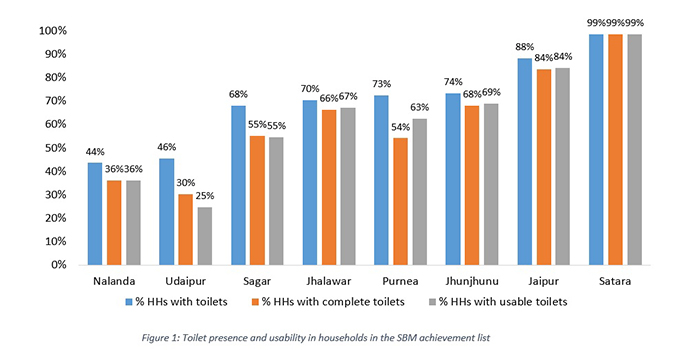
Avani: To begin with we found that featuring in the governments’ MIS is no guarantee that the household actually has a toilet. We found about 29% of the households, which according to the MIS data had toilets, in fact did not have toilets. There were district variations. For instance, Nalanda and Udaipur had the largest gaps between the toilets reported and the actual presence of these as compared to other districts like Satara, where this was not the case.

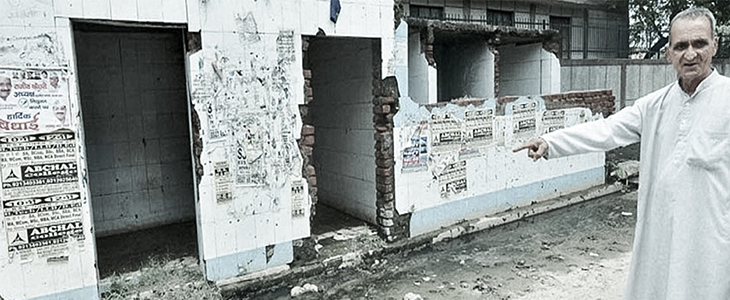
Second, having a toilet does not mean that it is usable. We found that 36% of households themselves reported that the toilets in their homes were unusable (for reasons such as broken pits, unsanitary conditions etc.); of these, the usability numbers were also lowest in Udaipur and Nalanda.

image 1_0.jpg

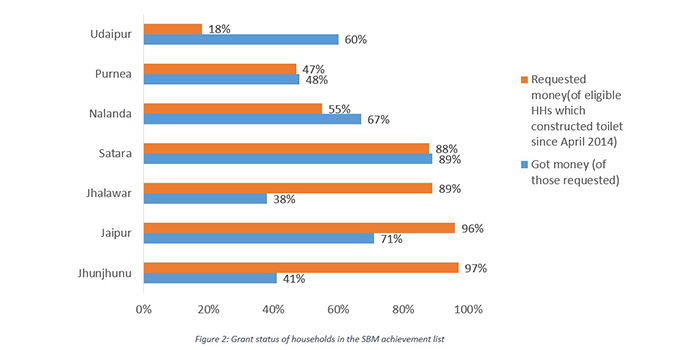
Vikram: According to the SBM guidelines, every eligible household that constructs a toilet, and subsequently applies for an incentive grant is entitled to receive Rs. 12000 from the government. We found that even if a household featured on the MIS list, which means they ought to have received money from the government, as many as 40%  households whose names featured in the MIS did not receive  money from the government. There are district variations again. For instance, in Jhalawar 40% did not receive the money, while in Satara 90% did.

image 2_1.jpg

What about the rest of your sample? What can you say broadly about the implementation of SBM?

Yamini: In order for the government to achieve its goal of an open defecation free India by 2019, it set for itself a target of constructing 11 crore toilets. To achieve this, the government has to focus on two critical components: i) the first raising awareness and fostering behavior change; ii) facilitating/ supporting toilet construction.  We assessed the implementation of the SBM from both these aspects.

Our most startling finding is that despite the policy rhetoric, the ceiling of expenditure on awareness raising had dropped from 15% under the previous Nirmal Bharat Abhiyan to 8% under Swachh Bharat Mission. A closer look at the expenditure data also showed that this money was largely unspent across most states. Expenditure on Information Education and Communication (IEC)–government parlance for awareness programs–decreased from 8% of total expenditure in 2013-14 to 1% in 2015-16.

This lack of focus on awareness raising is very visible on the ground. For instance: an important innovation introduced under the SBM was the creation of a cadre of volunteers known as Swachhta Doots responsible for spreading door to door awareness; yet only 6% of the households surveyed were aware of these Swachhta Doots. Further, only 10% reported having any knowledge of the Panchayat Swachhta Samiti–this being the case even though Panchayats have been conceptualised to play a crucial role in ensuring local buy-in. Similarly, only 10% reported that awareness programmes on sanitation were conducted in their villages, while a mere 3% of the households reported being visited by a government official to explain the benefits of the programme.

All of this may seem counter intuitive, as anyone who has travelled around India would have noticed that nearly every village wall has a painted symbol or slogan of the Swachh Bharat Mission, and there is a buzz amongst officials across all districts we visited. Yet are our survey shows, this buzz is still to translate into action on ground.

One important issue that we noticed during our field work is that districts are following standardised templates provided by the central government on how to build awareness. There is very little focus on building more local and direct engagement with the people involving actors like Swachhta Doots. It is equally important to create a concerted focus on the public health consequences of sanitation and hence the need for toilets. That is an important missing link–both administratively in terms of coordination between health and sanitation departments, as well as in terms of the messaging. The point needs to be driven home that the ultimate benefit of an open defecation free environment is ensuring quality public health outcomes.

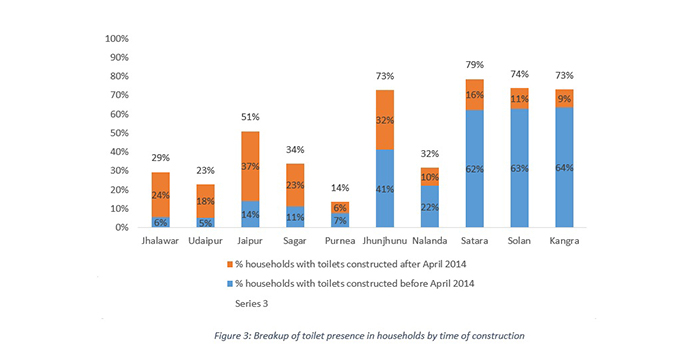
Avani: The second critical component, as mentioned by Yamini, is the construction of toilets. Even today, two years into the programme, the lack of overall coverage of toilets and the continued presence of open defecation is a serious issue. Our survey found that only 37% of households had toilets in Jhalawar, 27% in Udaipur, and 58% in Jaipur in Rajasthan. Similarly, coverage was 23% and 33% in the districts of Nalanda and Purnia in Bihar respectively, and 40% in Sagar in Madhya Pradesh.

Yet, the picture is not all bleak. The pace of construction has undoubtedly accelerated in the last two years (since April 2014) with specific targeting of those districts, which had low toilet coverage according to Census 2011. For instance, in a district like Jhalawar, which only had 7% coverage in Census 2011, 81% of the toilets today have been built in the past two years.

image 3_0.jpg

However, there is an interesting observation here. Most people built toilets without government assistance: only one-fourth of the households that constructed toilets in the past two years received government grants. Further, the average cost of construction in most districts (except Sagar and Nalanda) was between Rs. 20,000–40,000, while the government grant is for only Rs. 12000. 

Thanks for highlighting the issues with awareness raising and toilet coverage. But what about usage? This has often been mentioned as a critical lacuna in sanitation drives.

Vikram: It is encouraging to observe that with the exception of three of the districts we surveyed, most people who had toilets did use them. However, in the districts of Udaipur, Nalanda and Sagar, usage continues to be a problem despite the presence of toilets. For instance, 26% of households in Udaipur, 17% in Sagar, and 13% in Nalanda reported that at least one member of the household defecated in the open despite having a fully constructed toilet.

Yamini: An important thing that the usage data highlights is how difficult it is to actually track usage! We spoke to a number of sanitation experts before designing the usage question since the way you ask, how you ask, whom you ask, and how often you ask can all have consequences on the responses you may get. According to many experts, and even in our own experience, the best way to track and understand usage is through a deeper, qualitative case-study based approach. This may necessitate a different approach to monitoring.  Usage may not be trackable through large scale surveys. Rather the government will need to build networks with anthropologists, sociologists, political scientists and others familiar with qualitative surveys to track usage effectively.

Based on your findings and understanding of the situation on the ground, what is the way forward to realise a Swachh Bharat?

Avani: Let us summarise what we recommend based on our survey findings:

  • Data quality: There need to be independent checks and verification of the MIS data. Audits both by government machinery as well as third party evaluations are key.
  • Awareness: it needs to be reiterated that it is important to establish the link between the need for an open defecation free environment and the resultant public health benefits at all levels, which is likely to generate greater uptake. The method employed needs to be direct, targeted, one-to-one communication, especially through generating local champions and building a movement. On the contrary, currently, one of the best practices put out by the government is the use of punitive measures, including vigilante groups and naming and shaming tactics, which is problematic.
  • Improved monitoring: For every single aspect of the programme, whether it is awareness raising or verification of toilet construction, the government is meant to and must monitor. However, we found that monitoring is very low at present, which also feeds into the poor quality of MIS data, making tracking progress difficult.

To read the Swachh Bharat Mission (Gramin) Budget Brief click here.

To access the data used for the study, click here.

Human resources for health: “wicked” problems or misunderstood?

India, like many other countries, struggles with governance of its human resources for health. It is common knowledge that there are too few qualified health workers, that they are too unequally distributed to serve population health goals, and that the quality of services they provide is troublingly inconsistent.  Inter-governmental bodies and national governments periodically rediscover these “wicked” problems and frequently advance previously attempted solutions – which often face failure, in repeating historical cycles of policy amnesia.

With examples from the speaker’s research and experience of policy reforms of 15 years, this talk will outline the inadequacies of prevailing, largely instrumental approaches to governance of human resources for health, such as retention, substitution and assimilation. The talk will illustrate how deeper socio-political phenomena such as professional dominance, pluralism, parallel systems and regulatory capture have shaped the character and dynamics of the health workforce, rendering it resistant to common policy solutions.  The talk will conclude with instances of encouraging policy processes and political responses to health workforce problems, followed by a general discussion.

Kabir SheikhMBBS MPH PhD is the director of the Health Governance Hub at the Public Health Foundation of India, an Honorary Senior Lecturer at the London School of Hygiene and Tropical Medicine, Honorary Fellow at the University of Melbourne, and Visiting Professor at BRAC University Dhaka. He is a health systems researcher and policy analyst with broad interests in strengthening public sector and community institutions in low and middle-income countries. He is the founder and national scientific convenor of the Ministry of Health and Family Welfare’s national knowledge platform (NKP) for health systems research, and in 2011 he co-authored the Government of India’s High Level Expert Group recommendations on universal health coverage. He is an editor of Health Policy and Planning (OUP), and in 2010 he edited the anthology Health Providers in India: On the Frontlines of Change (Routledge). He is the Vice Chair of Health Systems Global, the first international membership organization dedicated to promoting health systems research.

Budget Briefs 2016: State of Social Sector Expenditure

Every year Accountability Initiative (AI) delivers a budget brief series analysing government allocations and expenditure in key social sector schemes.

This year, AI realigned its budget work to study state rather than union budgets in response to the Fourteenth Finance Commissions (FFC) recommendations to increase the fiscal autonomy of states. Through a study of 19 state budgets, AI analysed how this move toward fiscal devolution impacted the future of social sector investments.

In the video (above) Yamini Aiyar, Director of AI, explains what these briefs are and how they will be used to deepen the public debate, going forward. 

The full report, State of Social Sector Expenditure in 2015-2016 can be accessed here.

The research this year analysed union budgets in four schemes combining these with field surveys.

Budget briefs on government schemes can be accessed here: Sarva Shiksha Abhiyan, Integrated Child Development Services, Swachh Bharat Mission (Gramin) and National Health Mission.

Six out of the 19 states studied in the State of Social Sector Expenditure in 2015-2016 were studied in detail.

These six state briefs can be accessed here: Bihar, Chattisgarh, Rajasthan, Karnataka, Tamil Nadu and Maharashtra.

Tweetathon on Fiscal Devolution Research

Accountability Initiative’s tweetathon on fiscal devolution research

Accountability Initiative conducted a tweetathon between 26 August and 2nd September to disseminate key findings from our study on the State of Social Sector Expenditure 2015-16. This study assessed the recent changes in fiscal transfers from the Union to the states in FY 2015 – 16 with the acceptance of the 14th Finance Commission (FFC) recommendations by the Government of India in February 2015.

The tweets look at how this proposed fiscal devolution impacted social sector investments and public service delivery in the states, specifically for education, health and sanitation. The study carried a preliminary evaluation of 19 state budgets and an in-depth analysis of 6 states, namely Maharashtra, Chhattisgarh, Rajasthan, Bihar, Karnataka and Tamil Nadu.

The tweetathon took off with a series of posts that summarise findings from the preliminary examination of 19 states, subsequently sharing details from the 6 focus states, and how these were impacted with respect to: i) changes in the overall share of union transfers, ii) changes in the composition of funding (tied and untied), iii) changes in investment patterns for social sectors, as well as explore fund transfer in key schemes in education and health.

To continue our dissemination, we have storified our tweetathon in the following links:

Click here State of Social Sector Spending in India 2015 – 16 

Click here Understanding Fiscal Devolution in States 

Click here Conclusions and Way Forward for Social Sector Spending 2015 – 16 

Follow @AccInitiative and @CPR_India handles with the hashtag #PAISA2016 for more tweets on fiscal devolution and public service delivery in India.

To learn more about fiscal devolution proposed by the FFC, read an earlier interview with AI researchers here.

Accountability Initiative Public Finance Blog Series

Accountability Initiative (AI) released a series of blogs to demonstrate our recent research on fiscal devolution and social sector spending in India. The research specifically investigates the implications of the 14th Finance Commission’s (FFC) recommendations on funding central schemes for development programmes in education, health and sanitation in India. It does this through a preliminary evaluation of 19 state budgets and an in-depth analysis of six states and four centrally sponsored schemes.

The blog series takes forward questions from the research to investigate the degrees to which social sector spending has been altered in the country.

Winners and Losers: How the 14th Finance Commission Recommendations Impacted State Revenues

The first blog highlights areas in which states have gained from the recent devolution trends, as well as provide a complete picture on what has been lost in the process. It assess research from the 19-state analysis on social sector expenditure in 2015-16 to highlight the repercussion of devolution on state revenues.

Read full blog Click here

What Has Changed for Centrally Sponsored Schemes (CSSs) in 2015 – 16?

The second blog examines the changes (or lack of) in CSSs, India’s primary vehicle to funding social welfare schemes. This blog draws how this new state autonomy will influence the structure, and hence function of CSSs in India.

Read full blog Click here

The 14th Finance Commission and Social Sector Spending

The primary objective of the FFC was to deliver greater fiscal autonomy to states to meet expenditure needs quicker and make informed expenditure decisions based on their state-specific needs. From the previous blogs we see that the FFC has succeeded in meeting this objective through measures of greater devolution to states, but how are they using this to their advantage? This blog explores this question by breaking down data collected from our research.

Read full blog Click here

The 14th Finance Commission and the Way Forward in States

Blog four in our series goes one step ahead by suggesting effective steps to take this research forward. Here our researchers show their interest in continuing to track the fiscal relationship between the Union and state governments to ensure social sector investments translate into efficient public service delivery to citizens.

Read full blog Click here

The Future of Centrally Sponsored Schemes in the New Era of Devolution

In the final blog, Yamini Aiyar, Director of AI, offers new thinking on centre-state dynamics a result of the FFC recommendations. With this, she suggests possible models that could mitigate the prevalent challenges in funding CSSs.

Read full blog Click here

To read our 19-state analysis of the impact of FFC recommendations on state budgets, click here

The scheme-wise (CSSs) analysis can be accessed through the following links: Sarva Shiksha AbhiyanIntegrated Child Development ServicesSwachh Bharat MissionNational Health Mission 

An in-depth analysis of 6 states on FFC implication on state budgets, available here: MaharashtraRajasthanBiharChhattisgarhKarnatakaTamil Nadu

Find us on twitter @AccInitiative to follow the story in real time #PAISA2016

Local Interpretations of Implementation and Governance that Work

Intent begins to take a beating when vision is cautiously tamed to become acceptable policy. At the end of its journey through pristine development planning checkboxes, born 30,000 feet above contextual reality, intent can be elusive in the programme design. Sadly, this is not news. It falls within tolerance afforded ever incremental improvements in the politicised agenda of development. Sadder still, is that this off-the-mark design is drilled down as a list of disjointed to-dos through the unshakeable, officious cascade onto the long-suffering frontline bureaucrat’s desk.

At this stage, the only task more tedious than implementing hand-me-down programmes, is to fulfil the demand that it be monitored. But monitored it is. The most visible, and therefore the least telling and easiest to stage, is crammed into sheaves of forms. The resulting busywork lulls all concerned into thinking they are working hard to contribute to the good of the people – the only party left out of any critical decision making in the process. 

Accountability Initiative (AI) works in Rajasthan. We support the frontline bureaucracy to accept and nurture the participation of the School Management Committee (SMC) as a collaborator to deliver quality learning outcomes through informed participation in fiscal governance at the school level. The policy and the law, the state rules and the administrative structure being what it is, AI walks the distance in the headmasters’ shoes as s/he manages the circumstances of his assignment. In over a year of doing so, and despite the small sample, there is evidence that program design can be highly effective when led by the people most affected by the problem and outcomes of an intervention. Our suggestions to the Government are built around solutions that are created by their own foot soldiers to improve program design, its governance and accountability, and therefore, outcomes as envisioned in policy.

For example, the compulsory membership of women in the configuration of a School Management Executive Committee (SMEC) is intended to ensure that they, along with a representation of every social group that comprises the parent community, co-govern public education. We found, that none of the 42 women in the 6 SMECs we follow, had stood for elections, none knew about their role as an SMEC member, none attended meetings regularly, and, none spoke in the presence of the men of the SMEC (their discomfort compounded by the fact that the male members are senior relatives).

These designated placeholders for power, are not representative of the community, and include the anganwadi worker (a Government employee); and, daughters-in-law of the most influential (the Sarpanch, or the richest businessman in the locality, or the most senior member of the highest class in the community). We even met an officious middle-aged man who respectfully addressed himself as Sarpanch-pati (the officiating Sarpanch by virtue of being the Sarpanch’s husband). The rule that guardians are allowed to be members has been warped to mean grandparents, such that the male members are mostly powerful senior citizens. The school is the low-hanging stage for local politics. No policy, program or administration protects or prepares a hapless headmaster from the powers that be.

However, when program design was adapted to the context it proved effective. AI’s effort over half a year to craft spaces where women could participate in a solution that worked for them, was rewarded with candour. The women’s meeting is facilitated separately by a female teacher. Children of the higher classes are often included in the women’s group. We have observed they support each other’s learning.

9-sept-16_3_0.jpg

Headmasters share the women’s point of view with the men and joint decisions are taken, that are documented in the minutes. The recommendation to the Government being that the teacher elected to the SMEC of a different gender than the head of school, be trained to facilitate SMEC meetings and, that schools are provided with a list of small-group activities that are relevant to women and include children, which can guide their SMEC meetings.

Similarly, SMEC meetings, ordered every month, it is assumed, need to start and end with all members present. In a forum for accountability that is meant to nurture diversity, this is rarely possible. The only people with enough control over their resources to predict and plan the use of their time are inevitably the most powerful, few and not representative of the parent body.

Motivated headmasters work around the problem. Conversations begin at the homes of the poorest as the headmaster goes to the homes and work places of the SMEC members to call them for meetings. They continue through the day, of the day of the meeting, with women members as and when they have the chance to come by the school for a few hours. Our recommendation to the Government being to identify fiscal issues that need to be raised in SMEC meetings, document and cross verify data and opinion on planning and implementation using simple forms that are then submitted to and used by the system. The simplified forms and, the means to train the headmasters and the SMEC members have been submitted too. AI is now working on suggesting a more actionable process for the information to be included in district planning.

Like all our development colleagues at the grassroots, AI finds hope in the character of individuals, and the space fueled by sincerity and goodwill. Its naiveté in the field is tempered with clear-eyed academic analysis of observed evidence, and followed up with ongoing dialogue with an attentive, if resigned State Government in Rajasthan.

Pritha Ghosh is Programme Lead: Strategy and Implementation, at Accountability Initiative. Her role is to develop a strategic implementation vision and plan for Accountability Initiative’s work at the state and district level with a view to ensure that Accountability Initiative’s research translates in to a reform agenda on the ground.

भाग 1: शैक्षिक सुधार और स्थानीय प्रशासन : बिहार में एक अध्ययन

भारत की स्थानीय नौकरशाही भ्रष्टाचार और भाई-भतीजावाद, नागरिकों की उपेक्षा, कोशिशों की कमी और अत्यधिक गैरहाजिरी के लिए बदनाम है। यह ब्लॉग बिहार के स्थानीय शिक्षा प्रशासन के बारे में एक वर्ष तक किए गए गुणात्मक अध्ययन के निष्कर्षों पर आधारित है। इसमें शिक्षा क्षेत्र के पदानुक्रम में अपनी भूमिका के बारे में स्थानीय सरकारी कर्मचारियों के दृष्टिकोण और उनके रोज़मर्रा के व्यवहार पर संगठनात्मक ढांचे और कार्यसंस्कृति के प्रभाव का अध्ययन किया गया है।

ब्लॉग दो हिस्सों में है-यह पहला भाग है

भारत में स्थानीय प्रशासक होने का क्या अर्थ है? पिछले दो दशकों में भारत की स्थानीय नौकरशाही पर हुए अध्ययनों के मुताबिक देश में स्थानीय नौकरशाही की पहचान है-अत्यधिक गैरहाजिरी, प्रयासों की कमी, नागरिकों के प्रति उपेक्षा का भाव और भ्रष्टाचार तथा भाई-भतीजावाद(Beteille,2009, Chaudhary et al. 2006. Das et al.2008,Murlidharan et al. 2014, Wade 1985) इसलिए  प्रिचे और वूलकॉक (2004) का विचारोत्तेजक विश्लेषण है कि भारत में (और कई अन्य विकासशील देशों में भी) स्थानीय नौकरशाही “अंतत: सरकार जैसी नज़र आती है” जो बनी तो है औपचारिक, सुव्यवस्थित नियमों के आधार पर काम करने और पदानुक्रम तथा तय ढांचे का पालन करने के लिए, लेकिन व्यवहार में संरक्षणवाद और घूसख़ोरी के सिद्धांतो से संचालित होती है।

लेकिन इन सभी अध्ययनों में एक संगठन के रूप में स्थानीय नौकरशाही के स्वरूप – इसके संस्थागत ढांचे, आंतरिक कार्यसंस्कृति और निर्णय प्रक्रियाओं- तथा रोज़मर्रा के कामकाज और कार्य-निष्पादन के दौरान स्थानीय कर्मचारियों के दृष्टिकोण, और व्यवहार पर इसके प्रभाव का कोई खास विश्लेषण नहीं किया गया है। दूसरे शब्दों में इस बारे में बहुत कम जानकारी है कि स्थानीय कर्मचारी प्रशासक के रूप में अपनेआप को कैसे देखते हैं और इस आत्मछवि से उनके कामकाज पर क्या प्रभाव पड़ता है।

इस कॉलम में, हमने बिहार में शिक्षा विभाग की स्थानीय नौकरशाही पर किए अपने एक वर्षीय गुणात्मक शोध अध्ययन (जुलाई, 2014-अगस्त, 2015)  के निष्कर्षों की रिपोर्ट प्रस्तुत की है। हमने शिक्षा प्रशासन के स्थानीय अधिकारियों (ब्लॉक शिक्षा अधिकारियों, क्लस्टर रिसोर्स सेंटर समन्वयकों और प्रधानाध्यापको) के 100 से ज़्यादा गहन साक्षात्कार किए और पाँच महीनों तक चार क्लस्टर रिसोर्स सेंटर समन्वयकों के साथ समय के उपयोग संबंधी विस्तृत अध्ययन[i] किया। हमने अपने अध्ययन में यह समझने की कोशिश की है कि स्थानीय सरकारी अधिकारी अपनी भूमिका और जिम्मेदारियों, उच्चाधिकारियों के साथ अपने सम्बन्धों, सरकारी स्कूलों के कामकाज और सरकारी स्कूलों के कामकाज में सुधार के लिए सरकार द्वारा किए जाने वाले विभिन्न उपायों के असर के बारे में क्या सोचते हैं और संगठनात्मक ढांचे और कार्य-संस्कृति से उनका रोज़मर्रा का व्यवहार कैसे तय होता है।

दो हिस्सों के इस ब्लॉग के पहले भाग में हमने साक्षात्कारों और समयोपयोग संबंधी अध्ययनों के आधार पर स्थानीय प्रशासन के परिवेश के बारे में अपने निष्कर्ष और उनकी व्याख्या प्रस्तुत की है। अगले भाग में, सुधार के प्रयासों के प्रति स्थानीय प्रशासन की प्रतिक्रिया और सुधारों के संस्थानीकरण तथा परिमाण पर इस परिवेश के असर से जुड़े निष्कर्ष प्रस्तुत करेंगे।

‘संदेशवाहक’ प्रशासन

हमारे शोध का पहला चरण यह समझना था कि स्थानीय अधिकारी शिक्षा क्षेत्र के पदानुक्रम में खुद को कहाँ देखते है? जब हमने साक्षात्कार देने वालों से पूछा कि शिक्षा प्रशासन में उनकी क्या भूमिका है तो ज़्यादातर ने खुद को एक ऐसी बड़ी मशीन का शक्तिहीन पुर्जा बताया, जिस पर उनका कोई नियंत्रण नहीं है। साक्षात्कार देने वालों में से ज्यादातर ने खुद को ‘डाकिया’ या ‘रिपोर्टिंग मशीन’ बताया जिसे निर्णय लेने के बहुत कम अधिकार हैं। इसे निर्णय प्रक्रिया में अपनी भूमिका के बारे में उनकी समझ से बहुत अच्छी तरह समझा जा सकता है।

“अपेक्षा ? वह क्या होती है? ….. यह ब्लॉक रिसोर्स सेंटर है: यहाँ जिला स्तर के आदेश ही चलते हैं’।

“….. मैं क्या सलाह दे सकता हूं? मैं सरकारी नौकरी करता हूँ। मेरी पहली ज़िम्मेदारी है सरकारी आदेशों का सही तरीके से पालन, उसके बाद ही मैं अपनी कोई योजना बना सकता हूँ”।

“…… आखिरकार, सरकार जो चाहेगी, वही होगा”।

अय्यर और भट्टाचार्य (2015) के एक शोध पत्र के मुताबिक, खुद को महज “डाकखाना” मानने की यह प्रवृत्ति शिक्षा प्रशासन के सांगठनिक ढांचे में मौजूद है जिसकी खासियत है ऊपर से नीचे की नियम आधारित पदानुक्रम वाली नौकरशाही, जिसमें स्थानीय अधिकारियों के पास बहुत कम अधिकार होते हैं।[ii] और काम करवाने के अधिकार के अभाव में, अधिकारियों ने अधिकारहीनता का तर्क विकसित कर लिया है। अय्यर और भट्टाचार्य अपनी बात समझाने के लिए एक उत्तरदाता (BEO) का हवाला दिया, जिसका कहना था,

“प्रधानाध्यापक यहाँ आते हैं और मेरे पास इस बात का कोई जवाब नहीं होता कि उसके अनुरोध या समस्या का क्या हुआ। मैं उन्हें जिला कार्यालय भेज देता हूँ …..मेरे पास कुछ करने का कोई अधिकार ही  नहीं है”

पदानुक्रम और उसके फलस्वरूप निर्णय प्रक्रिया के केन्द्रीकरण की संस्कृति को राजनीतिविज्ञानी अक्षय मंगला (2014)  “नियम-कानूनवादी संस्कृति” कहते है यानि ऐसी कार्यसंस्कृति जहां स्थानीय जरूरतों और प्राथमिकताओं की कीमत पर नियमों, पदानुक्रम और प्रक्रियाओं का कड़ाई से पालन किया जाता है।

“नियम-कानूनवादी तंत्र” में कर्मचारियों के लिए कार्य निष्पादन का अर्थ नागरिकों की जरूरतों का समाधान करना नहीं बल्कि केवल ऊपर से मिले आदेशों का पालन करना भर होता है। और इन आदेशों का पालन करते हुए स्थानीय अधिकारियों ने मान लिया है कि शिक्षा प्रशासन में उनकी भूमिका नियमों का पालन और सूचना एकत्र करने की है न कि स्कूल की जरूरतों को पूरा करने के लिए मुस्तैदी  दिखाने की – और इस प्रकार वे अपने महज डाकिया होने के तर्क को वैधता प्रदान कर देते हैं । जैसा कि हमारे अध्ययन (साक्षात्कारों) से स्पष्ट है, बिहार इस नियम-कानूनवादी प्रशासनिक संस्कृति का बहुत अच्छा उदाहरण है।

बिहार के स्थानीय शिक्षा अधिकारी का आम कार्यदिवस

खुद को महज नियम पालन और आंकड़े इकठ्ठा करने वाला मानने की यह प्रवृत्ति कुछ प्रशासनिक कार्यों, जैसे बुनियादी ढांचे के निर्माण या छात्रववृत्ति और पेंशन का वितरण करवाने के लिए तो ठीक है। क्योंकि  यहाँ प्रशासनिक चुनौती ही यह है कि आदेशों का समुचित पालन हो। लेकिन शिक्षा का मुद्दा कहीं अधिक जटिल है। इसकी परिकल्पना में ही स्थानीय शिक्षा अधिकारियों से महज आदेशों को आगे पहुँचने के अलावा भी कुछ योगदान देने की अपेक्षा की गयी है। उनसे उम्मीद की जाती है कि वे विद्यार्थियों को शिक्षित करने में सक्रिय भूमिका निभाएँ। ऐसे में, उनके महज “डाकिया” होने से स्कूलों की जरूरतों को समझने और विद्यार्थियों को शिक्षित करने की प्रक्रिया में कोई मदद मिलने के बजाय नुकसान ही होता है। क्लस्टर रिसोर्स सेंटर समन्वयक का उदाहरण लेते हैं।

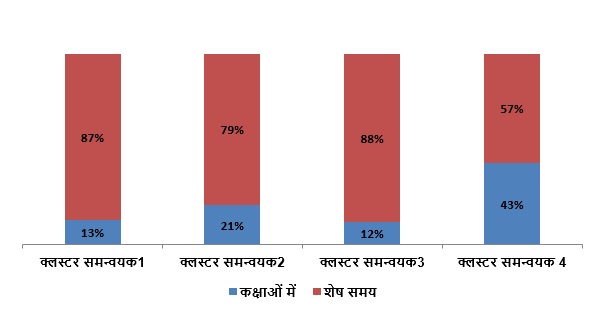
1990 के दशक के अंतिम वर्षों में, विशेष रूप से स्कूलों और अध्यापकों को नियमित और निरंतर सहयोग प्रदान करने के लिए शिक्षा प्रशासन में क्लस्टर रिसोर्स सेंटर समन्वयक के पद का सृजन किया गया था।[iii] इस भूमिका के समुचित निर्वाह के लिए ज़रूरी है कि क्लस्टर रिसोर्स सेंटर समन्वयक स्कूलों में पर्याप्त समय बिताएँ और कक्षाओं के तौर-तरीकों को समझें, विद्यार्थियों के शैक्षिक स्तर को पहचानें  तथा अध्यापकों के साथ संवाद करें। लेकिन हमारे समयोपयोग संबंधी सर्वेक्षणों के मुताबिक स्कूलों के अपने औसत दौरे में (जो आमतौर पर 1-2 घंटे का होता है) CRCC 10 से 20% से भी कम वक़्त कक्षाओं में बिताते है। बाकी वक़्त वे अपने वरिष्ठ अधिकारियों द्वारा मांगे गए आंकड़ों को जुटाने के लिए रजिस्टरों की जांच करते हैं या प्रधानाध्यापकों या साथी शिक्षकों से गप्प मारते हैं (चित्र1)  [iv]

 चित्र 1: क्लस्टर समन्वयकों द्वारा स्कूलों में बिताए गए समय का विभाजन
15th September_chart_1.jpg

नियम-कानूनवादी संस्कृति के ही अनुरूप क्लस्टर रिसोर्स सेंटर समन्वयकों ने अध्यापकों के साथ जो थोड़ा-बहुत समय (कक्षाओं के अंदर और बाहर दोनों) बिताया भी, उसका उपयोग शिक्षकों को कुछ सिखाने या उनकी सहायता करने में नहीं, बल्कि अपना आधिपत्य जमाने में किया। कक्षाओं में तो क्लस्टर समन्वयकों ने  अध्यापन कार्य को पूरी तरह अपने हाथ में ले लिया। उन्होंने विद्यार्थियों से तो बातचीत की लेकिन अध्यापकों को अध्यापन के तौर-तरीकों पर कभी कोई फीडबैक या सुझाव नहीं दिया[v]

पदानुक्रम और आदेशों का यही व्याकरण क्लस्टर समन्वयकों और उनके वरिष्ठ अधिकारियों के संवादों में भी स्पष्ट दिखाई दिया। ब्लॉक या ज़िला अधिकारियों के साथ होने वाली मासिक बैठकें एकपक्षीय थीं, इनमें वरिष्ठ अधिकारी क्लस्टर समन्वयकों को प्रशासनिक मामलों से जुड़े आदेश देते थे। क्लस्टर समन्वयकों द्वारा समय प्रबंधन, उनके स्कूल दौरों के स्वरूप या शैक्षिक सलाहकार के रूप में उनकी भूमिका पर कोई चर्चा या बहस नहीं होती थी। जैसे, क्लस्टर समन्वयकों को शिक्षण और सीखने के प्रचलित तौर-तरीकों का निरीक्षण कर उसके आधार पर एक गुणवत्ता निगरानी प्रपत्र भरना होता है। लेकिन ब्लॉक कार्यालय द्वारा न तो कभी यह प्रपत्र मांगा गया, न कभी इस पर बहस या चर्चा की गयी, यानि, संदेश स्पष्ट है कि क्लस्टर समन्वयक के दायित्वों में अकादमिक निगरानी अंतिम प्राथमिकता है।

ऐसे समयोपयोग की व्याख्या यह कहकर भी की जा सकती है कि ऐसा व्यवहार संवेदनहीन, गैरजिम्मेदार और अनुशासनहीन नौकरशाही की खासियत है। लेकिन जब नियम-कानूनवादी संस्कृति और इसके द्वारा पोषित “डाकिया” प्रवृत्ति के नज़रिये से देखा जाए तो क्लस्टर रिसोर्स सेंटर समन्वयकों का व्यवहार बिलकुल सामान्य लगेगा! असल में, क्लस्टर समन्वयकों को एक विश्वसनीय अकादमिक सलाहकार या परामर्शदाता मानने का विचार ही उस नियम-कानूनवादी संस्कृति के खिलाफ है जिसके वे हिस्से हैं। ऐसी संस्कृति में परामर्शदाता समझने और उसी अनुरूप व्यवहार करने की प्रवृत्ति को विकसित करने की ज़रूरत है। लेकिन हमने वरिष्ठ अधिकारियों को क्लस्टर समन्वयकों के साथ ऐसा संवाद करते बहुत कम देखा जिससे पदानुक्रम की जगह परामर्शदाता प्रवृत्ति विकसित हो सके। ऐसे में, समन्वयक भी इसी पदानुक्रमिक आधार पर एक तरफ तो अध्यापकों से खुद को वरिष्ठ समझते हैं और दूसरी ओर अपने वरिष्ठ अधिकारियों के आदेशों की प्रतीक्षा करने को ही उचित मानते हैं। साक्षात्कार के दौरान जब हमने समन्वयकों से पूछा कि क्या उनकी नज़र में उनकी भूमिका स्कूलों के अगुआ की है या सहयोगी की, तो सभी का एकमत से जवाब था कि वे खुद को एक ऐसी व्यवस्था का स्तम्भ मानते हैं, जिस पर उनका नियंत्रण बहुत कम है।

नतीजा यह कि क्लस्टर रिसोर्स सेंटर समन्वयक का कार्यदिवस कैसा होगा यह पूरी तरह वरिष्ठ अधिकारियों से मिले आदेशों पर निर्भर करता है। जब कोई आदेश न हो तो जैसा कि एक उत्तरदाता ने बताया, बाकी वक़्त, “आरामदेह स्थितियों में पूरी तरह से आराम करते हुए” बीतता है।  स्कूल की जरूरतों पर ध्यान देने और शिक्षकों को परामर्श देने जैसे काम शिक्षा अधिकारी नहीं करते- और भारत के सरकारी शिक्षा तंत्र में सीखने पर इतना कम ध्यान दिये जाने की यह एक बड़ी वजह है।


टिप्पणियाँ

[i] समयोपयोग संबंधी अध्ययनों में हमने कार्यालयी समय के दौरान क्लस्टर रिसोर्स सेंटर समन्वयकों का     निरीक्षण किया जब वे अपने दायित्वों का निर्वाह कर रहे थे।

[ii] ऊपर निर्णय नीचे पालन की यह प्रणाली कैसे काम करती है, इसके लिए देखें अय्यर इत्यादि(2014)

[iii]क्लस्टर रिसोर्स सेंटर समन्वयक पद के क्रमिक विकास के विस्तृत ब्यौरे के लिए देखें तारा इत्यादि (2010)

[iv]एकाउंटेबिलिटी इनीशिएटिव द्वारा इसी अवधि में हिमाचल प्रदेश, मध्य प्रदेश, महाराष्ट्र और राजस्थान में किए गए समयोपयोग के उपयोग संबंधी अध्ययनों में भी यही व्यवहारगत पैटर्न देखने को मिला।

[v] चार में से एक क्लस्टर रिसोर्स सेंटर समन्वयक अपवाद था। लेकिन उसका व्यवहार स्वप्रेरित था, उसमें व्यवस्थागत प्रोत्साहनों का कोई योगदान नहीं था।


और जानकारी के लिए देखें