
B is for Babu

This is the third blog of a five-part series to unpack the meaning of some of the frequently heard terms and phrases in the Indian bureaucracy.


Encyclopaedia Britannica definition:

Babu: An honorific title bestowed upon native civil servants, particularly the clerical staff, under the British Raj

Bureaucratic translation:

Group C officer who is the lifeline of government offices. Generally considered to be in short supply.


In the colonial days, babus were the anglicised brown sahibs who were in a league of their own, sometimes admired (for their proximity to the Raj, their capacity to affect lives, and their lifestyle) and sometimes despised (for the same reasons as they were admired) by the masses. Post-independence the meaning associated with the term babu gradually shifted as the general perception of the bureaucracy’s functioning came to be associated with decadence and inefficiency in the layperson’s lexicon.  But within bureaucratic corridors, no such feeling is attached to the term.

A babudom without babus?

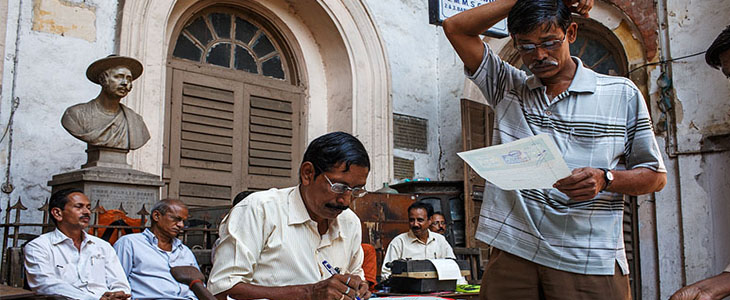
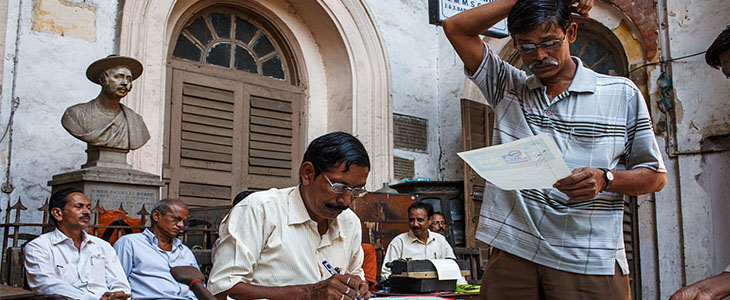
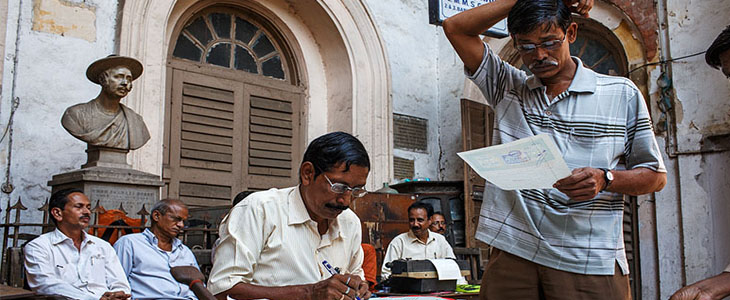
Within the bureaucracy, the babu is a Group C officer which includes mainly the technical, non-technical, and non-gazetted administrative staff. Babus, in fact, are the lifeline of government offices. “Babu ki kami hai!” (there’s a shortage of clerks!) is an all too familiar concern shared by government staff in the mid and lower level offices.

The bulk of work at the mid and lower level offices across departments comprises of processing and maintaining large volumes of data coming from frontline to higher government agencies.  And babus are the ones who are responsible for filing, checking, collating, maintaining and transmitting facts, figures and records. Since I’ve heard the same story of clerical staff shortage coming out of seven different states and multiple departments, I am led to believe that this must be a large scale issue in the country. 

Once you are in a government office, it is wise to ask around for the Mr/Ms. Know-it-all of the office. There’s almost always that one babu who knows the full story of their office and its workings, and they are also likely to be the most overworked. General respect for her dedication and efficiency comes at a personal cost. Their phone number is on speed-dial of the officer in-charge, and they regularly work over-time. It’s bad enough they have an additional work load on them owing to staff shortage, but they often end up taking on tasks assigned to their (to put it softly) more easy going colleagues.[1]

 

Image 2_2.jpg

Babus in the digital age

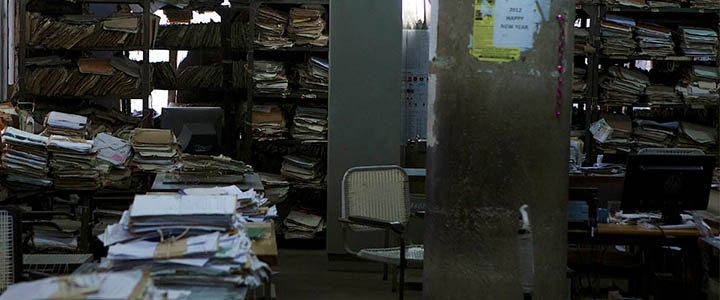
Now, one may argue that staff shortage should not be viewed as grave an issue as it appears to sound. We are living in the times of e-offices and ‘Good Governance’ which means the belief is that once offices are fitted with technological apparatus, office efficiency will increase, therefore we would not need as many babus to manually wade through files, scribble away in dusty registers, and engage in other such “dated” practices. Outside of the fact that India has about a fifth as many public servants compared to the US relative to its population, most offices continue to struggle with the “electronic” part of “e-office.”  The attachment to the thick cardboard bound sarkaari file continues and does not appear to have significantly weakened with time even though the rhetoric of good governance has permeated. Cabinets and office corners stacked with hardbound folders in government offices are a testament to this abiding love. 

Caught in a web

To sum it up, it looks like there may be a large scale shortage of clerical staff in government offices across the country. Those babus who are actually doing their job seem to be overworked as they end up taking on other officers’ responsibilities. Those who take things lightly get to do so because of the lax or skewed accountability structures that are in place. The rhetoric of efficiency/good governance is something that all government officials are well familiar with. But the technological infrastructure, technical know-how, and a culture of working with the new tools is still severely under developed.  The babu, therefore, is the work horse of the government office, who works with blinkers on for all the above mentioned reasons.

Another reason why mid and lower level officials function the way they do is due to their fixation with government circulars. At the end of the day, the work of the babus (and their superiors) is driven by orders sent from above in the form of circulars and office orders. Government circulars are to government officials what passages from religious books are to the faithful. And like the religious, the potential to turn fanatical is just as high within the bureaucracy. In her next blog, Taanya will shed light on the power circulars hold over government officials.  


[1] For a discussion on the prevailing work culture specific to the education bureaucracy, read the following blog post here.

Vincy Davis works with the Public Administration team at Accountability Initiative. Currently, she is conducting field work for a project which involves analysing the implementation process of key government interventions in education in the NCT of Delhi.

Data, Taxation, Expenditure

Even as I write this blog series on government data transparency, a huge battle rages on the utility or otherwise of the Indian union government’s demonetisation exercise. Without going into the merits or otherwise of this exercise (I have written extensively on social media about that), it is interesting to note that those on both sides of the debate rely on bits and pieces of data that support their conclusions. What is being missed by the supporters is the considerable inconvenience that ordinary people are being put through in order to get their legitimately earned money back. The consequences on economic productivity seem to be too large to be estimated at the moment.

But let us put all that behind our backs to notice one interesting thing about the demonetisation exercise. One of the avowed objectives of this exercise is to eliminate black money; that is, money on which tax ought to be paid, but isn’t. Besides, this move comes closely on the heels of a tortuous negotiation that has led to the introduction of GST in India. If one steps back a bit further, one also notices that State governments have gone in for reforms of their taxation measures too over the last decade, enthusiastically embracing e-governance to attempt to streamline commercial taxes, check posts, VAT and property taxes.

What does all this tell us, from the perspective of administrative process reforms?

It tells me that governments, regardless of their political persuasion, tend to be quite enthusiastic and receptive to e-governance measures in taxation systems. Even the current demonetisation measure, though hasty and badly planned, might have the long term consequence of spurring a larger number of Indians to move to banking transactions, where their financial transactions can be captured through formal and measurable means. It might take a decade or so, but it will happen – at considerable cost and pain, largely suffered by the unbanked poor.

However, there is a flip side to this coin.

Even as governments vigorously put in place inter-operable e-governance systems for the administration of taxation systems, we are beginning to lose sight of how governments spend all this money collected from the people. There is little logical data on that.

What is the kind of data that people require to hold their governments accountable for expenditure of the money collected through taxes?

The first step in the disclosure of data relating to expenditure, is budgetary data. We must know how much is allocated, and for what. We need to get to know enough to compare whether we are spending more money on health than on fly-overs, or more money on education rather than irrigation canals.

Second, we must know whether the moneys allocated are actually released to the agencies of the government concerned, for expenditure. When I say ‘released’, it means that the money actually flows through a supply chain to the expenditure authority, and there are no visible or invisible restrictions that apply on the latter, to incur expenditure. By the way, governments of all hues revel in invisible restrictions. Ask anybody working in any finance department on how they curb expenditure even as they seem to be encouraging it, and all you’ll get in return is an enigmatic smile.

Third, we must know whether we are getting value for money. That means we must know everything about the procurement and implementation process. When was the work undertaken? How long did it take? What was the estimated cost? How much did it eventually cost? What was its quality?

Fourth, we need to know enough to gauge the eventual impact of how our money was spent. The government projected that by implementing an expensive public transportation system, the number of private vehicles on the roads would come down by forty percent. Did that happen? Or were there unintended costs, or benefits? Those sort of questions, need to be answered.

However, the system of providing government data rapidly unravels when it comes to expenditure information. Sadly, the same enthusiasm and attention to detail that is lavished on implementing taxation systems is lacking when it comes to tracking our taxed rupee as it is spent. Yet, there are simple ways in which we could improve data transparency when it comes to tracking trails of expenditure. More of that in my next blog.


A Circuitous Journey

This is the fourth blog of a five-part series to unpack the meaning of some of the frequently heard terms and phrases in the Indian bureaucracy.


Webster Definition:

Circular: A printed notice, order or advertisement given or sent to many people at the same time. In business or politics, used to inform a wide range of recipients of new policies or other important matters.

Bureaucratic Translation:

The all-important, pre-requisite order, mandatory to initiate or allow any kind of bureaucratic action. As critical to a bureaucrat to get things done as ‘Open Sesame’ was to Ali Baba.


There is perhaps nothing more important to the world of babus than that without which, nothing can ever begin. The all-important circular that acts as the official order or notice giving directions regarding any work, discussion, meeting that the bureaucracy undertakes. Much like the Ganesh Vandana (invocation to Ganesha – the Hindu God) that precedes most Hindu pujas as a rite of passage before any work can be initiated, the reciting of the ‘Circular chant’ is essential for the bureaucrat before business can well and truly begin.

This blog focusses on the treacherous journey that a circular makes through various levels in the bureaucratic hierarchy and our experience in trying to navigate every stage.

Stage 1: Where is the circular?

Armed with a plethora of background research and ready set of questions, we walk into a sarkaari office at the scheduled hour (which, if luck permits ends up being the same as the time we meet the officials). What follows is an eloquent explanation of our study (the purpose of our research) which lasts for about fifteen minutes before one is stopped mid-sentence to be asked, “Who sab toh theek hai madam, par circular hai kya aapke paas?” (All that is alright madam, but do you have a circular?). Depending on the seniority, height, and current mood of the official, the inflection of this phrase varies from saccharine sweet to bitter-gourd sour.

The essence of this deep question nonetheless, lies in the implicit understanding that the bureaucracy functions on – without a circular directing them, no study, work or research is worth wasting their time.

In an environment where officials are already inundated with more work than they can cope with, the lack of a circular implies an absence of legitimacy – used both as an escape clause, and a way of discerning the relative importance of the person/task at hand.

The end result of this mid-sentence questioning, if answered in the negative, is usually a polite request to return if and when a circular can be provided.

Often (if one is more fortunate), this is also encased in the form of a sympathy-inducing apology that assures us that we would have been spoken to, if only the official permissions were in order. Nonetheless, the tight-lipped attitude of the bureaucrat to speak about, or even listen to anything beyond his regular routine of work without a circular is indicative of the forced atmosphere of secrecy in which the bureaucracy continues to function even today. This is induced both by fear of repercussions and a tendency to put off tasks for as long as possible.

Stage 2: The circular may have arrived, but has it reached?

The process of obtaining the official stamp of a circular merits a blog post of its own. Suffice to say however; that the levels of hierarchy that one has to navigate in order to get official permissions from one person to the next would make for an epic the size of Odyssey. Months of waiting, repeat visits, mails and sanctions by various departments later, we walk into the office, beaming and armed with a copy of the official ammunition of a circular. Introduction exercise is repeated this time lasting for a good 30 minutes before we are asked, mid-sentence again, “Madam aa toh gaya hoga circular, par upload hua hai kya?” (Madam the circular may have arrived, but has it been uploaded?)

Irrespective of the fact that you may have been carrying a copy of the circular with your name and directions from the highest authorities, this stage represents a classic demonstration of the proverb, “many a slip between the cup and the lip”. At this point, the demeanor of the bureaucrat is visibly softened, given the official sanction presented. However, attempts ranging from those to ascertain the originality of the circular, to questions about the fine print that may need ‘further clarification’ at a ‘higher level’ are characteristic of this phase. This is supplemented by a generous dose of majboori (helplessness) comments regarding their inaction, considering the circular may have been printed, but has not been ‘uploaded’ to the website. The end-result is a politer request to come back when the circular has been clarified better and has ‘reached’ the bureaucrat in his official capacity.

Stage 3: Nearing the finale – but to what end?

The ultimate stage of this journey is represented by a (sometimes grudging) acceptance of the fact that all legalities and formalities are in place, and therefore some amount of time must be allotted to a discussion on the circular. However, this visit represents a conundrum of its own, reflected in the bureaucrat’s inability to decide which circular to follow. “Madam aapka circular toh theek hai, par doosre department ke circular ka kya karun?” (Madam your circular is fine, but what do I do regarding the one belonging to another department?)

As circulars are one of the most widely used sources for information dissemination, this stage represents an oft-encountered problem in the bureaucratic world – the coordination of directives issued in different circulars.

On more than one occasion, there is a genuine concern regarding the mixed messaging passed on to the bureaucrat regarding the same event making it difficult for her to juggle competing conceptions of what is the right course of action.

More complexities include previous orders prohibiting or allowing a certain action; future events that may have to be kept in mind before disclosing any information; and simultaneous guidelines from multiple ministries that are not completely in sync with, or apprised of each other’s’ work.

All this contributes to a confusion even when there is a sincere effort to help on the part of the bureaucrat. In fact, the absence of orders itself is also a source of many misunderstandings, forcing an official to err on the side of caution rather than risk consequences. The end result of this stage is usually a request for time to ensure that all misconceptions regarding ‘interpretation’ can be cleared. It is only when the last hurdle of this stage is crossed that one can truly begin work.

What is it that makes the circular such a revered and feared instrument at the same time? The need for directives and compulsive adherence to rules and regulations, particularly in the written form, is characteristic of babudom in a manner scarcely seen elsewhere. This has become so ingrained in the functioning of the bureaucracy today that actual intentions have ceased to be less important than the symbolism of ensuring that things are in order. Circulars are perhaps the most tangible form of this ‘cultural’ practice. Notwithstanding the fact that that the sheer number of such circulars, their contrasting directives and long-drawn process of issuing are impediments to ensuring the smooth functioning of the bureaucracy; For the bureaucrat, above all, circulars represent the ultimate truth: No circular, No work.

In the next blog, Vincy discusses the more crucial question of what happens once the all-important circular has been issued, the work has begun and the D-Day looms large. Watch out for her blog on how babus deal with dreaded deadlines!

Taanya Kapoor is part of the Public Administration team at Accountability Initiative. Her primary focus is on qualitative research to understand education reforms at the state level.


Fiscal Decentralisation Debate: Why and How?

The debate started with a simple question: How does a society ensure that resources are distributed efficiently and equally to a diverse and heterogeneous society?

We take this question to leading economists and public finance theorists to find the rationale behind it.

Kenneth Arrow,1a.jpg Richard Musgrave, Paul Samuelson: In a democracy, the government is the custodian of my society’s interest and hence should be responsible for maximising my welfare.

James Buchanan: But, government agencies are guided by their own self-interests and are no different from individuals. So, it cannot be a single powerful agent seeking to maximize benefits for the society.

Richard Musgrave: However, the government need not be indivisible. There can be different levels where the highest level takes the responsibility of redistributing resources to keep the economy stable. This is important as mobile voters can reduce the potential of redistribution through the lower levels of government.

Wallace Oates: That being said, local level governments continue to play an important role among immobile voters as tastes and preferences vary across regions.

Charles Tiebout: Exactly, and to add there exists a class of goods called the ‘’local public goods’’ for which people effectively sort themselves into homogenous groups. Demands acros2.pngs groups vary and therefore I feel decentralized finance holds potential.

Mancur Olson: Smaller groups are likely to be better in attempting collective action as there is less incentive for free-riding at the cost of others. This is because they can be more easily detected. Also, large groups would face relatively high costs when attempting to organize collective action, as compared to local action by small groups. Plus, different levels of government can provide output of public goods whose benefits coincide with the geographical scope of that jurisdiction. And when a service or function can be delivered equally well or better at a lower level, then why do it at a higher level?

Wallace Oates: But hey, there can hardly exist a perfectly coincided jurisdiction with the geographical benefits of public goods. So, there will be spill-over benefits. But then I guess it is still better than uniform, centrally determined level of public outputs.

If we all agree on fiscal decentralisation as a way of better governance, then how should it be institutionalised?

Wallace Oates: If one level of government generates tax revenues in excess of its expenditures, then it can transfer the surplus to another level through inter-governmental grants and revenue sharing. Also, higher order government can give conditional1 grants in the form of matching2 grants where local services generate spill-over benefits for other jurisdictions.

Frank Flatters, J. Vernon Henderson, Peter Mieszkowski: True. Grants are also needed to correct migration patterns and provide desired assistance to poorer jurisdictions.

Wallace Oates: And, unconditional3 grants can be used for fiscal equalization. In the absence of such grants, fiscally stronger local governments can exploit their position to promote continued economic growth, some of which may come at the expense of poorer ones. Besides, the Centre has limited information and are under political constraints to not give generous grants in one jurisdiction over another.

Richard Musgrave: I disagree. I think local public sector should be financed by its own-source revenue like user charges and local taxes such as property tax. Similarly, consumption tax should be left to the States and income tax to the Centre.

Barry R. Weingast, Ronald McKinnon: But local governments should not rely excessively on debt financing because it can destabilize the economy as a whole. Local governments need hard budget constraints.

George Break: One3.jpg second…and what if competition among local governments for economic development lower the outputs of public services by holding down tax rates?

Wallace Oates: Nah, local governments compete for mobile resources which not only generates income but also provide taxes for them. Therefore, local governments will try to pull these by adopting efficient levels of output.

Alice Rivlin: I think this competition can easily be tackled with some kind of a revenue sharing mechanism of national taxes which would free the states from worrying about losing business to other states with lower taxes.

After this stimulating discussion, do YOU think fiscal decentralisation is a way forward for better governance?

This view of fiscal federalism as stated above – also known as the First Generation of Fiscal Federalism or FGFF) assumes that public officials seek the common good without considering the behaviour of political agents which also seek to maximise their objectives in a political setting.  Moreover, it was limited only to efficient allocative and distributive functions of the government and took  for granted issues like asymmetrical availability of information and the existence of an effective political decision making process. Continued debate and exploration on the subject led to the Second Generation of Fiscal Federalism or SGFF which we will cover in our next blog.

** Viewpoints and text of the authors cited above have been edited for simplicity.


Footnotes

  1. Conditional grants: These grants place various kinds of restrictions on their use by the recipient.
  2. Matching grants: Grantor finances a specified share of the recipient’s expenditure.
  3. Unconditional grants: These are lump-sum transfers to be used in any way the recipient wishes.

References

Arrow Kenneth (1970), “The organization of economic activity: Issues pertinent to the choice of market versus non-market allocation”, in Joint Economic Committee, The Analysis and Evaluation of Public Expenditures: The PPB System, Vol. I (Washington, D.C.:U.S.GPO)

Bird, Richard M. 1999. “Threading The Fiscal Labyrinth, Some Issues In Fiscal Decentralization”.

Brennan, Geoffrey, and James M. Buchanan (1980), “The Power to Tax: Analytical Foundations of a Fiscal Constitution” (Cambridge: Cambridge University Press)

Hansen, Alvin, and Harvey Perloff (1944), “State and Local Finance in the National Economy” (New York: Norton)

Inman, Robert P. and Daniel L. Rubinfield (1997), “Rethinking Federalism”, Journal of Economic Perspectives 11 (Fall), 43-64.

McKinnon, Ronald I. (1997), “Market preserving federalism in the American Monetary Union”, (London: Routledge), 73-93

Musgrave, Richard A. (1959), “The theory of Public Finance” (New York: McGraw-Hill).

Musgrave, Richard A. (1983), “Who should tax where and what?” in C. McLure, ED., Tax Assignment in Federal Countries (Canberra: Australian National University), 2-19.

Oates, Wallace E. 1999. “An Essay on Fiscal Federalism”. Journal of Economic Literature 37 (3): 1120-1149.

Oates, Wallace E. 2005. “Toward A Second-Generation Theory of Fiscal Federalism”. International Tax and Public Finance 12 (4): 349-373.

Olson, Jr., Mancur (1969), “The principle of Fiscal Equivalence: The Division of Responsibilities among different levels of government”, American Economic Review 59, 479-87.

Samuelson, Paul A. (1954), “The pure theory of Public expenditure”, Review of Economics and Statistics 36 (Nov.), 387-9.

Tiebout, Charles (1956), “A pure theory of local expenditures”, Journal of Political Economy 64 (Oct.), 416-24.

Weingast, Barry R. (1995), “The Economic Role of Political Institutions: Market-preserving federalism and Economic development”, Journal of Law and Economic Organization 11, 1-31.

Understanding Bureaucracy from the Bureaucrat’s Perspective

In the podcast below, Yamini Aiyar, Director of Accountability Initiative (AI), talks about understanding bureaucracy from the bureaucrats’ perspective drawing from AI’s research on frontline bureaucracy in the education sector.

Click here To listen to the full podcast

To learn more about understanding bureaucracy at the frontline, we present our key research papers.

The Post Office Paradox (2016)

Yamini Aiyar, Sharanya Bhattacharya

Elementary education administrators at the block level primarily perceive themselves, or report themselves to be, disempowered cogs in a hierarchical administrative culture that renders them powerless. Using the case of education delivery, this paper attempts to probe an administrator’s perspective in resolving the implementation problem at the last mile.

Click here

Education Reform and the Puzzles of Implementation (2015)

Yamini Aiyar, Ambrish Dongre, Vincy Davis

This paper unpacks the organisational culture and norms that make up the Indian state and how this impacts the crisis of implementation capability. Through detailed qualitative interviews of Bihar’s education administrators, this research analyses the Government of Bihar’s attempt to improve quality learning as part of a larger reform effort called the ‘Mission Gunvatta’.

Click here

Bringing the Education Administration Back Into the Classroom (2016)

Yamini Aiyar

In this blog, Yamini Aiyar, Director of Accountability Initiative, pulls from our earlier research to present key discussions on the need for education administrators to break away from the bureaucratic eco-system and focus on learning outcomes and quality service delivery.

Click here

Debating the Role of India’s Frontline Education Bureaucracy (2016)

Yamini Aiyar

Taking from the previous blog, this piece goes one step further to suggest practical and scalable suggestions to reform bureaucratic systems to directly impact learning outcomes and quality in education. These insights come partly from a discussion with key stakeholders (CBOs, education administrators) on the way forward for education bureaucrats.

Click here

Reforms in Education Bureaucracy (2016)

Vincy Davis

Vincy Davis talks us through the obstacles embedded in the bureaucratic environment of frontline education administrators that restrict the output of quality education. Her blog concludes with suggestion to adopt new approaches to circumvent these obstacles to ensure better learning in government schools.

Click here

To read about our work on Understanding Bureaucracy click here.

How Honest is Honest?

Before one sets in place a system of 360 degree appraisal and expects it to work effectively, two pre-requisites have to be in place. First, there must be a shared understanding of what integrity is and second, there must be a culture of acceptance of honest criticism up the hierarchy. Both are sadly lacking in the government.

One of the key questions in the system of performance appraisal in the government – the Annual Confidential Report system – is regarding the integrity levels of the officer being appraised. This is the question for which the blandest answer is almost always the norm. The safest thing to do, as I have written before, is to write the words ‘Beyond reproach’, which usually translates into ‘What? I did not see that question’. Yes, while those appreciative but lacking in knowledge of grammar may write ‘fully integrated’, or the sneaky may write ‘he conducts experiments with the truth’, nobody writes things they might actually want to say, in that column.

Let’s explore the idea of a shared understanding of what comprises integrity in the government, a bit more by considering the scenarios described below.

  • An officer routinely uses his official car to go to a private club on the way home and stays there late, playing cards, whilst his driver waits outside, without being paid overtime.
  • Marshy government land, which is considered useless, is arranged to be granted to the club by the officer, to set up a golf course. Officers of the civil services are given fast track membership into the club, on the payment of a concessional fee.
  • An officer knows her minister is making money by interfering in postings and transfers of officials below her. The task of undertaking transfers has been always with officers, but slowly, the minister has taken over by demanding to see the files on transfers. The officer shrugs her shoulders, says that things have gone seriously wrong in the government, and looks away.
  • An officer working in the local government allows the members and corrupt engineers to make some money on contracts for roads, but on the tacit understanding that she be left alone to run a corruption free programme for supporting farmers with training and technical inputs for water harvesting. This in turn ensures that the officer is not moved out and that the programme benefits a large number of people.
  • An officer has a reputation for austerity and honesty of a high degree. Wherever the officer is posted, she investigates who is dishonest and proactively collects evidence against such people. She then submits petitions to higher level governments against such people. She often leaks such reports to the press and gains a reputation as a David, who slays the Goliaths of corruption. The problem is that she is transferred within a few months in each of her jobs and she never stays long enough to complete any of her missions.

I am not going to attempt to analyse or provide answers as to whether the behaviour of the protagonist in each situation comprises behaviour of high, or low integrity. However, these situations (and many more that are similar) paint a picture of many hues. We are led to realise that in reality, standards of integrity are not precise or universal, but are made up at the nick of the moment, as circumstances unravel.

It is not as if the government does not do anything to define standards of integrity. However, documents that aim to do so are usually verbose and vague. Typically, the conduct rules which lay down the rules for official and personal conduct of Government staff, do not keep pace with the circumstances of the day.

Catch all phrases such as ‘conduct unbecoming of an officer’ can be subjectively interpreted to apply personal biases as to what is acceptable and what is not, whilst judging an officer’s behaviour. For example, whilst arriving at one’s workspace in an inebriated state would be a definite no-no, drinking off hours in a private bar might, or might not, be considered as behaviour unbecoming of an officer. The exceptions to the rules are also capable of being widely misinterpreted. For instance, while the rule that an officer ought not to communicate with the media without permission is easy to understand and apply, the exception that applies to expressions that are of an artistic or literary nature has been used as a window to express oneself on social media. That would be fine if one were writing about one’s hobby or publishing a work of fiction, but when an officer of the government takes sides in a political argument through Facebook or Twitter, it might become decidedly iffy.

Clearly, it is safe for an appraising officer, whether in a supervisory capacity or in a subordinate role, to write that the officer being appraised is Beyond Reproach. Much safer than saying that he is a Rotten Egg.


What makes for ‘Successful Implementation’?

If you asked the Government administrative machinery its point of view, they would likely report that the key to successful implementation is the flow of messages through the cascade, exactly as per plan.  By that measure, Accountability Initiative (AI) has been extremely successful in its work with the managerial staff responsible for effective School Management Committees (SMC)[1] in Rajasthan. The State Project Director issued an order, which was reissued in some detail to the Directorate and Sarva Shiksha Abhiyan offices in the Bassi district. Following this, the District Education Officer put his Resource Persons (RP) in charge of implementation.

The RP in-charge of community mobilisation and the RP in-charge of monitoring took care to demonstrate their interest. They reached out immediately to the head teachers of the schools concerned through WhatsApp and phone calls to relay the message of our imminent arrival. In turn, the principals used every power vested in them to ensure warm and welcoming SMC meetings as per schedule – complete with tea and alu bhujia served to every SMC member they were able to track down the morning of the meeting. Technically speaking, access was granted. And, like many before us, and many who will follow, we bustled about our business busily, convinced of our clarity and of our purpose.

While AI was ticking off rapport building on its list of to-dos, the RPs used their well-healed experience to clear just enough time in their schedules to estimate the possible consequences of AI presence in their geography – a calculation based on the amount of influence they perceived we had, and the iron-grip they have over status quo. In other words, right there, in the first meeting, this cadre, held in place by a political warren connecting the cluster to the State, made a reliable prediction about the impact of our work.

What we learnt in the year to follow and what the RPs knew at the time, was that the effectiveness of an SMC as an accountability mechanism depends entirely on how it is constituted. Their elections are doctored to reflect the corrupted norms that rule local self-government. The transactional relationships between a highly politicised teaching community scattered carefully across clusters, with corresponding interests at the block and district level, collectively control the fate of reform implementation.

This elaborate, unmentionable, unrelenting web confines reform such that it does not significantly disturb the stakes. Head teachers implement picture-perfect election days attended by all the parents, and then some ‘respected’ elders of the community and announce a list of SMC executive committee members. Except that, parents come from families with children who have stayed in school. Protected by the rule that Rajasthan allows schools to keep students on their rolls without needing them to attend regularly (once in a three-week period is considered adequate), the most vulnerable families quickly drop out of local, education-related decision-making. And the list that the head teachers present to this rarefied group, is pre-approved by the political network in tandem with the block level administrators.

While clinical, densely invested pilots gasp for life as they face the mammoth immovable machinery that blocks innovation from crawling up to state policy or trickling down from elevated echelons, implementation is very often successful. Success is defined at the block level by the studied facade of meek, disenfranchised, seemingly cooperative officers, whose charge it is to maintain the machine’s power structures. By definition, it means that there is no lasting change.

Read my next blog about the role of school leaders in ‘successful implementation’.

[1] Accountability Initiative has been been working in the Bassi block in Rajasthan, to ascertain the challenges to the education management as it takes on the task of running effective SMCs. Of the many levels of education bureaucracy we work with, there are 6 principals of schools who are provided inputs on coaching SMCs on fiscal literacy.

The ABC of Indian bureaucracy – a primer

This is the first blog of a five-part series to unpack the meaning of some of the frequently heard terms and phrases in the Indian bureaucracy.

Poora system hi corrupt hai!” is an all too familiar statement heard being muttered by actors from both within and outside the bureaucracy. This is a powerful, all-encompassing narrative which, to begin with, discredits the work of lakhs of individuals who are committed to public service. Moreover, every time we indulge in this line of thought we take a step away from having a meaningful engagement with the organisation that has been disproportionately tasked with the responsibility of executing and directing the fate of government policies.

Without an informed, meaningful engagement with the bureaucracy, how can we even begin to formulate the right questions to ask of people running the show? In this five-part blog series the Public Administration team at AI will attempt to shine a light on some the words one often hears being flung around in government offices, from the perspective of mid-level and front line government actors. By doing so we hope to unpack some of the factors that drive government officials at work, and touch upon a couple of root causes that add to the overarching narrative associated with the bureaucracy.

Administration in alphabetical order

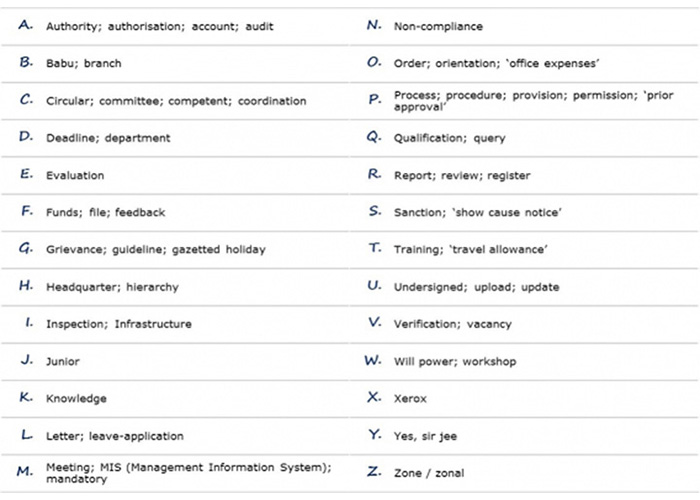
The public bureaucracy, like any other organisation, has a vocabulary, work culture and an internal logic unique to itself. The following words may appear deceptively bland to the layperson but to a government official the symbolic and literal meanings associated with them is enough to legitimise most of their work practices! So without further ado, here is a list of frequently used words in bureaucratic corridors, pulled out from our field level experiences spanning seven Indian states.

image1_0.jpg

In the course of this month, we will be sharing our experiences of what some of these words and phrases mean for stakeholders within the middle and lower levels of the bureaucracy[1] so watch out for these![2]


[1] For our purpose, we have defined the middle and lower or frontline bureaucracy in the following way:

Middle level bureaucracyPermanent and semi-permanent government agencies tasked with oversight and administration of frontline agencies. They ensure proper implementation of government policies, programmes and rule compliance, and provide technical support to frontline actors. Physical proximity to public is usually lower and contact with them is less frequent compared to frontline agencies owing to location of offices and nature of the primary responsibilities.

Frontline bureaucracy – Permanent and semi-permanent government agencies tasked with interpreting, implementing state level policies and programmes. Physical proximity and frequency of contact with general public is consistently high compared to agencies at higher tiers of the bureaucracy.

[2] For an insight into the world of top level bureaucracy, do follow our resident expert, Mr. T.R Raghunandan’s blog –  Raghu Bytes.

Public Financial Accountability – Who Cares?

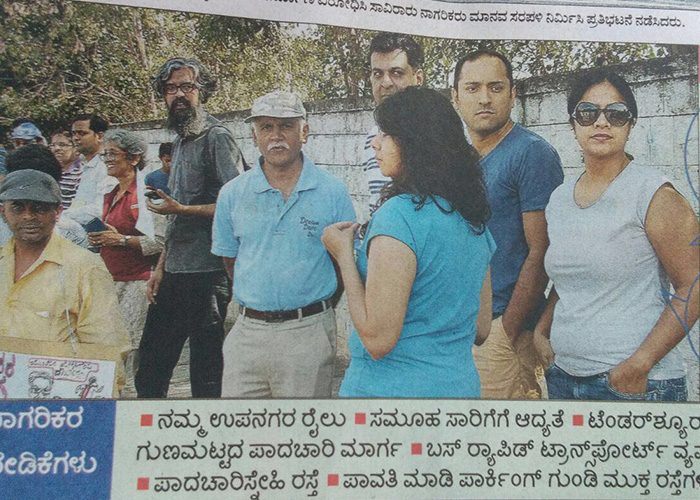
I found myself commuting into the city of Bangalore couple of weeks back on a Sunday. It was to join a human chain that would link their hands over a distance of a few kilometres. I had strong feelings about the subject of the protest.

The state government had announced its intention to build a flyover that would rise from the heart of the city and sail over six kilometres, to dump traffic onto the highway that leads to the Bangalore international airport. It was to be built in steel – to resurrect the fortunes of Steel companies in Karnataka, it is said – and to clear the way for it, about eight hundred trees, some a century or more old, were proposed to be cut. The announcement by the state government resulted in howls of protest from the public.The state government on the other hand, said that though the project was announced now it was approved by the previous government and that the majority of the public were in favour of the project. When investigated, it was revealed that around 250 or so individuals had responded online to the government seeking public opinion, which constituted about seventy percent of all respondents on the site. To counter this assertion of the government, a collection of NGOs, activists and politicians decided to organise a protest where people were exhorted to come together to link hands along the route of the proposed flyover.

Image 1.jpg

As I stood in line, a large number of organisers, or roving activists, busily surveyed the build up of the chain. Politicians of various political parties walked around, meeting people, shaking hands and generally getting noticed. A Member of Parliament strutted around and when he tired of that, he got into a high end SUV and sped away. I looked around and noticed a sculpture on a traffic island nearby – fibreglass children ringing a concrete tree.

I fell into a reverie and the chattering round me faded away.

My thoughts turned back to conversations with Yamini Aiyar, when she was toying with the idea of starting Accountability Initiative (AI). Years back, when the seed of AI was sown, the prime focus was on investigating the flow of money from the higher levels of the government to various service delivery institutions; schools, hospitals, veterinary hospitals, police stations and suchlike. There was an unquestioned belief in the idea that if somehow, we were able to track the allocations and expenditures of government money and make it public, it would result in large numbers of ordinary people asking some tough questions of their governments.

Yet, as I contemplated the fibreglass children and the concrete tree – an appropriate sculpture for today’s Bangalore – I wondered whether we were not being too presumptuous, when we assumed that free knowledge of budget allocations and expenditures would ipso facto result in greater scrutiny of government actions.

Take the flyover project, for instance. Within days of the project being announced, the estimated cost of the flyover rose by about thirty percent. As the demands to see the feasibility reports that justified that the flyover ought to be built increased, the government came out with contradictory reports on them. When experts on traffic management said that the flyover would be unnecessary if better traffic management was adopted and public transport improved, the government brushed these opinions aside.

What makes the government so stubborn, in the face of protests by large numbers of people against such gigantic protests? It is not as if there are no other options. Anti-flyover groups argue that the entire paradigm of individual motor-car based traffic is wrong and that it will bring the city to a grinding halt, regardless of how many flyovers might be built. They assert that with the same money that is used for the flyover, if public transport were to be improved and rail connectivity established by using existing under-utilised railway lines, there would be much less traffic congestion. The government has dug its heels in and they say that the flyover is an immediate imperative if large scale traffic snarls are to be avoided.

When there were no signs that the standoff would cease, finally, it was left to the protesters to file public interest petitions in the courts. The latest news is that the High Court of Karnataka has stayed any action by the Bangalore Development Authority to implement the project, on the ground that procedural steps such as consultation with the Bangalore Metropolitan Planning Committee had not been undertaken.

However, regardless of the merits of the arguments of both sides, the question still remains; would the availability of data on government fund allocations and expenditures radically alter the way that citizens engage with their governments? What if the government – as is seen in the flyover example – disregard data supported arguments against the flyover and continues its efforts to build it?

What if data is available and used by the citizens, and still, the Government does not care?

The Loneliness of the Ethical

I had ended my blog a fortnight back with a reflection on how difficult it is to maintain an ethical position, when the incentive structures within a society militate against ethical behaviour. The maintaining of an ethical position then means going against the grain and that can have adverse consequences on one’s career. This is what I left behind in my session on ethics in the Lal Bahadur Shastri Academy (LBSNAA). I asked questions of the young officer trainees as to how they would manage their ethical dilemmas, but stayed away from suggesting answers.

The LBSNAA has an excellent system of seeking feedback from the officer trainees on each lectures and I looked forward to receiving comments on my sessions. The feedback revealed that more than one officer trainee felt that I ought to have spoken more of real life situations, using case studies or even personal experiences from my career. Some felt that such an approach would have helped them better understand how to behave in tricky situations.

However, that was exactly what I did not want to do. Giving examples from one’s own life can soon deteriorate into long winded story-telling, when one often tends to sanitise one’s position and attempts to showcase success when there might not have been any. Besides, anecdotes do not tell the whole story of the agonising loneliness of those who take an ethical stand, in the face of large numbers of those who do not.

Even as I reflected on the feedback received from participants in my classroom sessions, I received a mail from a former colleague. This former colleague of mine was known for his integrity, but was generally known to also be a bit of an introvert. Over the years, as he became more senior, he began to militate against the increasingly corrupt system around him. He began to do so by first resisting attempts made to persuade him to do what he considered to be wrong things, and then, by writing petitions against officers he thought were doing so. He also began to seek information about officers he wrote against, through applications under the Right to Information Act. My personal opinion was that while there was some substance in his petitions, he also tended to write in broad based terms, accusing everybody of lack of integrity, including some officers who were known to be honest enough to serve with distinction and effectiveness within the government.

This riled the honest no end.

Therefore, when it came to the crunch, the former colleague of mine was pushed around. He did not make matters easy by often acting as if he were on strike when occupying various jobs; but he had plenty to complain against, as he was frequently transferred. Finally, matters reached such a stage that he was served with a compulsory retirement order, just four days before he was to retire in the normal course. I personally believed that whatever might have been the merits of the situation, such an action was unwarranted and reeked of vindictiveness.

Across India, if one looks at the civil services environment, one comes across several such instances of people who have been isolated, been transferred frequently, or even subjected to more stringent punishment, simply because they profess to occupy higher ethical standards than others and they say that out loudly. Sadly, vindictive action visits such people more frequently than on those who are popularly seen as being honest, but who might have bent a few rules and regulations to secure a few advantages.

While the case of my former colleague might be an extreme one, I relate it only to point out that the veneer of bonhomie that lies over internal relationships within the civil service, is often a barrier to the examination of integrity of individuals from a hard, dispassionate perspective. If we think that someone is a ‘nice guy’, we tend to be harsh on those who ask uncomfortable questions of them. The anger against those who question the ‘nice guy’ label, the hierarchical arrangement of the civil services and the drawing of several informal lines of behaviour traits that cannot be crossed, all together make it highly unlikely that a 360 degree appraisal system will actually work.

Today, a subordinate who gives an adverse report about an officer is likely to expose himself or herself to considerable risk. If such an adverse report is based upon a subjective position on what constitutes high integrity behaviour, then it becomes all the more difficult to sustain. The subordinate would tend to lose in the long run as he or she earns the reputation of being one who is difficult to work with. That, for an ambitious person, is disaster.

Since the risk inherent in a subordinate claiming that a senior officer lacks integrity, is dependent upon the very definition of integrity, another tricky question remains to be answered; how honest is Honest?

In my next blog, I will look at that question, within the context of the Civil Services.