
The Spreading of Spreadsheets

This blog is part of a series on the rollout and progress of e-Governance in India. 

I fell in love with spreadsheets, even as the rest of government, in the 1980s, looked upon computers as nothing more than modern typewriters. The idea of bunging in formulae into columns and rows and watching them do addition and subtraction and more, was fascinating. Yet, my extolling the virtues of spreadsheets with colleagues and team members – all novices in computers anyway – only drew blank stares. Why would an IAS officer be fooling around with these machines, when they had stenographers to type on them, they seemed to ask.

The stenographers were no good either, when it came to understanding the potential of desktop computers in the office space. They liked them only because they could make corrections with the text without using white fluid, and because they did not have to wait for the tinkle of the typewriter’s bell to ratchet down to the next line. Even when it came to documentation, they did not have any clue about storage of written records and their retrieval on the computer. I could explain all day about how easy it is to prepare tables using spreadsheets – and government lives on tables; usually full of misleading data, but undersecretaries and others preferred the clunky calculator to attempting to enter formulae in spreadsheets. To them, that was programming, and beyond their sarkari remit. We must hire programmers to do that, they said.

The loneliness of being enlightened has its compensations, though.

I worked those days in the Department of Health and Family Welfare, looking after the murky goings on in the Medical Education Department. I operated out of a dank, dark room, beyond which an equally dank and dark corridor was being constructed; with all its attendant delights of wet gunny sacks hanging over my windows for curing the concrete. Sure as anything, I developed a rich, throaty cough, which drove me to gulp down plenty of antibiotics, which in turn, made my tongue the colour and consistency of the concrete being laid just beyond my window. The files I dealt with were not inspiring, either; they were mostly about the shenadigans of private medical colleges, which were charging astronomical fees for ‘management quota’ seats, and which used their leeway to provide subsidised seats to the children of politicians and bureaucrats, to wangle more concessions for themselves.

Suddenly, things began to change; various courts began to issue orders that private medical colleges should not be allowed to operate in this way, and that they must provide a percentage of seats for those clearing the government managed entrance exam, at subsidised rates. The private colleges howled in protest and complained that they were living a hand to mouth existence and that their earnest efforts to improve the lot of humanity by charging plenty of lakhs of rupees for medical seats, were being thwarted by an interfering government.

And so they came to our office in their posh cars, to negotiate the fee structure that would enable them, in their opinion, to break even after they were done with cross subsidising the seats that needed to be filled by students who passed the government conducted examination.

They came well prepared, with data that showed the cost of medical education and how various permutations and combinations of fee structures for different categories of students would affect their bottom line.

My boss came from a trading background; he often proudly told me that he was the first in his family to join the civil services. Whilst medical evidence does not reveal any genetic predilection to driving a hard bargain in those who belong to trading castes and communities, my boss could drive many researchers scuttling to seek conclusions in that direction. He would stare impassively at the bejewelled boss of a private medical college, resplendent in his white safari suit and crocodile skin shoes, reeling off statistics to show that that the government’s proposal for a fee structure was totally unworkable. Then he would tighten the screws by asking for a lower fee for the government student than what the man opposite had used for his worst case scenario projection.

He was able to do that, because I was Sancho Panza to his Don Quixote.

No sooner that I was handed over the calculation sheet presented by the private medical college management, than I would run down the corridor to the Karnataka Government Computer Centre, and breathlessly enter the data myself in those beloved spreadsheets. Bingo! I ran the calculations and created my own analysis of these and prepared alternative scenarios that I would slip into my boss’ hands.

Yeah, spreadsheets were very useful. One could have moved mountains of red tape with them. Yet, nearly three decades later, I am not surprised when I ask data from a government office, and it is often sent as a picture of a table, sent through social media, rather than data in spreadsheets. The large majority of people in the government did not use spreadsheets then, sadly, they don’t do so now either.

And the same chaps who send me pictures of tables of data, also send Whatsapp forwards of how Blockchain Technology is going to revolutionise governance.
MISRA – and the era of cute acronyms

This blog is part of a series on the rollout and progress of e-Governance in India. 

Finally, on the eve of the nineties, I escaped from my dungeon in the Medical Education Department and took charge as Deputy Commissioner of a district. Known as the District Collector in most other states, the posting as the Deputy Commissioner is the single most important aspiration for most people who go through the arduous task of appearing for the civil service entrance exams. The fifty acre forests surrounding the huge colonial era bungalows in which these worthies live, their cars with red beacons on top of them, the appearance of the Deputy Commissioner at most district-level functions, the automatic reference to her as the problem solver in each district, all this drives the popular lore and mystique that surrounds the IAS.

Yet, in Karnataka, the DC of the early nineties was a piffling scaled down version of the real thing. In 1987, the state had gone through a ‘big bang’ effort to deconcentrate power to elected rural local governments, by setting up Zilla Parishads in each district. These bodies were elected and most development departments were transferred from the control of the DC and placed under the Zilla Parishads. What was worse – as seen from the perspective of an IAS officer who dreamt of the day when he would ride into the Collectorate on a white charger (or at least pull up in a white Ambassador) – was that the administration of each ZP was headed by a ‘Chief Secretary’, a far more senior officer to the DC.

Luckily, I was not particularly worried about being dislodged from the numero uno position in the administrative hierarchy of the district. The fact that plenty of open ended development responsibilities had moved to the Zilla Parishad meant that DCs could focus on their core responsibilities, the main of which was land administration.

It was then that I discovered Altaf and Raghavan, two kindred souls.

Altaf was a Shirastedar, a delightful term used to describe someone higher than a head clerk, but not yet an officer. He was one of those rare souls who still retained wit and wisdom even after two decades in government service. His ready smile hid a fanatical commitment to being systematic and a phenomenal memory for the intricacies of the laws relating to land administration.

Raghavan was another restless soul, who, finding the regular land administration work to be too boring, wandered into the National Informatics Centre of the District and discovered that his calling lay in software. He taught himself programming – of course, this was back in the days when Office suites were virtually unknown – and his aptitude got him a job close to the DC’s office, where he could be relied upon to churn out the multitude of reports that are sent every day, which is often the only tangible evidence of any governance happening.

Like all taxation systems, the land revenue laws of most states are precise and logical. Land Administration by the British, which was copied to a large extent by the old Princely State of Mysore, lived by precise data on land assets on which land revenue was assessed, charged and collected. This was maintained by an army of village accountants, displacing an earlier generation of hereditary ‘Shanbhogs’ – village officers who wielded considerable power and influence because of their knowledge over land matters. However, over time, as the attention of DCs began to encompass several welfare programmes, the reporting protocols of land administration had begun to fail. Less attention paid to the daily tasks of land record maintenance, coupled with staff shortages and the expansion of welfare responsibilities, was beginning to weaken the land records system. The resultant confusion and uncertainties about land ownership had the potential to derail the entire economic base for the rural economy.

With my new found enthusiasm for spreadsheets, Raghavan’s far better programming skills and Altaf’s depth of knowledge of the law and rules, we set about systematising land revenue and land records maintenance and creating a computer aided system that would replace the entirely manual one followed so far.

In line with the newly fashionable trend – something that shows no signs of abating three decades later – we used an acronym to describe our efforts. We called our system ‘MISRA’, meaning, a management information system for revenue administration. 

More about MISRA in my next blog.

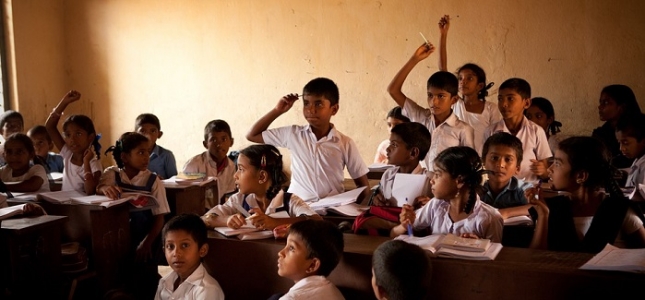
Mapping Learning through Outcomes: Understanding the amendment to the RTE

The focus of education policymakers on outcomes, especially learning outcomes, is steadily rising. This is the third blog in a blog series to discuss paradigm shifts in the field of assessments in India’s public education system.

Almost a year ago, on 20 February 2017, the Right to Education Act, 2009 was amended to include a new landmark provision- learning outcomes. These aim at improving the quality of school education and increasing accountability in the teaching system. If implemented well, learning outcomes could mark a paradigm shift in India’s approach towards teaching and assessments and play an important role in the way India’s students learn in the years to come. In this blog, I discuss the idea behind the introduction of learning outcomes, progress made till now and some of the challenges involved in their implementation.

What are learning outcomes and why are they important?

As per the amendment to rule 23(2)(c) of the RTE, all states have been mandated to prepare “class wise, subject wise learning outcomes” for all elementary classes (standard I-VIII), and to develop guidelines for putting into practice evaluation mechanisms that can achieve defined outcomes. The decision came close on the heels of a meeting of the Central Advisory Board of Education (the highest advisory body on education in India) held in October 2016. States were advised to create their own framework of outcomes based on a draft document prepared by the NCERT, (which were deemed as a “minimum”) on which different state councils could build as per their specific requirements.

Learning outcomes, in the NCERT framework have been defined as “assessment standards indicating the expected level of learning that children should achieve for that class”.[1] Simply put, learning outcomes indicate what a child should, ideally, have learnt by the time he or she moves from a grade to a higher one – or what the outcome of the year’s education should have been.

At first glance the idea may seem simple, but the notion of measuring learning outcomes and using results to drive policy decisions marks an important shift from a policy perspective. This is so because conceptually, learning outcomes are not just about testing a child for comprehension or rote memorisation linked to the syllabus (which has been the practice till now) but about testing a student’s understanding. This includes the capacity to learn, make meaning of, build upon, and apply knowledge gained inside the classroom.

The use of outcome-based evaluation has gained traction in many countries across the world in recent years, based on the idea that education must not only be seen as a process of transmitting basic competencies or knowledge to students, but as an overall, holistic development process where the teacher’s role is limited to that of a facilitator in the learning process.

Viewed in this light, the MHRD’s push to codify and mandate learning outcomes as goals for all schools (public, private and aided) across the country demonstrates a concerted effort to highlight the question of student learning.

RTE and Learning Outcomes

For many years, the RTE Act has been lauded by educationists as a progressive legislation for improving access to education in the country, universalising education as a right rather than a privilege, and focussing on students being taught in a stress-free environment. Yet the absence of uniform assessment standards to check what students had actually learnt remained an issue till now. Despite conversations around pedagogy shifting over time from ‘what teachers are teaching’ to ‘what students should be learning,’ there were few ways to measure progress on this in a uniform manner across schools. The issue of quality of education in public schools, as a consequence, was neglected.  

With this amendment to the RTE, the MHRD attempts at course correction. The shift towards mapping learning outcomes is expected to provide teachers a “tool to understand what exactly the child should be learning in various classes, how to teach this through activities, and how to measure and ensure that children have reached the required level”[2]. Learning outcomes are thus expected to act as checkpoints to assess student understanding at different intervals in a year (not only at the end of the academic session), to explicitly guide teachers to teach as per student needs, and to fix teacher accountability.

Concerns raised and way forward

Learning outcomes cannot be implemented successfully, however, without a larger change in assessment mechanisms. Currently, teaching-learning inside schools is geared largely towards syllabus completion and ensuring high pass percentage rates, which are used as markers to assess performance of teachers. Examination patterns also rely heavily on testing fact-based knowledge and retention ability rather than student understanding and ability to apply concepts.

In light of the learning outcomes, it becomes more so important to train teachers on how to prepare test papers that can carry different levels of questions to test these. In fact, the purpose of setting learning outcomes would stand defeated if test papers do not see reforms in a context where written tests are being re-prioritised. 

Till now, country wide implementation of outcomes appears to have been laggard. Reservations around the execution of this idea continue – many states in the country have still to adapt to learning outcomes comprehensively because of confusion regarding what these outcomes imply, the abstract nature of the larger goals they espouse, and scepticism around how they can be, if at all, measured. It is important that such issues are resolved through extensive training and preparation for all stakeholders, and an overhaul of examination cells. Some states like Delhi for instance, have taken steps in this regard. These include conducting workshops to familiarise teachers with the reasons for introducing these outcomes, creation of model test papers and linking attainment of grade-wise outcomes with teacher performance. Such models can be adapted to the requirement of different states as well.

Learning outcomes are an opportunity to implement the RTE Act both in letter and spirit by embracing a child-centric pedagogic approach. They must not be allowed to become just another marker in a report card. By arming education providers with a thorough understanding of the current learning levels of students and their needs, they provide a useful tool to reorient the end-goal of classroom transactions. Let us hope that the process of implementing learning outcomes is successful in leading us down that road.

The next blog in this series will shed light on what the promotion of different policies such as learning outcomes represent vis a vis the simultaneous scrapping of policies like the NDP and CCE, and our take on whether these decisions are in sync with each other or represent a contradiction in the MHRD’s approach to education.


[1] http://mhrd.gov.in/sites/upload_files/mhrd/files/Learning_outcomes.pdf

Accountability Initiative in 2017: The Year Gone By

Welcome to the start of a brand new year! Before 2018 begins in full swing, we bring you highlights of our activities in 2017. The year marked AI’s increasing contribution to on-ground governance practices. From policymakers, journalists and aspiring development practitioners to field workers implementing critical welfare schemes, we held no holds barred conversations where it counted. With your support, we look forward to continuing such dialogues this year, and making the voice asking for more accountability in governance many times stronger!

JANUARY

1_1.jpg

Analysing Budget 2017

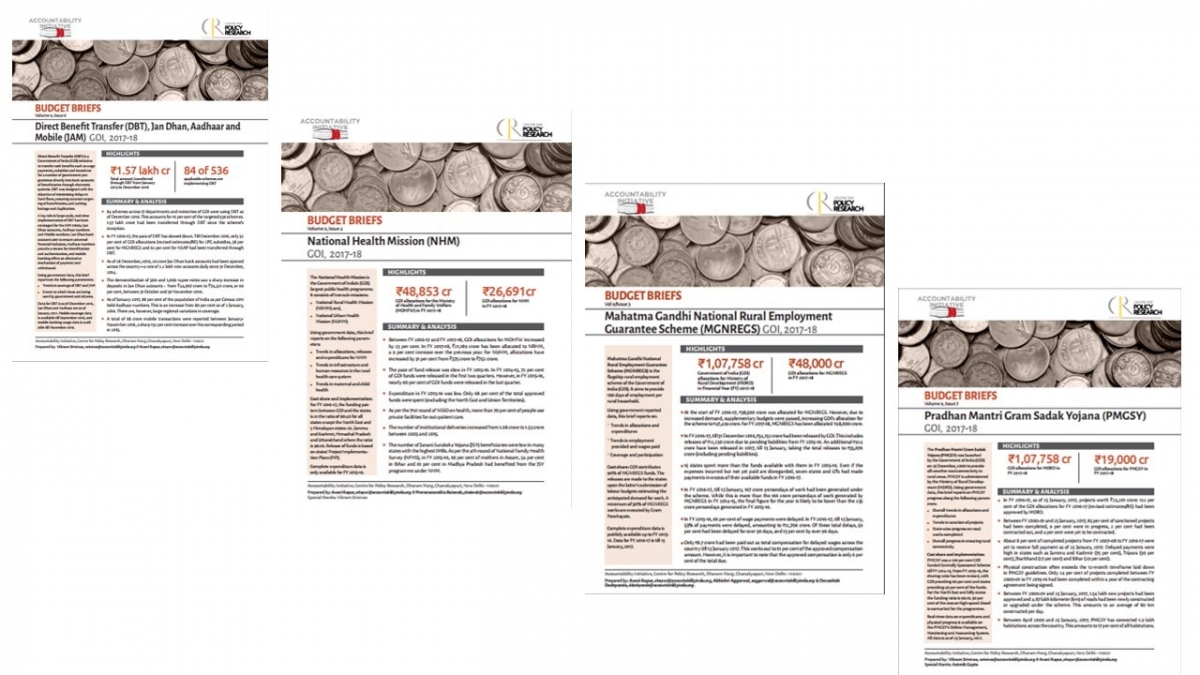
Our Budget Briefs published every year have emerged as a much-awaited source of analysis on India’s Union Budget. In 2017, we looked at the allocations, expenditures and progress of 7 key social sector schemes including the Sarva Shiksha Abhiyan (SSA), National Health Mission (NHM), Swachh Bharat Mission (SBM) and the Pradhan Mantri Gram Sadak Yojana (PMGSY). Given the current focus of the Government on Direct Benefit Transfers (DBT) and JAM (Jan Dhan, Aadhaar and Mobile Connectivity), the brief also included an analysis of the current coverage and implementation challenges for JAM and DBT in the series. You can find the complete set here.

FEBRUARY 

22_0.png

Breaking down the Budget for the media

Interpreting Budget documents is a hard task. We shared our analyses and lessons learned from reviewing Budget documents for the past 9 years with journalists to make interpretation easier for them and their readers. You can learn some key elements for yourself by visiting here.

MARCH

Reinventing the PAISA Field Cadre

AI’s flagship PAISA survey, which tracks fund flows and expenditures of welfare programmes, is India’s largest citizen-led expenditure tracking survey. Our PAISA Associates field cadre located in 5 states are critical to making this effort a success. Read the experience of an AI PAISA Associate who works on education and what she has observed while being in the field.

APRIL 

33102558151_c46a3390f8_z.png

Identifying challenges of Swachh Bharat Mission in Udaipur, Rajasthan

On the request of the local administration in Udaipur, AI began a survey to understand the process involved in declaring Gram Panchayats Open Defecation Free (ODF) and challenges in implementation for the rural arm of SBM. The 3-month study yielded insights on the functioning of the SBM machinery and were shared with the administration. A report of the study findings will be available by early 2018.

MAY 

Understanding the family planning machinery in Bihar and UP 

In 2012, India signed the FP2020 which committed to increase allocations for Family Planning (FP) and strengthen access to quality FP services. In order to understand the process of allocations, releases and expenditure on FP activities and analyse whether these are aligned with the FP2020 goal AI undertook a study on unpacking the processes of planning, budgeting and expenditure at the state and district level under the NHM. Commissioned by the Population Foundation of India (PFI), the study included 68 detailed qualitative interviews with officials at all levels in 2 high-focus states, namely Bihar and Uttar Pradesh. A working paper of the same will be available in a few months.

JUNE

Analysing fiscal federalism in India

The complexity of fiscal transfers between the Union-state governments in India is little understood. Yet there is little evidence about the efficacy of fiscal transfers for specific public policy objectives. A paper analysing evidence from past approaches to fiscal transfers for health was released this month. A collaborative effort of AI and the Centre for Global Development,  the paper received wide attention. It can be downloaded from here.

JULY 

M.png

Bridging the gap between citizens and the bureaucracy

From securing basic essentials such as water to schooling and Aadhaar, a blog series capturing real stories of the way in which ordinary citizens have navigated the bureaucratic system was the highlight of this month. Do read the gist of the series here.

AUGUST

Making data work for accountability in education

As part of a UNESCO commissioned study, AI carried out a field survey on the implementation of the usage of elementary education data for planning, monitoring and demanding accountability. The study was conducted in Himachal Pradesh, Rajasthan and Madhya Pradesh and focussed on understanding the way in which school-level data is being used for ensuring transparency and accountability in the public education system. The study also explores the link between awareness of school-level data in the public and its usage by parents, teachers and School Management Committee (SMCs) members to demand accountability. The study will be publically available in mid-2018.

SEPTEMBER

cranium-2099129_960_720.jpg

Grooming the next generation of public policy practitioners

AI experts engaged with students of the Indian School of Development Management (ISDM) on understanding state capacity. The unique course offers insights on the challenges facing administrative institutions, the root causes of governance failure, and designing public policy interventions in a way that addresses these lapses.

Insights on education for the Economically Weaker Section

AI also contributed new understanding on the provision of 25 per cent seats for children from economically weaker and disadvantaged sections of society in private unaided schools under the Right to Education Act. The report entitled the ‘State of the Nation: RTE Section 12(1)(c)’ is a collaborative effort of Indian Institute of Management-Ahmedabad, Centre for Policy Research and Central Square Foundation. You can access the paper here.


OCTOBER

people-play-child-education-classroom-kids-1104033-pxhere.png

Understanding perspectives of Delhi’s public school teachers

A new study on education in Delhi’s public schools began at the request of the Delhi Commission for Protection of Child Rights. The study seeks to understand how teachers’ time is distributed across different activities in schools, whether their administrative tasks affect teaching time, the amount of time teachers spend outside of official hours engaging in school related work, and to provide insights on teachers’ perceptions of their job. Read a blog on what teacher’s actually think of teaching and learning.

Challenges of financial management in Bihar’s School Management Committees (SMCs)

AI conducted a field survey on maintenance of finances by SMCs in Purnia and Nalanda districts of the state. As part of the study, we recorded challenges and difficulties in maintenance of cashbooks/passbooks with respect to funds for key SSA grants and two state-level schemes. The process of implementation of DBT in the two schemes was also examined. As many as 590 households and 1000 students currently studying in rural elementary schools were surveyed for this purpose. The findings were presented to top SSA officials and have been accepted by them.

For evidence-based decision making

We returned to ISDM with a workshop for development practitioners on understanding and applying research. Research is a key lens through which policy-makers and other stakeholders can identify policies that are more effective, and critically analyse how these can be improved. Complement your perspective with a 2-min read on what it will take to make evidence-based policies a reality.

Strengthening the accountability movement

AI participated in the 5th National Convention of the National Campaign for Peoples’ Right to Information. A panel discussion comprising AI experts explored transparency and accountability in the implementation of the Right to Education Act. Explore how RTI has been used by ordinary citizens to ask for a more accountable administration.

DECEMBER 

RaghuBytes-Leadership-2.jpg

Transforming local governance

Our cadre of PAISA field associates were facilitated as trainers on a new flagship PAISA course. Available for the first time in Hindi, the course – ‘Hum aur Hamaari Sarkaar’ – will be taken to grassroots-level field workers in the heartlands of India in 2018. The course offers critical analysis of state capability, especially at the local governance level.  Two pilots were conducted in December – one with Block level coordinators of Nehru Yuva Kendra in Rajasthan and the other with District level coordinators of Pratham in Bihar.

Exploring community approaches to sanitation

AI and the Scaling City Institutions for India (SCI-FI) teams at the Centre for Policy Research organised a conference which brought together prominent academics, policy researchers and practitioners in the sanitation sphere. The conference deliberated on sanitation policy and implementation, shared learnings and provided recommendations on the issue of safe sanitation, including but not limited to the role of SBM. Click to know the progress of SBM-Gramin 3 years on. The conference report is available here.

Social Audits in Meghalaya

We ended the year with increased participation of the public in governance as Meghalaya became the first state in the country to pass a law on the Social Audit of services. AI was invited by the Government of Meghalaya to participate in a National Convention on Social Audit. The aim was to draw upon insights and gain feedback from academics, activists, members of the CAG and central ministry and journalists to make the process stronger.

Whither, e-Governance?

This blog is part of a series on the rollout and progress of e-Governance in India. 

Last week, the Government of Karnataka announced that it would make the Aadhar number compulsory through legislation. The government said that its draft law would be modelled after the ones enacted in Maharashtra, Gujarat and Haryana.

I have been walking the tightrope on Aadhar since the time it was introduced. I see on the one hand, the possibility of using a unique identity number for easing the process of obtaining a multitude of services from the government. Yet, I also see that the premature linking of Aadhar to various services by bureaucrats and politicians driven callous by their ambition, has led to many tragedies in the lives of the poor. Stories abound of distraught parents being unable to admit their children to school under the Right to Education Act, because they did not get their Aadhar numbers in time. There have also been instances of ration shops being unable to distribute rations because the lack of connectivity does not enable them to update the central database, which uses Aadhar, to record the rations given to individual card holders. We even watch mutely with horror at the recent report that a child, bereft of an Aadhar card, starved to death for lack of ration.

Looking beyond the current grim reality that faces many – particularly the poor – there is the not so remote possibility that an illiberal, malafide government that cares little for democratic freedoms, might use the Aadhar to conduct surveillance of a magnitude that cannot be imagined. This would be a horror scenario where dissidents may be electronically confined, with their bank accounts and credit cards frozen, their properties seized, their conversations tapped, their emails read and who knows their physical location tracked so that assassins can pick their time and place to pick them off.  

Let us suspend for a moment, our scepticism and fear about a leviathan government running us into slavery through its ability to snoop over all of us, and look closely at what the Karnataka Government promises, in return for making Aadhar compulsory. The reports say that an Aadhar based platform created by the Central government, named the DigiLocker, will be adopted by the state. This will enable citizens to store all their critical documents in their own virtual locker in cyber space, thereby obviating the need for documents to be stored physically. Therefore, citizens will be able to keep virtual copies of their caste and income certificates, ration cards and other essential documents, in a secure space on the Cloud. The citizen, when applying for a government service that requires some of these essential documents, will be able to give access to the relevant government department to dip into the DigiLocker, extract the document required and issue whatever it is that they want. Thus, physical documents will not be necessary.

I have no doubt that all that is promised will become possible in the near future. However, the question is whether such innovations will make the government more responsive and accountable to the people. There, I have no reason to be optimistic.

Karnataka has had a long history of innovation in the digital sphere. The state established a Government Computer Centre in the early 1970s and has, since then, spearheaded several reforms in governance, using the possibilities of e-Governance. It filled one with pride to walk through the centre in those early days; with their whirring mainframe computers maintained in sterile, air conditioned environments. As a government officer serving in the state, in the mid-1980s itself, I had an opportunity to be trained in the government computer centre; an opportunity that was possibly not available to other service colleagues in other states. I remember how I was completely absorbed in the training, learning the possibilities of using Lotus 123 and MSDos, the pre-Microsoft offerings for spreadsheet and documentation. I remember the similar thrill that I felt when I opted for an early bird training in the centre in the mid-1990s, to familiarise myself with the first offerings of Windows. In terms of years, that was a mere two decades back; but it could be eons in the past, considering the strides that have been made since then in the capabilities of computers and software.

Yet, one thing remains constant; the Karnataka Government does not seem to have made any significant improvement in its responsiveness to people. True, certain things have dramatically changed, such as the accessibility and availability of land records, but in other ways, the state remains as non-transparent as it used to be.

This ought not to be construed as a criticism of Karnataka’s government, which is possibly much better off than that of other states. Yet, this dichotomy within the government, of a certain indifference and unresponsiveness that continues in spite of remarkable successes in streamlining certain self-contained processes, lingers. Indeed, Karnataka could be an excellent case study of this kind of widespread schizophrenia that affects other governments too.

Thus the question- wither e-Governance?

I will reflect more on this in my next few blogs.  

From an IAS Officer’s perspective

Sanskriti Jain is presently a Sub-Divisional Magistrate in Rewa, Madhya Pradesh. In the conversation below, she shares her experience of working as an IAS officer and offers some rare insights from the field. 

What motivated you to look at a career in bureaucracy?

large_20171129_100722 (2)_1.jpg

 I was not exclusively thinking about joining the bureaucracy in the beginning, but my experiences in policy making made me realise that this was a very good way to connect to people and serve the country. Being an IAS officer is a coveted and difficult job. When one is going in for the exam, we have lofty   ideas of the transformative impact we are going to have. What is to be remembered after is that the power and position that we hold has a consequence;   even a small decision creates a big impact.

 The chance to shoulder this responsibility drove me to give the exam. I am now accountable for a Sub-Division. I take care of issues as diverse as land   administration, implementation of education schemes, and how the governance structure is performing. The range of job requirements and a chance to serve   the country is what I now look forward to.

 What is a major governance challenge you have encountered?    

Governance depends a lot on the society that one is part of. Understanding what stakeholders- the people, people’s representatives, business interests, different arms of the government – want is critical. The main challenge here is complexity because of the stakeholders involved and how participative they are. For instance, in India, this is why some states are doing well, while others are not. Local governance bodies such as Panchayats depend on the participative spirit and which shows how they function at the grassroots level.

Since a one-shoe-fits-all approach does not also fit governance, in my experience, governance in India depends on the person responsible for implementation. This is how you see transformation through policies. The motivations of the person is key. At the micro-level, the person is part of a system which administers many major schemes and more sub-schemes. Connecting different people and bridging gaps on what they want (much like a manager’s role) is what this role demands.

Do you see your department changing to development needs?

I’ll quote a senior officer who once told me this – if you were to imagine a small wheel and a big wheel, then the big wheel moving faster than the small one can derail the entire system. It seems from the outside that the administrative structure is not addressing needs, but the actual situation for officers like me is more complicated. At my level, the bureaucracy is changing. We are using new technologies such as WhatsApp groups for instantaneous communication on administrative needs. We have weekly monitoring sessions and targets to achieve. Yet, if we try to do too much in a short span of time, the society will go off the rails. There are factors involved in governance other than the administrative system.

For example, there was a huge fire in fields around some villages. We had informed people to seek safe ground. We still couldn’t prevent 3 young children from dying, not because of the fire but because upper castes did not accept them for safety. These social dynamics also determine how much the government system can push for change both within the system and in the society it is operating in.

Can you share a memory that has touched you in your career as a bureaucrat?

As a trainee IAS officer I was entrusted with the Ujwala Yojana which provides cooking gas to households. I remember talking to one woman, an Anganwadi cook, who wanted to use wood. She had doubts that the cylinder would burst and was fearful of using it. This was an interesting experience because we had to convince her to use the gas cylinder and that it was safe. We ultimately made available over 64,000 cylinders across the districts!

We want to hear from you! Write to us at [email protected] if you would like to share your experience of being an IAS officer. 

#2: Whither, e-Governance?

This blog is part of a series on the rollout and progress of e-Governance in India. 

I had concluded my last blog with the thought that in spite of measures to streamline government processes through e-Governance, there is a certain unresponsiveness and indifference that continues to linger. So why does the government live in parallel worlds, nay, centuries? Why do some people in the government dazzle us with visions of a cashless, paperless future in which we breeze through life with nary a thought to the burdens of transacting with the government, while on the other hand, the same dusty rooms, with piles of files, the same rudeness, confusion and corruption assault us daily when we visit a typical government office?

Maybe the answers lie in history.

Now that I am old enough to bore everybody with my reminiscences, I think back to my early days in the government, where with the same revolutionary zeal that I see in younger government officers one set about to streamline government systems. Computers were unknown in the mid-1980s in most government offices, not to speak of connectivity. In the small town where I started my career in the government, we were served by a manual telephone exchange, with a jolly man (whom I never did meet in person) at the other end who would connect us to the outside world. A lightning call, which meant that one did not have to wait for an outstation call – sometimes the wait could be a day or more – cost a lot of money. Yet, the friendly telephone man connected government offices with each other without charging us the exorbitant lightning call fee. By the year end, he was helpful enough to connect me to my wife in Bangalore instantly, whilst charging me ordinary rates. On one memorable occasion – New Year’s Eve it was – he enabled me to play an Elvis love song to my wife, oh so far away. That must have been a first of sorts, for lightning calls.

Yes, that telephone man caused a considerable revenue leakage in the telecom department by misclassifying calls. I do hope the laws of limitation apply and arrears are not deducted from his pension with usurious interest by some nit-picking auditor.

It was the typewriter and the stenographers who were our window to speed and efficiency. Luckily, I was served quite well by efficient stenographers throughout my official life; the first ones engineered the transition from my monochrome English dominated persona to someone who could swear as fluently in Kannada, and what is more, dictate court judgments in it. It helped that I had learnt typewriting formally; so on the rare occasions when a document needed to be typed in English, I could step in as well. One, from the pair of stenographers that I had, assured me that if I did not know the Kannada equivalent for a particular official term, I could use the English term and she would immediately tell me the Kannada equivalent. That was the most efficient language class that I ever took; except that my familiarity with stilted official language rarely used by ordinary people, made my informal conversations in Kannada seem like I was a government circular come to life.

Speeding up decision making by just having the decisions typed out faster was, as they say nowadays, a win-win situation. My office’s arrears in disposal of court cases came down dramatically and what’s more, one of my efficient stenographers married the clerk looking after my court cases.

The first desktop computers came into the Government Computer Centre in the late 1980s. I was one of the first people to opt for a training programme. It was fascinating; one was instantly hooked. We speak of the era before the emergence of software suites for Office; one prepared documents and performed simple sums on spreadsheets, directly with the blinking cursor on the black screen. One memorised the various key combinations for operations and that enabled one to get by.

In the meantime, the winds of change were blowing through the offices of private secretaries of senior officers. The electronic typerwriter; a curious hybrid between a typewriting keyboard and electronically assisted punching of the typefaces onto paper, began to make their appearance. They were horrendously expensive and their ribbon cartridges were not designed to reduce one’s revenue budgets.

Yet, in spite of these tentative first steps, the objective still remained that government offices ought to become more efficient. As desktop computers began to be part of the official landscape, a few laypersons in the government began to realise that they could be used for something more than mere typewriting. To fully utilise the potential of computers to improve one’s efficiency, a few enthusiasts – one cannot term them as computer experts – began to experiment with something more than mere typing.

What after the No Detention Policy and Continuous Comprehensive Evaluation?

The focus of education policymakers on outcomes, especially learning outcomes, is steadily rising. This is the second blog in a blog series to discuss paradigm shifts in the field of assessments in India’s public education system.

2017 has been an exciting year in the field of public education in India. Several important policy changes have been introduced with respect to assessments. Two of these have been the scrapping of the No Detention Policy (NDP) and the Continuous Comprehensive Evaluation (CCE) by the CBSE. In this blog, I briefly discuss what these are, their implementation story, where we stand today with respect to these policies, and the questions bringing in these changes have thrown up vis a vis improving learning levels of students.  

What is the No Detention Policy and the Continuous Comprehensive Evaluation?

The No Detention Policy (NDP) saw light of day when the Right to Education Act (2009) was implemented. Under Section 16 of the Act, schools were prohibited from detaining or expelling any student up to standard 8. Moreover, schools were required to remove the oft dreaded end term examinations. The annual examination pattern, it was argued, put undue pressure on students to rote memorise the entire syllabi, which stunted a student’s capacity to understand and apply concepts. Another criticism was that such exams made scoring high marks in tests among the primary goals of education.

The end term examination pattern was to be replaced with a new pattern of testing called Continuous and Comprehensive Evaluation (CCE). Under this, schools were to test students periodically throughout the year, using a mix of written and activity-based assessments, on what they were actually learning. The idea was to equip the teacher with useful feedback regarding her student so she could tailor her inputs according to the pupil. The CCE pattern was also designed to assess other aspects of a student’s education such as creative skills and emotional development. Thus, CCE was conceived to put the focus again on student learning. 

Transition from traditional assessment patterns to NDP and CCE

It did not take long for the impact of these policies to become visible. Dropout rates reduced drastically in the years following the implementation of the RTE Act. However, concerns soon started emerging from states across the country. Schools began to complain about students not taking their studies seriously because exams had been scrapped and they would still be able to graduate to the next standard irrespective of their learning. Several teachers and principals even admitted to becoming lax about what students in elementary classes were learning. Moreover, CCE report cards, an important assessment tool, were not taken seriously since department-level inquiries about the content of these reports were rare.

The transition to the CCE pattern of assessments was anything but smooth and was marred by resistance, fuelled by the harsh reality of working in public schools. The kind of individual attention that teachers were required to give under the CCE mode of teaching and assessment was viewed as unfeasible because of poor teacher-to-student ratio, lack of classrooms, and other resource constraints. The time spent by teachers on reporting back on the CCE – often multiple times in a year – was also seen as an impediment, eating into their teaching time.

The present situation

In 2015, a Sub-Committee was created to look into the issues surrounding the CCE and NDP. Based on the feedback given by states, they issued several recommendations which would require amending the RTE Act (2009). A number of these were accepted by the Union Cabinet in August 2017. In the Winter Session of Parliament this year, the ‘Right of Children to Free and Compulsory Education (Second Amendment) Bill, 2017’ will be tabled which, if passed, will bring about important changes in the Act with respect to NDP. The proposed amendments are as follows:

  1. The provision to not detain students until completion of elementary education will be amended. Central or state governments will be able to allow schools to hold back students in standards 5 and 8, or in both classes.
  2. Regular exams will be held for students in standards 5 and 8 every year. If students fail these exams, they will be given additional lessons and a chance to reappear for the exams.
  3. If the students fail the re-examination, they may be held back in standards 5, 8, or in both classes. The central or state government will also be empowered to decide the manner and conditions under which students may be held back. 

The CBSE has scrapped CCE assessments from its schools and introduced a fixed, uniform marking pattern for standards 6 to 9. It has also reintroduced board exams for standard 10. Several state boards, however, continue on the CCE pattern in curtailed form for standards uptil standard 8.

Will reverting back to the old mode of assessments improve learning?

The present Bill, expected to be tabled in Parliament soon, explicitly links the move to scrap the NDP with the goal of improved learning:

‘In the “Statement of Objects and Reasons” for introducing the amendments, it is stated that “…in order to improve the learning outcomes in the elementary classes and after     wide deliberations with all the stakeholders, it is proposed to substitute section 16 so as to empower the appropriate Government to take a decision as to whether to hold back a child in the fifth class or in the eighth class or in both classes, or not to hold back a child in any class, till the completion of elementary education.”’

Annual exams (and the importance given to final test scores) are going to return. There are various questions staring policy makers. Firstly, are the moves to reintroduce the concept of detaining students and scrapping or heavily modifying the CCE contradicting the policy objective of improving learning? Secondly, will reverting to the previous exam pattern be able to address the issue of rote memorisation this time around?

Through anecdotal evidence we know that most teachers preferred the old assessment pattern. They firmly believe that students will learn only if they fear the teacher and failing exams.

Presently, large scale policy changes are taking place in the field of assessments, all with the goal to improve learning. In the previous blog of this series, my colleague Mridusmita threw light on how the National Achievement Survey (NAS) was pitched differently this year to ensure that state and national plans are designed keeping actual learning achievements in mind. Moreover, a new concept called Learning Outcomes (which will be discussed in the next blog by my colleague Taanya) has been introduced across the country which may have far reaching implications in how assessments are viewed in India’s public education system.

Yet, even as these new changes are being introduced, have policy makers learnt a lesson from the CCE experience? CCE was introduced to help teachers tailor inputs and assess students periodically such that students actually learn. The implementation of the CCE, however, only taught us that the system was not equipped to handle this change. This raises some critical questions. Have the limitations of implementing CCE (such as resource constraints faced by schools, and capacity of teachers to implement CCE in letter and spirit) been adequately addressed such that these new changes yield positive results? The answers will only shape up in the years to come.

A bureaucrat’s endeavours bear fruit

This blog is part of a series on leadership in the Indian bureaucracy and is based on the experiences of senior bureaucrats. The previous blog can be found here

With his stint in the Girijan Cooperative Corporation of Andhra Pradesh, T. Vijaykumar broke away from the depressing stereotype of a good officer who is in perpetual transition from post to post. With his keen interest in tribal development, Vijay is candid in admitting that he asked his senior in the General Administration Department for the post of Managing Director of the Girijan Cooperative Corporation. This was not considered a glamorous post, so Vijay got the position he wanted.

Vijay realised that the Corporation was motoring along, trading in the produce collected by tribals. Tenders were rigged; traders made the margins and the tribals anyway had little bargaining power and low expectations from the Corporation. Vijay was keen to increase the real incomes of the tribals the Corporation was set up to serve, but any face-to-face confrontation with  powerful trader interests would see his exit. Vijay began to study the market intensively, to go past the traders with the knowledge gained. He began to understand the huge price differentials that were dependent upon simple value addition techniques that tribal people could easily understand and implement. He initiated the concept of Community Coordinators, where young professionals from prime universities and institutes of technology spent 3 years in a tribal village working for holistic development.

The success of the Andhra Pradesh approach significantly contributed to the evolution of the national model, namely, the National Rural Livelihoods Mission. Vijay’s name was now synonymous with India’s rural poverty reduction approach.

The combination of good outreach and good knowledge had a huge beneficial impact of the tribals. Take the major product on which the Corporations commercial fortunes depended- Gum Karaya, an edible gum extracted from trees that was almost wholly exported. Vijay’s thrust on research, based on feedback from the market, resulted in a drive to improve handling of the gum at the level of tribal gum collectors. 80 botanists were hired to go into tribal areas to change the implements used by gum collectors and improving the practices of gum drying. GCCs storage facilities were improved, and shipping practices of Mumbai-based exporters changed for the better as well. At a modest investment of Rs 30 lakh, gum quality improved, tripling the prices realised by tribal gum collectors. It was a clear demonstration of how valuable research and an intimate knowledge of the market were in maximising price realisation. Vijay’s five year tenure from 1990-1995 ensured that the Girijan Cooperative Corporation transformed from a run-of-the-mill trading company to an institution that delivered substantial profit to tribal people.

Vijay’s next big break came when he moved in 2000, to head Andhra Pradesh’s Society for the Elimination of Rural Poverty, (SERP). The state-level society, set up as a special mission at arm’s length form the government in order to cut through red tape and work more efficiently, was implementing the state’s ambitious poverty reduction mission. The focus of the approach was to help poor women to organise themselves into self-help groups, where their thrift and credit activities would blossom into a substantial creation of wealth at their hands, through a basket of support ranging from training, to subsidies to set up businesses and improve skills. In the 10 years (2000 to 2010) that Vijay headed SERP, the poverty reduction programme went from strength-to-strength. The programme was expanded to cover all villages of the state and 1.15 crore rural poor women were enabled and assisted to form and run thrift and credit based self-help groups, which were federated into village, sub-district and district level organisations. As for wealth creation, the results were equally staggering. By March 2014, the self-help groups had cumulatively mobilised bank credit of Rs.65,000 crores in the undivided state of Andhra Pradesh.

The success of the Andhra Pradesh approach significantly contributed to the evolution of the national model, namely, the National Rural Livelihoods Mission. Vijay’s name was now synonymous with India’s rural poverty reduction approach. He moved to Delhi as Joint Secretary, Ministry of Rural Development and Mission Director, National Rural Livelihoods Mission (NRLM). He led the NRLM for 5 years, rolling out a nation-wide poverty eradication programme based on social mobilisation and empowerment of rural poor women. Over the next 10 to 15 years, this programme aims to reach out to 80 to 100 million rural poor households and stay engaged with these families till they emerge from abject poverty and enjoy a decent quality of life.

After he returned to Andhra Pradesh in 2015, Vijay took over as Special Chief Secretary of the Department of Agriculture & Cooperation. One of the significant achievements of the poverty reduction mission in Andhra Pradesh was the community managed sustainable agriculture (C.M.S.A) programme, through which women SHGs were assisted to take up collective farming. Vijay, based upon this success, turned his attention to low budget natural farming as a way to ensure livelihood and environmental sustainability. After his retirement, Vijay pursues his passion for improving the lot of the poor. The Andhra Pradesh government has appointed him as an Advisor on Agriculture and Cooperation, in charge of implementation of natural farming in the state. He is now involved in a programme of covering 5,00,000 farmers from 1,500 villages in the state to adopt ‘zero budget natural farming’ and reduce their cultivation costs and risks and increase their yields and incomes, even as soil fertility and quality of chemical free food improves.

The views expressed are of the author only. 

The Key to Success in the IAS

This blog is part of a series on leadership in the Indian bureaucracy and is based on the experiences of senior bureaucrats. The previous blog can be found here

From the examples of Kurien and Vijaykumar related in earlier blogs, are there any trends that emerge, as to what the qualities are, which equip an IAS officer for success, or is it dictated by environmental factors such as the circumstances of the positioning of the officer or the political climate?

Clearly, longevity is an important factor in the effectiveness of both officers. Kurien and Vijaykumar lasted long in their defining postings, in the case of the former, as the head of the Kochi International Airport and in the latter, as the head of the Girijan Cooperative Corporation and later on, the Poverty Eradication Mission. The assurance of a secure tenure enabled both officers to think in the long term and stay long enough to execute their plans. Another commonality between Kurien and Vijaykumar was that both entered into relatively new organisations, or those with expanding responsibilities, and had few legacy issues to deal with. In the case of Kurien, he was able to define processes to tune with the priorities he set himself. While in the case of Vijay, relatively speaking, he entered into organisations where processes were already begun to be established, he still had the latitude to change them to adapt to the steep growth path on which these organisations were moving.

The question is then, whether such longevity is a purely fortuitous matter and that therefore, the effectiveness of officers is largely a matter of luck; of how long they manage to stay in a particular position. In answer, there is still the matter of luck that prevails; both spent considerable periods of time at their defining jobs and that helped them make their mark.

Yet, if one looks closer, a stable tenure is not dependent merely on luck alone. It is possible for officers to create their own luck, through their quick grasp of the core requirements of the jobs they hold. In other words, both Kurien and Vijaykumar, unwittingly or otherwise, became indispensable to their organisations. They did so by gaining so much knowledge about the environment in which they worked, as also the processes they needed to adopt to move forward, that their removal would have imperilled any future progress.

Politicians are perceptive people and they know that at the end of the day, they will be judged by the tangible progress they have demonstrated on the ground. Yet at the same time, in the current political scenario, politicians see as very valuable their powers of individual patronage. They see this as cementing their relationships with a vast body of political friends and interest groups who work in concert to ensure that politicians get elected. Thus, a dichotomy exists in the minds of most politicians when it comes to their preferences regarding officials posted in their constituencies. They want somebody both effective and obedient, and oftentimes, these two qualities are not compatible with each other.

In the case of both Kurien and Vijaykumar, in all probability, the levels of trust they developed within their organisations gave them an aura of invincibility that no politicians who might have been annoyed with any of their actions, would have liked to tackle.

Quite simply, Vijay and Kurien reached a stage of widely respected professional excellence that removing them would have had adverse political repercussions on any politician who might have contemplated moving them.

That both Kurien and Vijay were able to reach this bastion, is due to their own qualities of leading from behind, and their easy ability for teamwork. In the government, teamwork is often spoken about, but rarely practiced. Hierarchical command and control systems are both de-facto and de jure the preferred option. If Kurien and Vijay had conformed to this conventional model of being top down bosses, their premature movement would not have surprised anybody. However, the fact that both of them were able to forge teams, must have built the political aura of invincibility and indispensability around them, which would have made any politician who might have been annoyed with them and contemplated moving them, think twice.

Yet, success could cause jealousy, which is the biggest threat to officers who perform well. Jealousy rarely emerges from the political side; but it is rampant in the closed confines of the bureaucracy. Jealousy could be of anything – usually it is of the success of the officer – but it could be of publicity that the officer gains, his easy relationship with influential politicians, or even about the fact that he is ‘having a good time’.

The last mentioned reason may look frivolous, but it is a real and serious problem. Vijay spoke to me about a valuable forest produce, a nut (Strychnos potatorum) that had the unique property of being able to clarify and clean muddy water. There was a huge procurement of this product, but at one stage the market collapsed. Whilst undertaking research on improving the quality of the product, Vijay stumbled on the potential of using this nut for removing radioactive contamination from water. He engaged scientists for conducting research on this matter and as research progressed, he believed that testing by the International Atomic Energy Agency in France and Germany would settle the matter. However, when he sought permission to go abroad to arrange for and have this vital test conducted, jealousy intervened and he was not allowed to travel abroad.

He was attempting to have a ‘good time’, and that is sacrilege in the Government.

The views expressed are of the author only.