First published on Seminar (web-edition), available here.
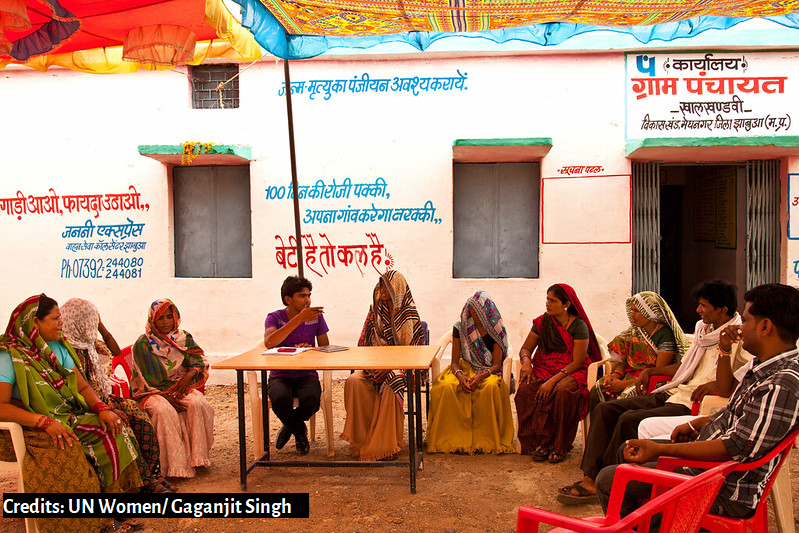
Despite the promulgation of the 73rd Amendment to the Constitution wherein states were mandated (wholly or partly) to constitute three levels of panchayat in rural areas and assign funds, functions, and functionaries to them, even today the status of devolution for even basic civic functions remains weak. While the Union government accepted the recommendations of the 14th Finance Commission, including that of not imposing more conditionalities, the period that followed undid the attempt to provide untied grants to panchayat.
As per the latest publicly available data on the status of devolution and fiscal and functional assignments to panchayats by the Ministry of Panchayati Raj (MoPR), of the 29 functions to be devolved to rural local bodies (RLBs), only five states reported devolution of all 29.
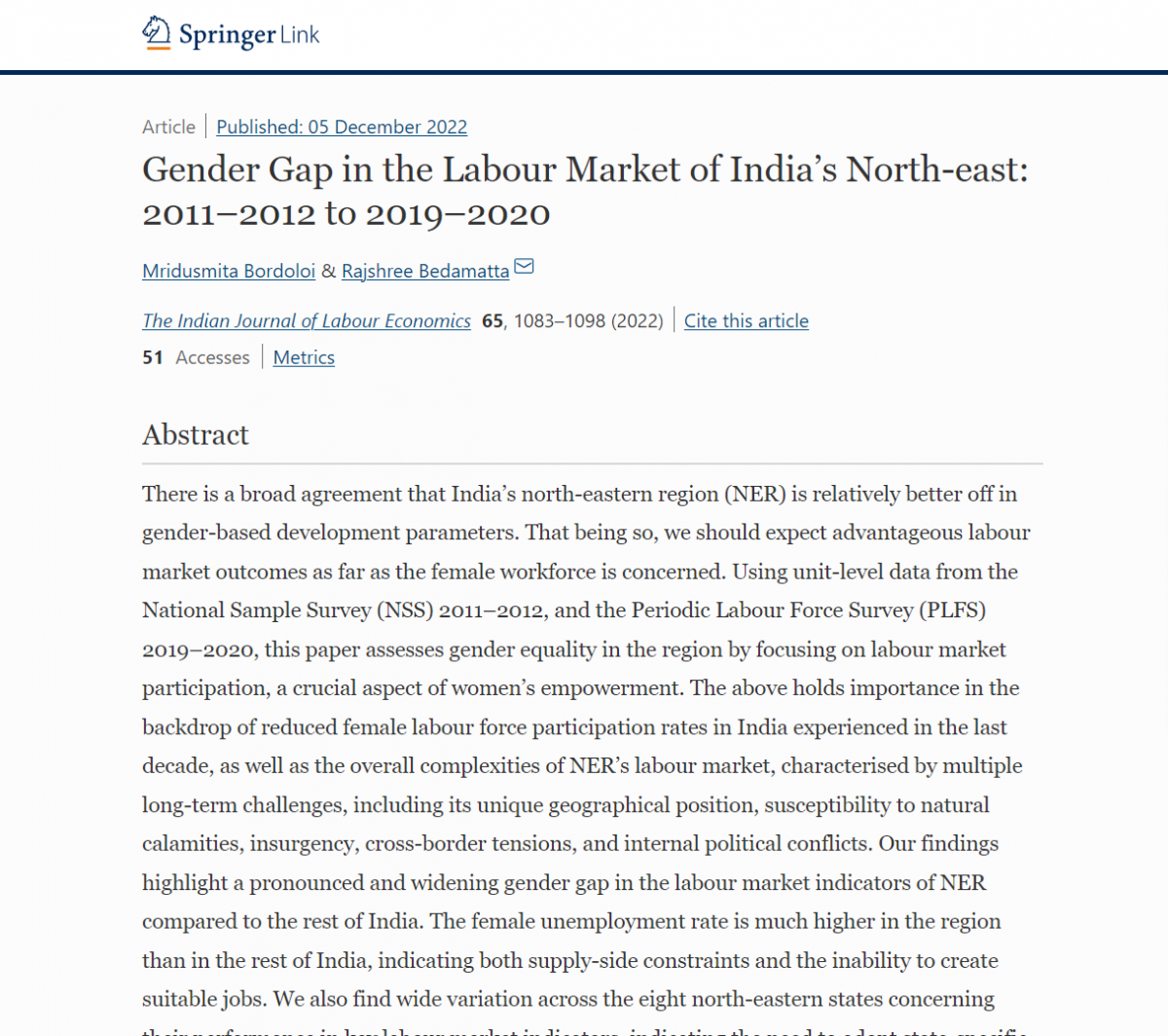
There is a broad agreement that India’s North-Eastern Region (NER) is relatively better off in gender-based development parameters. That being so, one should expect advantageous labour market outcomes as far as the female workforce is concerned.
Using unit-level data from the National Sample Survey (NSS) 2011–2012, and the Periodic Labour Force Survey (PLFS) 2019–2020, this paper assesses gender equality in the region by focusing on labour market participation, a crucial aspect of women’s empowerment. The above holds importance in the backdrop of reduced female labour force participation rates in India experienced in the last decade, as well as the overall complexities of NER’s labour market.
The paper’s findings highlight a pronounced and widening gender gap in the labour market indicators of NER compared to the rest of India. The female unemployment rate is much higher in the region than in the rest of India, indicating both supply-side constraints and the inability to create suitable jobs. There is also a wide variation across the eight north-eastern states concerning their performance in key labour market indicators, indicating the need to adopt state-specific policies.
First published in DCPCR’s Children First: Journal on Children’s Live; available here.
Union budget 2022-23, announced the renaming and restructuring of the Child Protection Scheme to ‘Mission Vatsalaya’ to address both child protection and child welfare. This piece critically looks at the extent to which the new guidelines are able to move towards a more holistic understanding of child protection and welfare and address shortcomings of the erstwhile CPS scheme.
The use of mobile devices to deliver public health interventions is rapidly increasing, particularly in low resource settings. Despite their proliferation, several mHealth interventions in developing countries fail to reach geographical scale, and long-term sustainability for most remains uncertain. Cost estimates can contribute to a more informed debate on resource allocation priorities and help make choices clearer for policymakers.
This paper has two main objectives:
(1) present a detailed protocol on determining the costs of a large national mHealth job aid and behavior change communication tool known as Integrated Child Development Services – Common Application Software (ICDS-CAS) in India, and
(2) to present lessons for policymakers on how to ensure financial planning for scaling mHealth interventions.
The study uses the Activity Based Costing—Ingredients (ABC-I) method. The major advantage of the ABC-I method is the clarity it brings to costs for each input and activity, across levels and geographies. It also accounts for indirect costs. There are five key lessons while costing for mHealth programs. The evidence generated can be used for more informed debate on resource allocation priorities, given competing priorities in low- and middle-income countries.
The voices of rural residents and front-line officials in India’s villages and small towns are often absent in accounts of the pandemic, which have focused on the crises unfolding in major cities. Yet these voices offer crucial insight into the invisible front lines of COVID-19, with critical lessons for governance and emergency response. For the past year, through two waves of COVID-19, we have gathered hundreds of grassroots accounts from citizen journalists and government workers embedded in communities across rural India. The stories that emerge reveal divergent experiences and gaps in trust and communication between local residents and officials. However, they also reveal instances where local actors bridge these gaps, suggesting the potential for a powerful “synergy—marked by cooperation and coordination—between locally embedded state and societal actors.” This synergy, we argue, is crucial for a robust pandemic response that reflects and meets local needs.
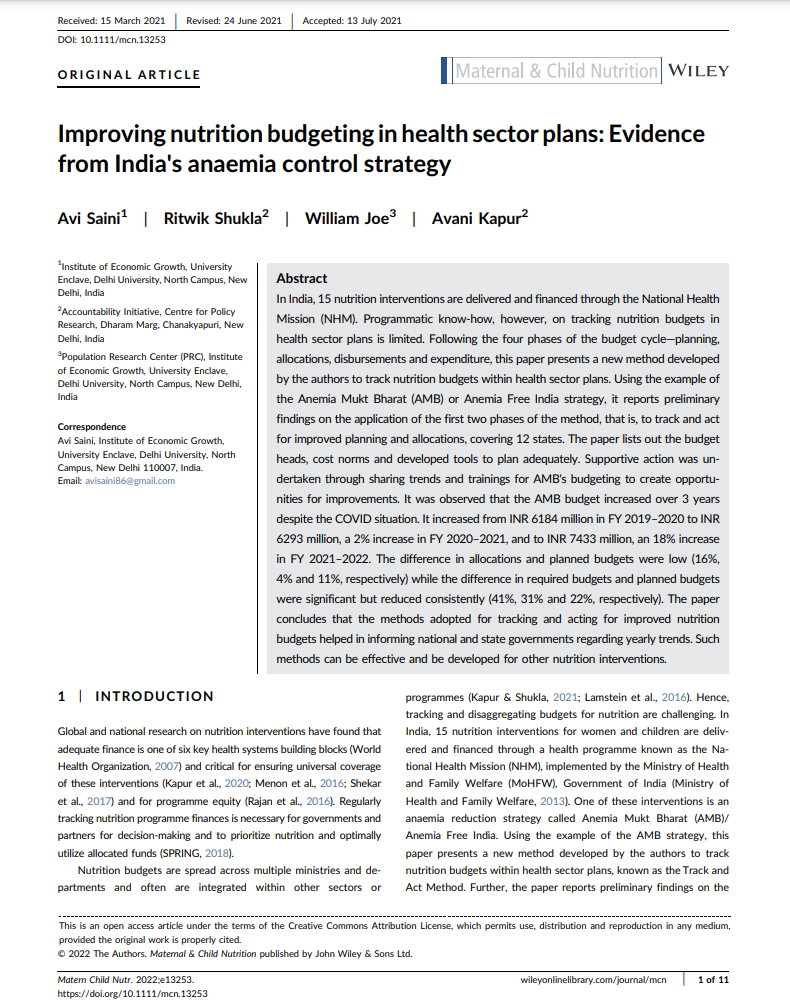
For investments to translate into improved public service delivery, having a strong public finance management (PFM) system that lays out the rules, institutions and processes by which public funds are managed is critical.
To enable a better understanding of the nutrition financial landscape, this paper seeks to determine whether the current PFM system in India allows for capturing required nutrition data.
In recent years, we have seen positive developments in policy, funding and outcomes on child nutrition in India. Now, when the Covid-19 pandemic has placed a significant strain on our already vulnerable populations, it is time is institute a far more decentralised, agile and equitable nutrition financing architecture.
Ecological fiscal transfers (EFTs) involve higher levels of government distributing funds to lower levels of government based on ecological indicators. In 2015 India established the world’s largest system of EFTs when its 14th Finance Commission added forest cover to the formula that determines the amount of tax revenue the Union government distributes annually to each state. Here we gather state-by-state data on forestry budgets to assess whether India’s EFTs incentivized states to protect and restore forests as evidenced by increases to their forestry budgets.