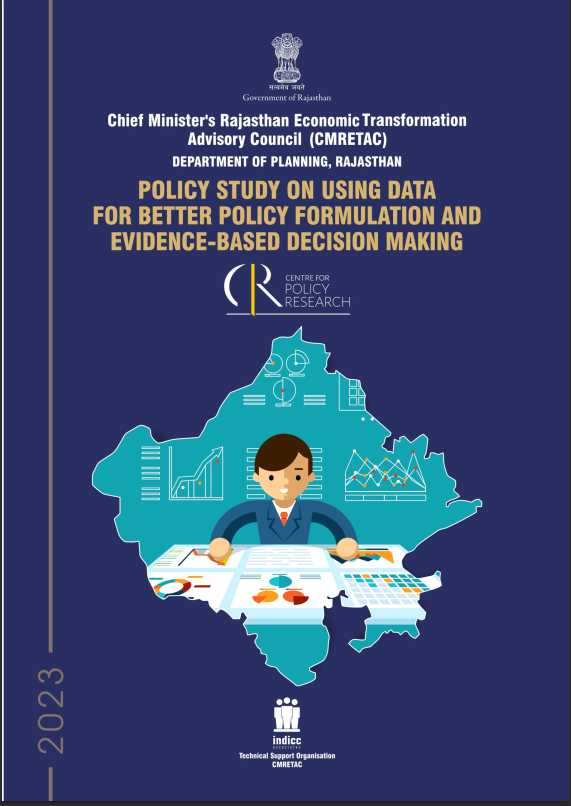
Welfare governance in sectors such as education, health and Panchayati Raj involve a comprehensive exercise of collecting and using data in innovative ways. The use of data can enable making decisions based on evidence (what is referred to as ‘evidence-based decision making’) rather than biases and assumptions. For this, an effective data governance framework is required that can enable setting standards for collecting data, sharing data across departments and encouraging a data-based comprehension of policy challenges.
In 2023, the Accountability Initiative was commissioned by the Chief Minister’s Rajasthan Economic Transformation Advisory Council
(CMRETAC) to undertake a study to recommend suggestions on how to strengthen data systems and enable the state for more effective evidence-based decision-making.
In this report, we assess three sectors of education, health and Panchayati Raj to unpack how data is collected, its usability, use cases of data and how data can feed into policy improvement. On conducting in-depth interviews and focused group discussions with functionaries across all tiers of governance in these three departments, we identified that each sector is a different stage of adoption of evidence-based decision making. For example, the education sector uses a unified Shala Darpan portal for school management and generation of report cards while health uses over – applications for similar management practices. Both sectors along
with Panchayati Raj required stronger capacities at the frontline to collect and use the data. Publication of anonymised data in the public domain (as open data) remains limited. Large governing principles such as a clear identification of what data is required at which stage in the policy cycle was missing.
The budget is a vital tool to support the government in executing various programs and schemes in a methodical and strategic manner. Most importantly, it is the document that informs citizens of how taxes are collected and resources are prioritised and spent — how much and on what? But the process by which the budget is prepared and the details of the budget document itself, are not easily comprehensible.
Health budgets (or budget documents in general) have traditionally been viewed as an accounting or administrative document, instead of a strategic policy document. Now, there is growing recognition that many aspects of the budgeting process are deeply embedded in India’s health system performance. Yet India’s 29 health budgets (Government of India plus 28 states) are complex, varied, and poorly understood. Thus, there is value in enhancing our collective understanding of how health budgets are formulated, executed, and evaluated; and in describing the implications of budget processes and structures for undertaking policy-relevant analysis
The main objective of this primer is to offer the reader a way to understand and interpret India’s Union and state health budgets.
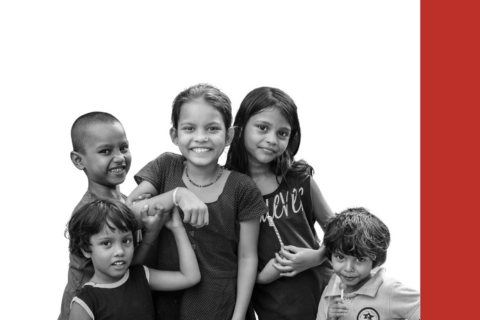
During Financial Year (FY) 2022-23, against the backdrop of the COVID-19 pandemic, the Accountability Initiative (AI) at the Centre for Policy Research (CPR) undertook a rapid assessment on the status of nutrition-related services under Saksham Angwandi and Poshan 2.0 (previously Integrated Child Development Services) scheme across two districts of Bihar, namely Purnia and Kishanganj.
This factsheet presents the findings of the study for the Kishanganj District in Bihar.
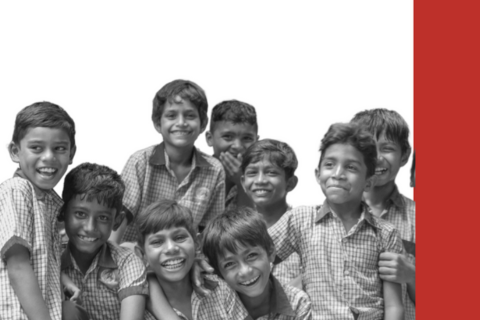
During Financial Year (FY) 2022-23, against the backdrop of the COVID-19 pandemic, the Accountability Initiative (AI) at the Centre for Policy Research (CPR) undertook a rapid assessment on the status of nutrition-related services under the Saksham Angwandi and Poshan 2.0 (previously Integrated Child Development Services) across two districts of Bihar, namely Purnia and Kishanganj.
This factsheet presents the findings of the study for the Purnia District in Bihar.
Even as large parts of government budgets and efforts are directed towards fighting the pandemic, it is important to ensure that children are not overlooked. Critical during this time is going to be ensuring that sufficient resources are provided for the protection to children in precarious positions and ensuring that the existing resources are utilised effectively.
This brief aims to study the status of implementation of Child Protection Services (CPS) scheme prior to the pandemic with a focus on the possible impact of COVID-19 on child protection and welfare.
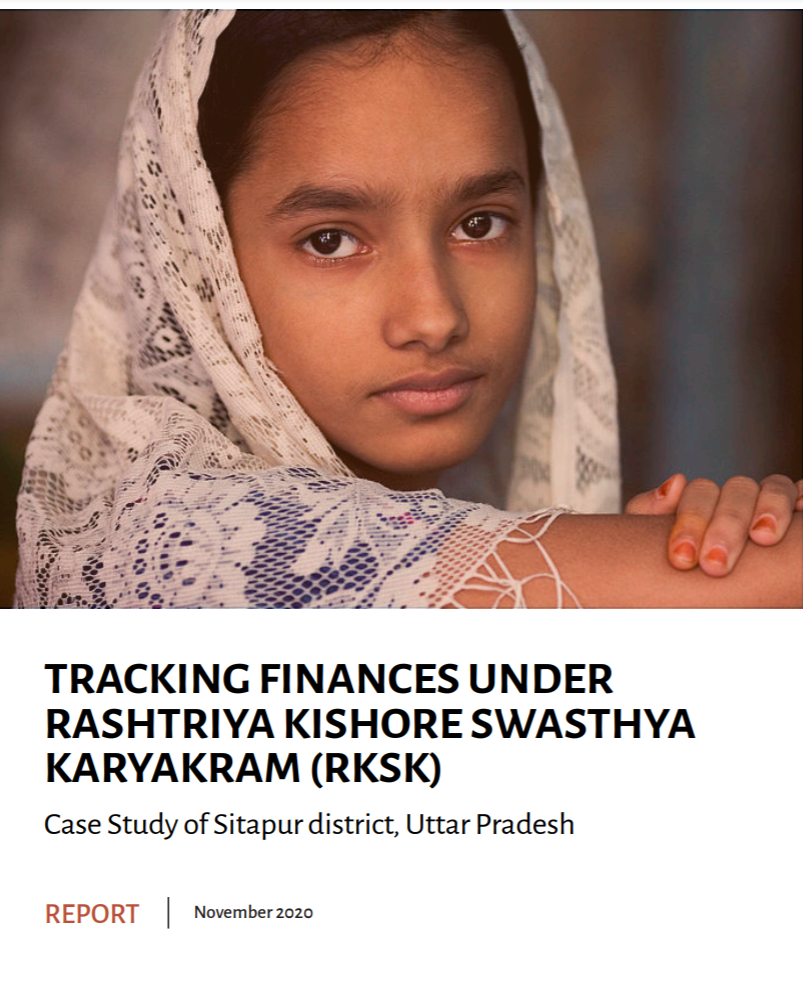
The Rashtriya Kishore Swasthya Karyakram (RKSK) is an adolescent health programme within the ambit of the National Health Mission (NHM).
This study focusses on the expenditures and fund flows of RKSK in Sitapur district of Uttar Pradesh.
Don’t have time to go through the report? Watch this video.
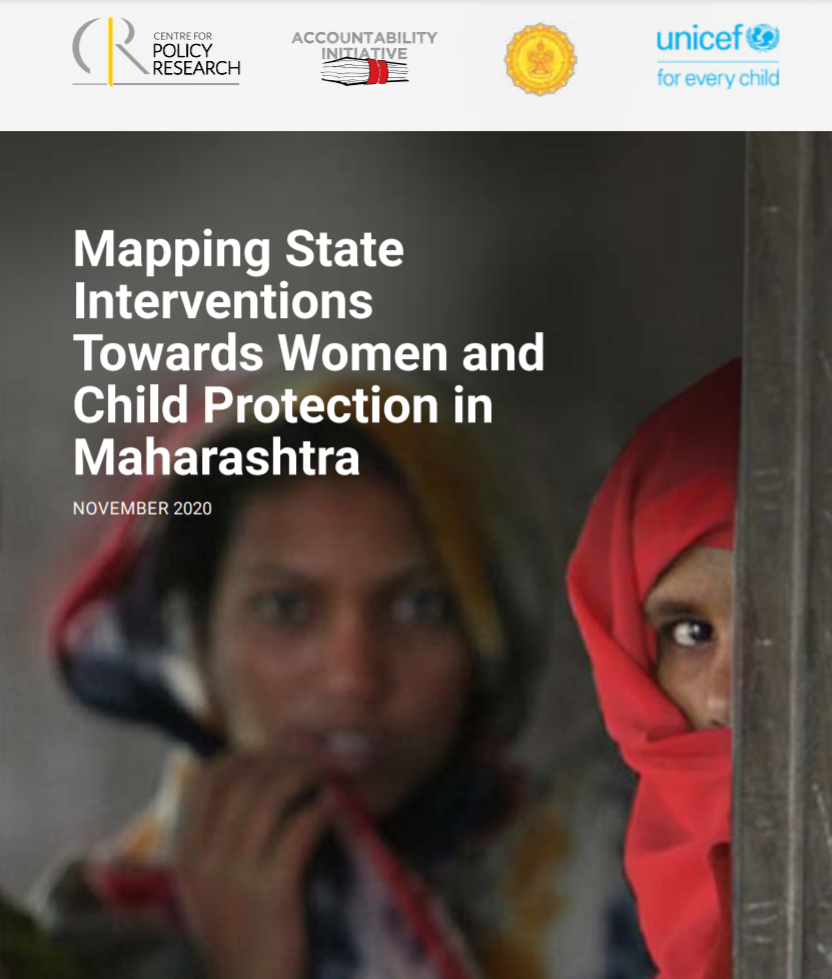
The report examines interventions addressing violence against women (VAW) and violence against children (VAC) in Maharashtra.
It also provides a brief insight into budgetary provisions existing in local governments for protection against VAW and VAC, potential overlaps among existing provisions, as well as understanding key factors that inhibit the performance of schemes, including convergence across departments in ensuring protection against VAW and VAC.
Also download a Policy Brief based on the report.
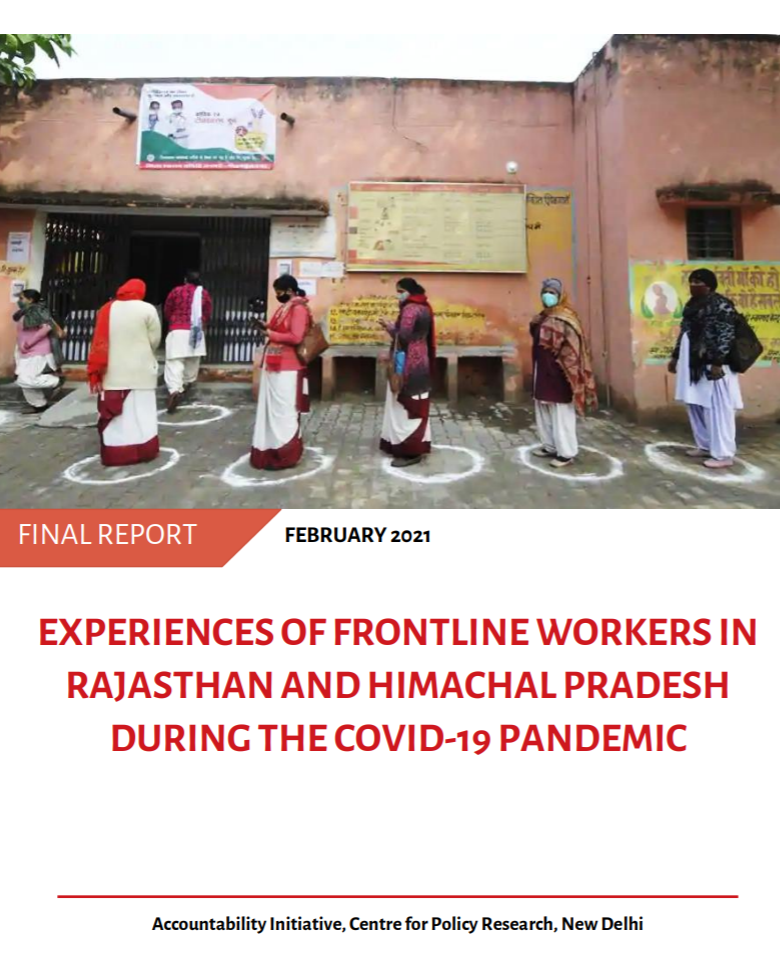
This study examines the evolving role and experiences of Frontline Workers (FLWs) during and after the nation-wide lockdown in 2020.
The findings provide insights into how FLWs shouldered additional responsibilities, how they have adapted to the disruption of routine health and nutrition related services, and how they have initiated creative responses to help the system adapt to the ‘new normal’.
Don’t have time to go through the report? Download this Data Visualisation from here to learn more about health and nutrition services during the pandemic.