
PAISA for Panchayats Report

The PAISA for Panchayats research project extends Accountability Initiative’s PAISA methodology to track fund flows and implementations processes at the Panchayat level. By focusing on understanding the state of fiscal devolution to rural local governments, this paper answers 2 key questions:

  • What are the overall trends in fiscal devolution to Panchayati Raj Institutions (PRI) in Karnataka?
  • How much money do Gram Panchayats actually receive?

To answer these questions we studied 30 Gram Panchayats (GP) in Mulbagal taluk, Kolar district, Karnataka. Our research shows that despite the State’s pioneering efforts in improving intergovernmental fiscal transfers, the system clearly falls short of the State’s vision for effective devolution to Panchayats. The 30 GPs in Mulbagal spent only 3 percent of all the money spent by the government within each GP’s jurisdiction. Not a single GP was aware of the nature or extent of expenditure made by other entities (like state line departments, parastatals, district and Taluk panchayats) in their jurisdiction. Further, these other entities do not track or maintain records of their fund flows at a GP level leading to inefficient expenditures which are non-transparent and non-accountable.

Based on our research, we recommend that the Karnataka Government make efforts to ensure there are no unfunded or overlapping (with other state bodies) mandates for panchayats and that their proportion of discretionary spending be increased. Also, as the old adage goes – What cannot be measured cannot be monitored. It is hence imperative to work towards creating and disseminating information on fund flows to relevant stakeholders through a holistic and open record keeping system that can measure in real time the allocations, releases and expenditure at a GP level.

To access data sheets used for the study click here. 
PAISA: Social Sector Spending in Chhattisgarh

This study delves deep into the implementation of four important Government of India (GoI) social sector schemes in Chhattisgarh to evaluate the nature and effectiveness of public service delivery of school education and nutrition in the State. It seeks to answer the fundamental question of whether development funds reach Chhattisgarh’s poor children, and in order to do so, it looks at multiple aspects of the public service delivery system: the efficiency with which government schemes on school education and child nutrition run in the State; whether the facilites are equipped to provide these services; what are the systems and processes in place and do they work, and finally – where are the bottlenecks and the most pressing issues and what steps can be taken to resolve those. This study does not delve into the effectiveness and outcomes of government policies but examines governance systems to see whether the processes and systems put in place by the State are capable of delivering government programmes.

पैसा: छत्तीसगढ़ की सामाजिक क्षेत्र योिनाओं का जिश्लेषण

हम इस अध्ययन हेतु तमाम सुजिधाएं उपिब्ध कराने के जिए छत्तीसगढ़ सरकार के अजधकाररयों के अत्यंत आभारी हैं। यह अध्ययन श्री अजमत अग्रिाि )सजचि, जित्त और िाजणस्ज्यक कर, छत्तीसगढ़ सरकार( और श्री डी.एस. जमश्रा )पूिण अपर सजचि, जित्त और जनयोिन, छत्तीसगढ़ सरकार( के प्रोत्साहन और मागणदिणन के जिना संभि ही नहीं था। अपने-अपने कायाणियों से जद्वतीयक आंकड़े उपिब्ध कराने के जिए हम श्री िगदंिा पांडे, प्रोग्रामर, एसएसए, राज्य कायाणिय; श्री अस्खि रायज़ादा, संयुक्त जनदेिक, आरएमएसए राज्य कायाणिय और श्री नाईक, संयुक्त जनदेिक, एमडीएम, राज्य कायाणिय के जििेष रूप से िुिगुिार हैं। हम अध्ययन के दौरान आिश्यक सहयोग देने के जिए श्री जनमणि चौधरी, मजहिा एिं िाि जिकास राज्य कायाणिय; श्रीमती जिस्टीना िाि, मजहिा एिं िाि जिकास राज्य कायाणिय; श्री मोहम्मद क़ैसर, जमिन जनदेिक, एसएसए राज्य कायाणिय और श्री मयंक िारिाड़े, जनदेिक एमडीएम राज्य कायाणिय को धन्मिाद देते हैं। श्री रािेि जससौजदया, जित्त जनयंत्रक, जित्त जिभाग ने हमें जिक्षा जिभाग में िेखांकन प्रणािी के कामकाि के िारे में िहुमूल्य िानकारी दी। ररपोटण की उत्कृष्ट्ता में इन अजधकाररयों का भी योगदान है।

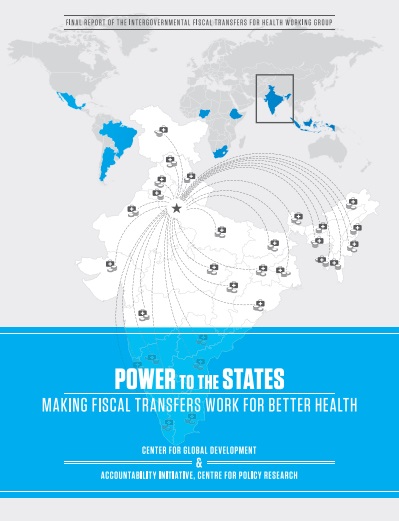
Power to the States: Making Fiscal Transfers Work

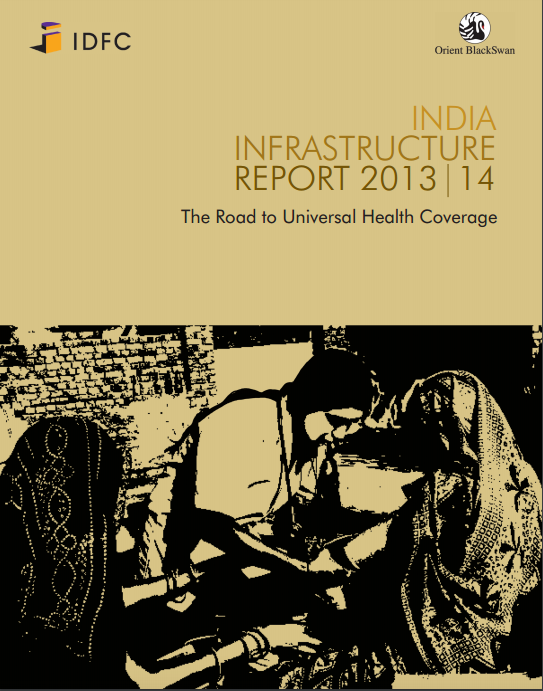
India embodies many perplexing contradictions in development. A middle-income country with a powerful diplomatic and economic presence at the global level, and citizens in business, science, and the arts with world-class contributions, India is also home to more desperately poor people than all the nations of Sub-Saharan Africa combined. India also matters for global health, accounting for about a fifth of the global population and a fifth of the global disease burden too, much of it preventable. But the central government spends only 1 percent of gross domestic product (GDP) on health, over three-quarters of which is sub-national, raised and spent by states.

Health status, access, and care vary greatly across states, and the decentralization of health systems and spending to date has had at best mixed results. For many years, the Center for Global Development (CGD) in Washington, D.C., has worked on global health financing issues and—separately—has drawn out lessons that India teaches the world, and the Accountability Initiative at the Centre for Policy Research in New Delhi has promoted informed and accountable financing and expenditure in India itself.

Now, we have partnered in a joint working group in one area that makes a difference for both organizations: how the relationship between the center and the state in a large federal country like India can be shaped in a way that is most likely to improve outcomes for people’s health. This working group report assesses past efforts to reform India’s fiscal and health policies and makes a set of actionable recommendations that may also be relevant to other countries and development partners facing similar challenges. The recommendations recognize that power and money in India have shifted to the states and that the center’s role should move away from direct service provision financing toward a focus on public goods and minimum guarantees in health—using the system of intergovernmental fiscal transfers as a lever and an enhanced set of data, research, and accountability mechanisms as enablers.

CGD and the Accountability Initiative are longtime advocates of outcomes-based approaches to improve the quality and local accountability of funding, such as through Cash on Delivery Aid, and that emphasis is reflected in this report as well. CGD and the Accountability Initiative will continue to monitor what the Indian Prime Minister, the Ministry of Finance, the National Institution for Transforming India Policy Commission (NITI Aayog), and the Ministry of Health do to move ahead on these recommendations, so crucial for building India’s leadership in global health. Each has a role to play but must first align on a vision where states are in the lead on service provision and the center uses its tools to enhance incentives for more rapid progress on health.

Rules vs Responsiveness

Elementary education policy in India is undergoing an important transition. For decades, the primary goal of the Indian Government’s elementary education policy was to create a universal education system through the provision of school inputs. This resulted in a significant expansion of India’s elementary education infrastructure – enrollment in India is near universal and most states in the country have constructed schools in every habitation. But even as this infrastructure was being put in place, it became increasingly clear that schooling was yet to translate into learning.

In May 2015, Accountability Initiative (AI) published a paper analysing trends in elementary education financing. The paper is based on data collected through AI’s flagship PAISA district surveys. It presents a detailed analysis of the survey findings and proposes an alternative, outcomes based financing system for elementary education in the country.

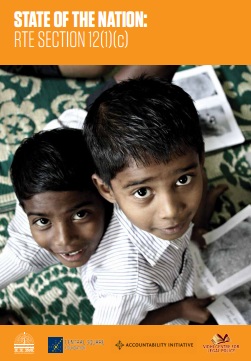
State of the Nation: RTE Section 12(1)(c) 2015

Section 12(1)(c) of the Right to Education Act imposes a legal obligation upon private unaided schools to reserve 25 percent of the seats in the entry level class for children from Economically Weaker Section and disadvantaged categories. The intention behind this provision is to ensure that the states as well as other stakeholders in society share the obligation of realizing the right to free and compulsory elementary education. The increased prevalence of unaided private schools makes them a natural stakeholder to the fulfillment of this obligation.

The mandate should also be understood as an effort to arrest the increasing segregation in Indian schooling and promote an environment of knowledge sharing between different sections of society to encourage the narrowing of current societal divisions. It has the potential to impact 1.6 crore children from EWS and DG categories in the next eight years. However, the implementation of this provision faces numerous challenges.

This report looks at Section 12(1)(c) from the administrative, legal, and financial perspective to highlight the challenges and to recommend suggestions for improvement.

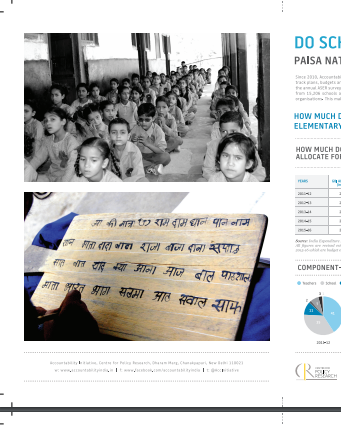
Do Schools Get their Money? PAISA 2014

Between October and November 2014, PAISA went to over 14 thousand government run elementary schools across India to ask the following questions: Did you get your money? When did you get your money? Did you spend the money? And if so, what was the output of that expenditure? The PAISA survey is conducted as part of the annual ASER survey that tracks learning outcomes and is implemented entirely by citizen volunteers and civil society organizations. This makes it the first and only citizen led effort to track development funds. Do Schools Get Their Money? (PAISA Report 2014)” offers a snapshot of findings from the 2014 survey.

JSY, Institutional Deliveries and Maternal Mortality

Janani Suraksha Yojana, Institutional Deliveries and Maternal Mortality: What does the Evidence say?

Despite tremendous medical advances, the instances of maternal and neonatal mortality occur quite frequently, especially in developing countries. Each year, more than half-a-million women die from causes related to pregnancy and child-birth, 99 per cent of which take place in the developing countries (UNICEF 2009). Nearly 4 million newborns die within 28 days of birth, 98 per cent of which occur in the low and the middle income developing countries. Most of these maternal and neonatal deaths are a result of direct causes—80 per cent of maternal deaths are due to obstetric complications including post-partum haemorrhage, infections, eclampsia and prolonged or obstructed labour, while 86 per cent of the newborn deaths are the direct results of the three main causes—severe infections, asphyxia and pre-term births.

These large numbers of maternal and neonatal deaths can be avoided if skilled medical personnel are at hand, better care is provided during labour and delivery, and key drugs, equipment are available. Given that these resources are more easily available in a medical facility, delivering in a medical facility has been recognised as an important way to reduce maternal and neonatal deaths. Yet, the proportion of women who deliver in medical facilities remains abysmally low in many developing countries, including India.