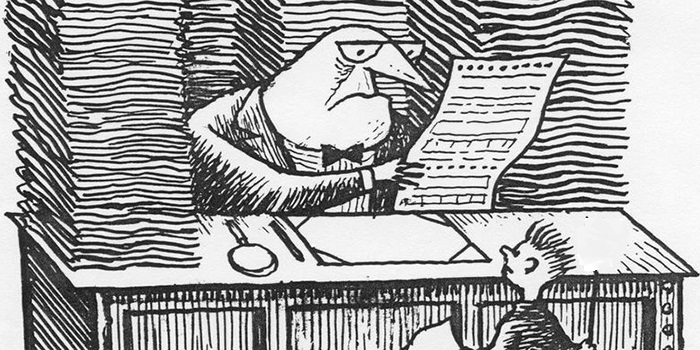
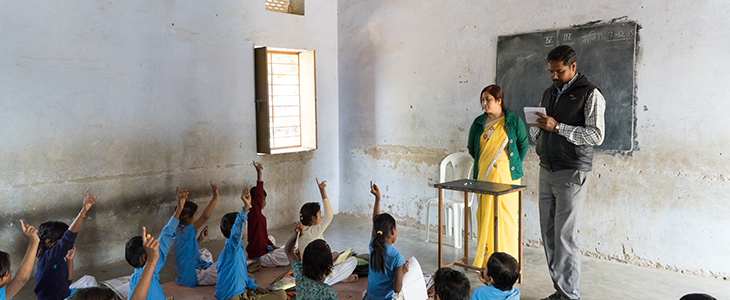
Exploring the ‘symbols’ of Indian Bureaucracy

The Public Administration team at the Accountability Initiative (AI) brings to you a five part blog series that attempts to unpack some of the frequently heard terms and phrases in the middle and lower levels of the bureaucracy in India. Based on the team’s personal experiences, these stories give the readers a peek into the peculiar world of Indian bureaucrats. More importantly, it gives us the opportunity to rethink and question some of the common myths and narratives generally associated with government officials in the country.


Blog 1: The ABCs of Indian Bureaucracy – A Primer

The blog series begins with an introduction to the ‘Administration in Alphabetic Order’. Here the blog lists some of the frequently used terms and phrases spanning the entire English alphabet (A to Z). It then guides the series presenting terms based on the first four alphabets –

A for Authorisation

B for Babu

C for Circular

D for Deadlines

Read full blog Click here 

Blog 2: Of Authorisation Letters, Samosas and Chai

The second blog represents the letter ‘A’ for Authorisation. Here we understand how ‘authorisation’ is perceived in the corridors of Indian bureaucratic offices. We see this through letters of permission, the weight of the signatory and the demeanor of the receiver on viewing the authorisation letter. As a start, it clearly unravels the subtle prerequisites (Letters, Samosas, Chai) that ensure work gets done in a government office.

Read full blog Click here 

Blog 3: B is for Babu

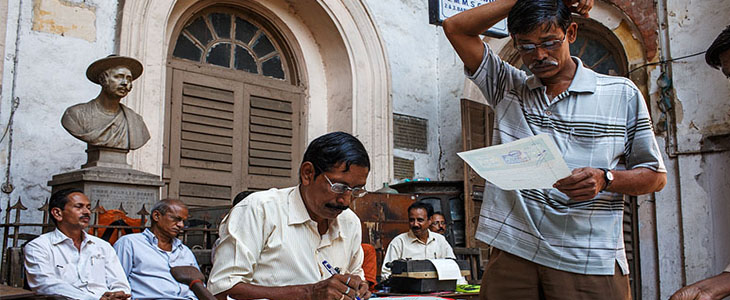
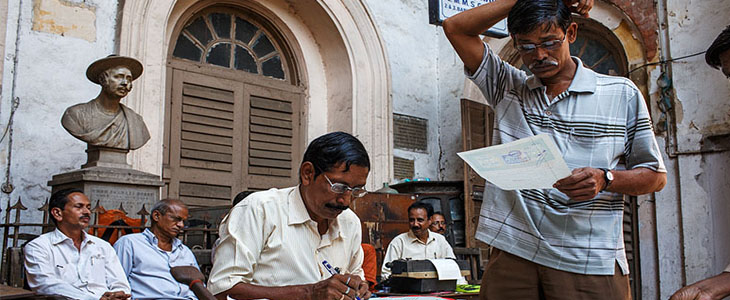
Blog three of the series delicately exposes the world of the ‘babu’ (babudom). It introduces us to the essential employee of any government office without whom no work can get finished. A bulk of the work in any bureaucratic office involves filing, maintaining and transmitting information. It is the ‘babu’ who takes responsibility of this tedious, yet essential task. Despite their importance in the system, a number of issues surround them.

Read full blog Click here 

Blog 4: A Circuitous Journey

The bureaucratic ‘circular’ (usually sent by a higher authority) is vital for most work to get done in a bureaucratic office. This blog discusses the nuanced journey of this circular and the power it can have on driving action and affecting results.

Read full blog Click here 

Blog 5: How Important are Deadlines in the Bureaucracy?

The final blog of the series discusses the peculiar relationship bureaucrats have with the concept of a ‘deadline’. It links with the factors discussed in the previous blogs that drive official work in a government office. Sometimes it is more potent than any other factors even though the bureaucracy is notorious for missing deadlines. What explains this paradox? Why do the factors discussed in this series continue to hold such a sway on the system? This blogs dissects these questions to illustrate how deadlines are important in fixing work priorities as well as the vicious cycle which keeps the narrative of the apathetic bureaucracy alive.

Read full blog Click here 


Incubating and Selling Policy – A Case Study of Demonetisation

Over the last month, the demonetisation saga has been holding centre stage in India. On 8 November, the Prime Minister announced the decision of the government to declare that from that midnight onwards, Rs. 1000 and Rs. 500 currency notes would not be legal tender. The reasons given for this decision were that it would hit terrorist funding and criminal activities such as counterfeiting and that it would directly render valueless the vast stores of cash stashed away as illegally acquired proceeds of corruption, or as tax-unpaid money. While doubts were expressed about whether the move will achieve the intended results, there was no escaping the fact that the move had widespread popular support, particularly amongst the middle class, which saw at last, a redemption of the promise for effective action in this direction.

It was but natural for people to assume that the government was well prepared to handle the massive transitions that would result from this dramatic announcement. After all, all governments deserve the benefit of the doubt for their actions. During the first few days following the announcement, there were some rumblings at the inconvenience caused by it. However, the general mood of the people as they stood in serpentine queues to deposit the high denomination notes that they held, as also to withdraw money in hundred rupee notes and the new denomination of Rs. 2000, was that it was all to be endured in the national interest.

Then, matters bean to unravel.

The first signs that all was not well came about when the new Rs. 2000 notes did not fit into the ATM machines. Then, it was discovered that even when dispensed, these notes were of no use, because of the absence of small change in the form of sufficient numbers of Rs. 100 notes. Instances of deaths of people waiting in queues began to trickle in. Initially, the discordant voices did not find their way into the media; some of them did see sense in the move, whilst others were known to be overtly partial in favour of the government.

However, a month later, it is clear that the move has had unprecedented and adverse repercussions on the economy. Industries are being shut, rural markets have no buyers and agricultural produce is rotting. There is an inestimable opportunity cost in the idle time spent by countless people standing in queues waiting to retrieve their legitimately earned money from the banks. The mountains of black money that were expected to be unearthed have turned out to be molehills and neither have the cupboards of the corrupt burst open, scattering skeletons everywhere. Actions such as a renewed amnesty scheme that allows those who stashed away black money to walk away after paying fifty percent taxes on the declared income – a significant come down from the complete loss that they were to endure if high denomination notes were deemed valueless – do not seem to be effective.

In the meantime, the Prime Minister has changed the narrative by extolling the virtues of a cashless economy. The bureaucracy has been kick started into action, to artificially drive people into preferring cashless transactions over those transacted using currency. This has put the fragile cashless system under strain, leading to breakdown and claims of unreliability. Cash based transactions continue to suffer, because no currency notes of the right denominations are available. As people with no slack to endure even the slightest blip in their economic activity are caught between an inaccessible cashless system and a cash starved market place, their desperation is evident.

In the meantime, politicians of all hues and opponents of the government have been quick to point out happenings that seem to cloud the issue even further; of sudden international remittances of funds a few months before the announcement, of large purchases of land by politicians using hard currency, of illegally stashed away money being returned to banks through ‘money mules’ (those who stand in queues to hand over others money into their accounts for a commission), of companies promoting cash transactions gaining huge market shares; all insinuating that a favoured few had insider knowledge of the impending announcement and had taken advance action to avoid its repercussions or were making windfall profits from business opportunities.

If one were to step back and survey the mayhem, the big picture is that policy making has been hasty and ill thought and there has not been any leisure to seek repentance. The Government is clearly now in panic mode and decisions seem more of the knee jerk reaction type at the moment.

How could this happen?

How are policies actually made in the government? Are there not any safeguards in decision making? If something goes wrong in policy making, who is accountable?

These are questions that will be explored in greater detail, in this new blog series.

Fiscal Decentralisation through the Lens of Second Generation Thinking

Our previous blog captured the First Generation Theory (FGT) on Fiscal Federalism. In this blog we will cover ground on the Second Generation Theory (SGT) on Fiscal Federalism which incorporates the learnings from FGT and builds on it by adding on to the growing experiences on decentralisation along with the evolution of public sector and fiscal institutions.

The primary difference between the approaches by scholars and practitioners between the two phases was that the first generation thought was rule based and disregarded the fundamental notions of human behaviour and public choice. Whereas, the second generation questions these assumptions and approaches decentralisation by borrowing from literature outside public economics. Such as, principal-agent approach, incentive-driven approach, information asymmetry, economics, organizational theory etc. A detailed comparative view has been discussed below:

Trade-off between the Centralisation and Decentralisation argument:

FGT regarded the government as the custodian of public interest. It sets a positive role for the government in terms of correcting various forms of market failure, establishing an equitable distribution of income and stabilising the macro-economy. Similarly, in a multi-level government setting, each level will fundamentally work towards maximising the social welfare of its respective constituencies. Mancur Olson envisioned its outcome as a ‘perfect mapping’ (technically referred as fiscal equivalence) of functions and finance of governments at different levels that deliver efficient levels of outcome. To manage the spill-over benefits and disadvantages, it simply applied the Pigouvian theory of subsidies where the Central government would provide matching grants to decentralised governments.

SGT, on the other hand questions the efficiency argument of governments by questioning if there can be uniform levels of output. This is because there exists fundamental information asymmetry which leads to perverse incentives and free-riding at the cost of the different tiers of the government (also known popularly as the prisoner’s dilemma). Further, Wallace Oates questions that if the argument for decentralisation is the lack of understanding of local preferences by the Central government, then how can it determine Pigouvian subsidies for local governments?

Going further, SGT included in its framework the political processes through two different ways: as Robert Inman’s setting of ‘de-concentration’ or ‘administrative federalism’ with the traditional principal-agent approach where regional and local governments are largely agencies that respond to Central directives and also, exclusively, the electorate as the principal and elected officials as its agents as studied by Mariano Tommasi.

Structure of the Public Sector and Fiscal Institutions

In the FGT approach, the Central government was responsible for managing the macroeconomic impacts that may arise.  It has stressed on the need for hard budget constraints in local governments so spending can be controlled and managed. This scenario however ignores what is called soft budget constraints as put forward by Janos Kornai i.e. an expectation of rescue by decentralised units from the Centre in times of fiscal stress.

These kind of expectations can set several difficulties as local governments find an irresistible incentive to expand their programs and spend beyond their means. Expectations are the basis of inefficiencies and goes against the Pigouvian spirit which identifies matching grants as solutions for fiscal rescue. On the other hand, Wallace Oates mentions that the SGT approach stresses that such claims cannot be ignored by the Central government because:

  1. Welfare of the locality may fall below desired levels due to low output levels in that jurisdiction and
  2. There may be electoral consequences for the Central government authorities.

In countries like Argentina and Brazil, local government fiscal behaviour had almost led to the destabilisation of the entire fiscal system and economy.  Wallace Oates explains that similar conflicts have arisen in the European Monetary Union where it was assumed that following a set of rules will prevent undermining the credibility of the European Central Bank by the member nation policies. But this was just in principal, as in reality there involved fundamental ‘common pool’ problems which came in conflict with the redistributive objectives of the European Union. Thus, SGT took into consideration the incongruity between the structure of public sector and fiscal institutions. It identifies that there exists a real conflict of objectives that presents a difficult trade-off in the design of fiscal institutions and budgetary procedures.

It recommends three important features that will make sure that the purpose of hard budgets are served well: 

  1. Establishing balanced budget constraints through the legislature
  2. Constrain borrowing limits for financing capital projects and
  3. Designing clear public bankruptcy laws that specifies clearly how fiscal crises will be handled

Role of the Central Government

FGT simply assumed federal structures to be stable and self-enforcing entities. As mentioned by De Figueirdo and Weingast, it doesn’t take into consideration that federal structures have two very inherent incentives for destructive behaviour i.e.:

  1. Central intrusion that leads to destruction of an effective federal structure
  2. Local capture undermining the federal structure that raids fiscal commons through opportunistic efforts that leads to local benefits incurred at the expense of other jurisdictions
  3. SGT attempts to find the delicate balance between the Centre and the local governments. By applying game theoretic analysis of soft budget constraints and fiscal bailouts.

But the larger point to drive home is that political and hence fiscal institutions are endogenous to the system they subsist in and hence solutions will have to be context dependent.

To summarise, where FGT followed a technocratic rule based approach, SGT builds a pragmatic way for measuring decentralisation. In spite of the outcomes being so country specific and adept with contradictions, broad rules of decentralisation has been framed. Follow our next blog to unravel the basic tenets and contextualization of decentralisation as put forward by Roy Bahl.

Information and Anger

Several research institutions and think tanks in India track expenditure. They tell us that budgets were laid down for this and that, they speak of estimates and revised estimates, they speak of expenditure, they cut that into slivers of capital and revenue expenditure, they write about balances, and discuss opening and closing balances. There are graphs in the main reports and tables, with twenty columns of dense data in tiny font, in the annexes. Typically, the font in which the source is mentioned, is tinier than the ones used for the numbers.

These reports do not do the one thing that they are intended to do. They do not make you angry and seek change.

The other day, an officer in the government, a close friend of mine, told me the story of women and child welfare programmes in the State of Karnataka. We, from Accountability Initiative had gone to meet her, to discuss in what ways the Panchayats could become central to the implementation of programmes for the welfare of women and children in the State. It was a revelation.

The officer explained that her first priority is the fact that the number of missing women – a phrase she used to describe women who die in delivery and the girl children that are not allowed to be born – is about 8 lakhs at any given time. She said that the government’s blunt instrument to solve the problem was to promote institutional delivery, which is to insist that women delivered their babies in hospitals. Karnataka had largely achieved this objective; institutional deliveries had now touched 90 percent of all deliveries in the State.

However, to keep track of women who had conceived, there was a system of registration for them. Those registered were given prenatal care. However, only 75 percent of those who had conceived were so registered. That meant that only 75 percent of women were receiving various supplements, including folic supplements. 25 percent of women were not receiving any such supplements, even though they were eventually landing up – at least a large proportion of them – in hospitals, to deliver babies.

Then, did the women who deliver babies, even in hospitals, live?

No, the situation is not good at all, she said. Maternal mortality in the State is at 133 deaths per thousand. Karnataka is the worst off State in South India, the only state to have its Maternal Mortality in three digits. Infant mortality is 28 deaths per thousand. In comparison, Tamilnadu’s infant mortality is 21 deaths per thousand, while Andhra Pradesh is at a high 35 deaths per thousand.

So, I responded, mothers die in more numbers and children die, right?

Well, she said, that’s because there is rampant child marriage in Karnataka. Young girls, suffering from nutritional deficiency get married, pregnant, suffer from more nutritional deficiency during pregnancy. They die, even if they die in hospitals. Besides, she said, while infant mortality is at 28 deaths per thousand, the mortality rates of children under five is 32 (against the Indian average of 42 deaths per thousand). So many of the children who survive their births, don’t live to see their fifth birthdays.

She then pointed out the results of the Fourth National Family Health Survey, 2015-16. According to this report, child stunting in Karnataka has come down from 47 percent in the previous survey to 36 percent. However, the percentage of underweight children had come down only marginally. What’s worse, wasting away of adults and children had gone up by 9 percent. Karnataka had a large number of low birth weight children, with Raichur and Bagalkot districts being the worst off.

As I sat quiet, ruminating over the graphic picture she painted of the situation on the ground, she interrupted my thoughts softly. ‘I spoke the other day to the Deputy Commissioner of …. District. It is an irrigated district’, she said. ‘He said he had not seen a single woman in the district during all his visits to villages, who is not stunted or underweight.’

‘What can the Panchayats do?’ I broke the silence.

There are 25000 severely malnourished children in Karnataka, described to be in the stages of Grade 3 and 4 levels of malnutrition. Children who are in the grade 4 stage are so weak that they cannot feed on their own, and they must be admitted to hospital.

25000. Enough children to fill a decent sized football stadium.

Protecting these children could be the responsibility of the Panchayats, she said. For one thing, the Panchayats can build toilets in the Anganwadi (crèche) buildings and provide facilities for clean drinking water to them. There are 64500 Anganwadis in Karnataka and a further 1400 will be added to that soon, she said. Open defecation is highly correlated to infant mortality. Children catch stomach infections, suffer from low grade fever. One thing leads to another and soon, they languish and die.

Under the National Rural Employment Guarantee Programme, land could be donated and prepared for the building of Anganwadis. Only 40000 Anganwadis had their own buildings. Amongst those too, there are many who do not have kitchen sheds. We do not have full details, but can get them quickly and share those with you, she said.

‘But does not the government have money to spend on these urgent necessities?’ I asked.

The Government spends Rs. 1300 crore annually she said, for Anganwadis that reach out to provide care and nutrition to 58 lakh children.

That’s less than the money the government was planning to spend on a steel flyover to reach Bangalore airport, I thought.

As I listened, my friend spoke passionately of what more the Panchayats could do. The nutritional practices are all wrong, she said. Children are getting more than 25 percent of their recommended share of sugar. Not only is that bad for them, but Sugar is also full of sulphur, due to bad refining practices. They get milk as well now; under the Ksheera Bhagya scheme, 50 grams of dehydrated milk powder is given to children every day. The Women and Child Welfare Department has no ability to undertake quality checks on the material supplied. Mother’s committees at the Anganwadi level don’t work, they need to be activated. Panchayats could undertake regular social audits of Anganwadis. They could check on all these aspects of Anganwadi functioning, she said.

There are other ways in which the Panchayats could work on women and child related issues. There are a large number of abandoned or surrendered babies, due to teenage pregnancies that are not aborted. The Panchayats could keep track of abandoned babies.

Even as I grappled with the information she was giving, my friend waved her phone at me. She had already created a WatsApp group of her officers and staff, and they were sending in details of the good practices seen on the ground. ‘The Panchayats are already doing many of these things,’ she told me. ‘My suggestions are drawn only from what I’ve seen on the ground’. She showed me pictures of Bettegeri panchayat, where the Panchayats had helped Anganwadi workers to grow vegetables in bottles and also set up a donation system for supplementary nutrition through putting a basket at the gate of every Anganwadi. Panchayats were donating clothes, as well.

She ended by reflecting that education starts with health, it does not start with education. She pointed out what the Nobel Prize Winner, James Heckman had said; that of every dollar spent by the government, the highest return is obtained on what is spent during early childhood. The child’s critical brain development happens in the first 1000 days of the child including the time spent in the womb. Keeping a child well fed and healthy improves educational outcomes later on. If children have immunity, they do not miss school. Their incomes in future are impacted positively, immeasurably. She spoke of the new programme that the Government was planning to start; a pilot programme in 4 taluks of the State, to ensure that the inter-generational cycle of malnutrition is broken. A thousand day programme. She said that the Panchayats must monitor these programmes.

I looked at my watch as I left. I had spent just over an hour with my friend.

I was angry. Seriously angry.

How Important are Deadlines in the Bureaucracy?

This is the final blog of a five-part series to unpack the meaning of some of the frequently heard terms and phrases in the Indian bureaucracy.


Webster’s definition

Deadline:

1. A date or time before which something must be done

2. A line drawn within or around a prison that a prisoner passes at the risk of being shot (archaic)

Bureaucratic translation:

A date or time before which something must be submitted to higher authorities. Often treated as a relative concept despite being accompanied by circulars promising action against non-compliers.   


In our previous posts, we discussed how the work lives of bureaucrats are guided by a volley of circulars, orders and procedures. Deadlines are another factor which shape work priorities. Now, deadlines are something that professionals have to deal with on a regular basis. In the world of the bureaucracy, however, bureaucrats share a peculiar relation with the concept.

Two types of deadlines; too many deadlines

I have seen the bureaucracy tackle two types of deadlines – one is connected to routine administrative work. For teachers to continue teaching students, infrastructure should be in place, salaries must reach teachers on time, staff should be given regular in-service training etc. So a salient role of the bureaucracy is to make sure these tasks are planned, implemented and monitored on a timely basis. The second type is the one dictated by political masters, usually connected to their pet projects. It’s harder to predict when such a type of deadline might be dropped on the bureaucracy since the tasks may not have been planned well beforehand. In that sense, this second type of deadline is more disruptive.  

Once a deadline is set at short notice, one sees offices abuzz with activity. Papers fly, circulars and office orders are frantically framed and pushed down the chain of command, meetings are hastily convened to discuss how work must now be re-prioritised, and go-to babus in various government offices are pushed to their limits. In my experience of studying the education bureaucracy, I have noticed mild to severe chaos ensue once a new deadline is set because the bureaucracy is often seen struggling to juggle multiple deadlines. The persistent feeling is that there are too many deadlines and most of these crop up at short notice because of the whims of those in command – either in the bureaucracy or in the political space. Planning is generally viewed as a futile activity as the expectation is that more tasks will be dropped on their heads which would mean more deadlines to battle. 

Obvious and thinly veiled threats of action being taken against those who fail to meet the deadline are reinforced through more circulars with ominous clauses, “discussions” in government meetings and increasingly on ‘official’ WhatsApp groups. The peculiar thing is that despite these efforts, missing deadlines is more often than not the norm.

And the issuing of circulars once deadlines are missed – the ones that carry more warnings around action being taken against errant officials – is treated as a ritual in itself.

But work does come in eventually. The system trudges along and delivers in its own time and action is rarely taken if initial deadlines are missed. The impression one gets is that the bureaucracy is not interested in respecting deadlines, and once deadlines are missed, the circulars that are issued and the personal calls that are made to officials are all just rhetoric.

Whose deadline is it anyway?

If we ask why this happens, we will come back to the issues affecting the bureaucracy which have been discussed in the previous posts. Managing a multi-layered, diffused and a highly interdependent public bureaucracy is a massive challenge to begin with. It is bound by orders, circulars, procedures and guidelines to keep parts of it from turning rogue at any point. What does not help is the fact that there is an apparent staff and infrastructure crunch, limited technological literacy, and officials are primarily held accountable for maintaining and transmitting data rather than ensuring high quality services are delivered. Officials often share with us that they deliberately choose to not penalise subordinates if they are unable to deliver on time because “who will do the work then?”

So how important is one deadline over another in the bureaucracy? As important as the degree of heat faced by senior bureaucrats from the hands of their political masters. When a type-2 deadline is imposed routine administration work takes a back-seat and then we see it quickly piling up. Thus begins a vicious cycle – because action will not or cannot be taken against officials who fail to deliver on time, officials’ incentive to even stick to timelines is reduced. This pushes the pace of work back further. Moreover, data that has already been transmitted gets requested in different formats and points in time owing to poor data management which exacerbates the situation. As do half-baked plans that are pushed down from the top resulting in more chaos below and rendering the Deadline relatively meaningless.

Symbols of bureaucracy

This blog series has been an effort to showcase a slice of life inside the mid-level bureaucracy by decoding the meaning of some of the commonly heard terms and phrases. If you look at the terms closely, as listed down by us in the first blog of this series, you will get a sense of the kind of activities the system tends to prioritise. The takeaway is that the bureaucracy tends to make certain activities the end-all of their responsibilities, say creating inspection reports or following rules with blinkers on even if the rules end up causing more harm than good, because of practices that have congealed into a set of norms over the decades. Getting out of this procedural rut and an introspection on the actual requirements of the bureaucracy – be it in the space of capacity building or work rationalisation – is the need of the hour if we have to bring about positive and sustainable improvements in public service delivery. 


Vincy Davis works with the Public Administration team at Accountability Initiative. Currently, she is conducting field work for a project which involves analysing the implementation process of key government interventions in education in the NCT of Delhi.

False News and Anger

In last week’s blog, I wrote about the challenges of converting information to content that can make people angry, because anger is a great motivator; a call to action. However, there is a flip side to that coin. If the objective of making people angry takes precedence over the information itself, then we have a far more dangerous problem to contend with; the strong incentive to generate false information.

Generating false information to divide and polarise people is as old as the origin of language and communication. However, possibly never has it been so easy or convenient to do so, than today. Social media networks can make false news go viral even in the natural way, but when manipulated, can spread it with unimaginable speed. Apart from the content itself being false, such as, for instance, a doctored video that shows communal trouble, the popularity of the content can be faked, in order to trigger greater, genuine popularity. It is an open secret that posts that rapidly ascend to the top as ‘trending’ ones, on Twitter, reach that status because of fictitious followers and automatic retweets. Thus, when a genuine follower sees the Tweet, she is impressed by the support it has already received. The social media falsehood industry has thus developed two specialisations, namely, the falsehood creating one and the popularity boosting one.

The intriguing question is whether social media platforms such as Facebook, can be pilloried for false information that is spread on it. This question has moved centre-stage as politicians have begun to woo Mark Zuckerberg, the Facebook supremo. Donald Trump, the US President-elect, has gone so far as to credit Facebook for his victory.

There are two views on blaming social media. Those who fault it point to the fact that the algorithms that drive content onto one’s feed are not transparent, and are often at loggerheads with one’s own convictions and beliefs. That it happens is not disputed; I have personally been annoyed by Facebook sending me unsolicited content that is contrary to my political, social and environmental ideology. However, it is possible to ensure that such content does not come one’s way. When I deleted such posts, a pop up from Facebook prompted me to answer questions as to why I found the content inappropriate and on repeated occasions I clicked on the box that it goes contrary to my beliefs. Over time, I have noticed that Facebook has stopped beaming such content my way. The other view is that on social media, as in any other interaction, it is open to us to choose the communities and people with whom we ought to interact. If we don’t and we are swayed by content – whether genuine or false – to change our beliefs, then the fault is entirely ours.

I am torn between which views I should take; my heart says to go with the first, that social media is to blame for the power and adverse effects of false information, but my head says that it is up to us to acquire the capability to sort out the wheat from the chaff.

Last night, I had an opportunity to test myself on whether I should follow my head or my heart, when I received a WhatsApp forward of a blog that purported to reveal a deep international conspiracy to flood India with counterfeit currency. A check of the blogger showed that she, he or it, had not been a consistent blogger for any length of time; this was the first blog of any substance. Second, the blogger’s name seemed to be a crude attempt to evoke nationalistic feelings. Third, the blog casually mentioned two Indian universities that people of a certain political disposition love to hate, as being the recipients of large quantities of counterfeited money. It did so without even pretending to produce evidence. If one recognised these signs, clearly, in my mind, the news was false. However, the comments section of the blog were revealing. Many of those who commented on it were anonymous or operated under pseudonyms. They were abusive and insulted anybody who attempted to question the content and the veracity of the blog. Clearly, what could be seen was how the false information generator and the false information populariser, were operating in tandem.

So what is the lesson for those who want to negate the damage done by false news? The easy response would be to rant, or to demand action upon the social media platform concerned. The more difficult one would be to swiftly counter false news with the right information.

I would opt for the latter. If we are not happy with what we see on social media, it is our responsibility to use our power and that of our organisations to create content to refute false news, rather than waste time resenting it.

The Worrying Status of Sarva Shiksha Abhiyan Implementation in Bihar

Historically, Bihar has been a major centre for learning and education. In recent years however, owing potentially to population explosion and poor governance, the status of education in the state has been steadily deteriorating. A symptom of this is Bihar’s low expenditure on the Sarva Shiksha Abhiyan (SSA) -– the centre’s flagship scheme for elementary education and programmatic vehicle for implementing the Right to Education (RTE) Act of 2009; the state spent Rs. 5,229 crore on the program in 2012-13, which fell to Rs. 4,613 crore in 2013-14 before rising to Rs. 5,913 crore in 2014-15; as a proportion of the total funds that had been approved for the program, these figures stood at 51%, 68% and 76% respectively (SSA portal). The question that arises then is how these numbers impact the implementation of the scheme on the ground.

In order to gauge the impact of these fund flows on public service delivery, the Accountability Initiative (AI) regularly conducts PAISA (Planning, Allocations and Expenditures, Institutions Studies in Accountability) surveys, which track government money to the last mile. As part of the survey for SSA, schools are marked on measures of infrastructure, grant receipts, salary flows, presence and functionality of School Management Committees (SMC), delivery of entitlements – all critical indicators of the scheme’s implementation.

The districts of Purnea and Nalanda in Bihar have been covered by the survey since 2011. Unlike the surveys conducted in 2011 and 2013, the most recent one conducted in December 2015 had a small sample size and was not statistically representative. In the following sections, however, comparisons are made across the 3 survey years in order to establish a comparative picture; these numbers must be studied with this caveat in mind.

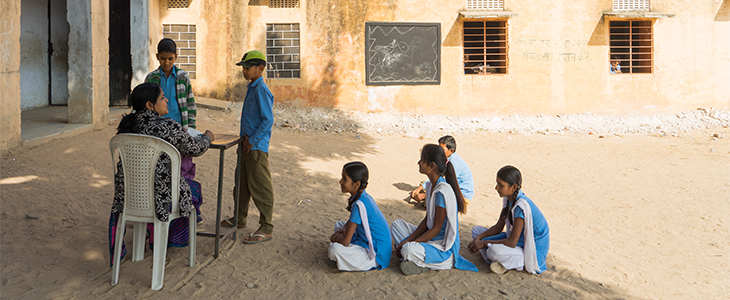
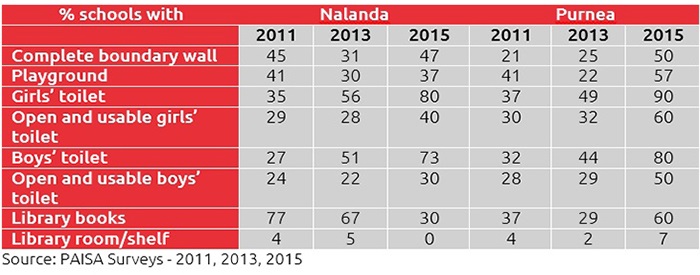
The most recent survey found schools to be lacking in critical infrastructure; 53 of the 60 schools surveyed in Nalanda and Purnea (30 in each district) did not have sufficient classrooms. On Right to Education (RTE) indicators such as presence of a boundary wall, playground, toilets and library books as well, the districts performed poorly. Of particular concern was the lack of open and usable toilets, given the current government’s emphasis on sanitation as part of the Swachh Bharat Mission. Though the presence of toilets in the schools surveyed in 2015 was much higher than the district averages for 2011 and 2013, the districts failed in ensuring usability. In Nalanda in December 2015, only 40% of the schools visited had open and usable girls’ toilets, while for the boys this proportion was even lower at 30%. In Purnea, these numbers stood at 60% and 50% respectively.

Image 1_1.jpg

Schools also receive grants for day to day operations and general maintenance; the School Management Grant (SMG) is meant to be utilised for infrastructure upkeep, while the School Development Grant (SDG) is for school operation and administration. When questioned on these in the most recent PAISA survey, it was found that a little over 3 months before the end of the financial year, only 3% of the schools visited in Nalanda and 23% of those in Purnea had received both grants.

This low rate of receipt may possibly be indicative of a growing problem; the PAISA survey conducted in 2009-10 had found that a majority of the grants in Nalanda had reached schools by the second quarter. In 2012-13 however, over 80% schools in Nalanda received their grants in November. In Purnea too, timing of grants worsened from 2009-10 to 2012-13, with the latter seeing most grants reaching schools in December-January. When a majority of the funds come in during the final quarter, the schools are hard pressed to spend them before the end of the year. Such situations lead to quick and easy expenditure in areas which may not necessarily be of priority to the schools.

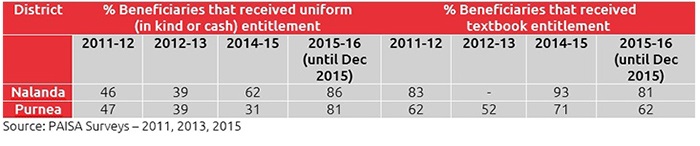
In contrast, the state improved when it came to receipt of textbooks and uniforms, as is visible in the table below. These entitlements are critical, as they are a source of supporting student retention in schools. This is of particular importance in a state like Bihar, where student drop outs are extremely high.

Image 2_0.jpg

In the case of panchayat shikshaks however, who form an overwhelming majority of the teaching cadre in the state, salary flows were found to be extremely problematic. In FY 2015-16, 80% of the shikshaks in the schools visited in Nalanda, and 95% in Purnea, reported a delay in receiving their salaries. Importantly, over 70% of the teachers in Purnea reported delays of over 3 months.

Community participation too remained extremely poor. Of the multiple ways through which the government interacts with schools, a key channel of communication is the SMC. The SMC, which is comprised of parents, teachers and locally elected representatives, is responsible for preparing a school development plan (SDP), which is meant to assist planning at higher levels of government (block and district). Though the PAISA survey conducted in 2013 found SMCs in nearly all the schools surveyed in both districts, only 30% in Nalanda and 24% in Purnea had reported making SDPs at the time. This number did not vary significantly for 2015 sample for Nalanda, where only 37% schools reported making an SDP. The schools visited in Purnea, however, showed considerable change with over 70% schools reporting SDP formation.

These findings are regularly presented to block and district level government officials with the purpose of highlighting the impact of administrative inefficiencies on schools at the ground level, along with discussing potential avenues for action. Though this is a crucial first step in improving service delivery, the process of change can be extremely slow and difficult. As Lant Pritchett very aptly stated in his paper ‘Is India a Flailing State’ (2009) – “India, with its multitude of reform efforts is struggling on the path to reforms that lead to the effective implementation of rules, but they are far from out of the woods.”

Abhishri Aggarwal works with the Public Finance team at AI. Her expertise is in Public Policy and Data Analysis. 

Of Authorisation Letters, Samosas and Chai

This is the second blog of a five-part series to unpack the meaning of some of the frequently heard terms and phrases in the Indian bureaucracy.


Oxford definition:

Authority: (1) The power or right to give orders, make decisions, and enforce obedience. (2) A person or organisation having political or administrative power and control.

Authorisation: A document giving official permission

Bureaucratic translation:

The position or a document attesting your rank and status in the babu-dom (the world of the bureaucrat)


I first understood the clout of these powerful terms as I walked into the bureaucratic setup, the arena of ‘departments, circulars, orders, notices, and rules’. The complicated task of trying to gain access into this fortress-like organisation appeared formidable at first to me, especially since I was an ‘outsider’ – a freshly minted researcher just beginning to understand this field.

Surprisingly though, far from being treated like an outcast as I had feared, I quickly realised that there was something much more influential at work here. The magical power that ‘authorisation’ has to transform attitudes in this world would put even the best of Rowling’s potions and Potter’s charms to shame.

The behavioural transformation of the bureaucrat, as a consequence of knowing that you possess the much treasured authorisation letter, is almost instantaneous. It is marked usually by a change in tenor from the particularly repulsive (reserved especially for annoying salesmen who disturb a Sunday afternoon siesta), to that which embodies the Atithi Devo Bhava (guest is our God) level deference.

In one such instance, walking into a District Mines Office in Chhattisgarh, I remember having to wait for the longest time as an invisible entity in an official’s room, while he was busy engaging in an enlightening rant about the sorry state of Indian morality and ‘girls-these-days’ with his junior staff. Presumably, I was seen as one of the girls he was referring to (at least the looks of pity I was receiving seemed to suggest so). However this lasted only till I was able to quietly place a letter of authorisation from the Joint Secretary on his table requesting him to assist us in our project. In a matter of seconds, before one could even finish uttering the words ‘ji, sir-ji’ (Yes, sir), the Diwan-e-aam (the gathering of commoners) was dismissed, the paan-chewing stopped, and I was offered a chair to, ‘please make yourself comfortable, madam’.

In another scenario, the reaction was even more priceless. A government school principal who we intended to interview initially decided to not show up, and instead sent his clerk to let us know that  ‘saheb abhi busy hain, baad mein aana’ (Sir is busy, come later). Another teacher, likely sent by the man himself, came to inquire, ‘Kahan se aaye hain aap? Koi authorisation hai kya?’ (Where have you come from? Do you have any authorization?). The clarification that our study had the requisite permissions from the concerned department resulted in an immediate invitation to what is usually reserved only for the ‘very special’ in such caseschai and biskut (tea and biscuit). In fact we were privileged enough to be granted the ultimate honor of samosas and mithai (snacks and sweets) as well – ‘local speciality, madam, taste toh kijiye! (It is local speciality madam, you must try it!)’, while we waited for the principal who rushed to meet us. It is my studied observation that in such cases, the lavishness of the spread is almost always directly proportional to the perceived bade babu-ness (position in the bureaucratic order) of the issuing authority.

In light of instances like these, how does one even begin to make sense of the complex, love-hate relationship that the bureaucracy has with authority? Authority for the bureaucrat is that necessary evil, which, despite being the most reviled by him, is what ultimately molds his own behavior, constituting his official character.

What the bureaucrat hates most in authority (the enforced obedience and the necessity of compliance) is also precisely what he himself uses and revels in while dealing with subordinates and janta janardhan (them commoners). Perhaps this explains the grudging but absolute acceptance of authority one witnesses while engaging with the bureaucracy?

Curiously enough though, this does not imply that the mere presence of authority is sufficient to drive the bureaucrat into action. While on one hand, the need for requisite authorisation becomes an excuse to put tasks off or shirk responsibility; on the other hand, the rigidity of the system works at times against itself, disallowing even committed individuals from performing their tasks effectively.

As Max Weber, the grandfather of literature on the subject said, “The rational-legal authority underpinning bureaucracy derives its legitimacy from legal orders, which ultimately form an ‘iron cage’ of rules and laws that trap the very individuals that are a part of it.”

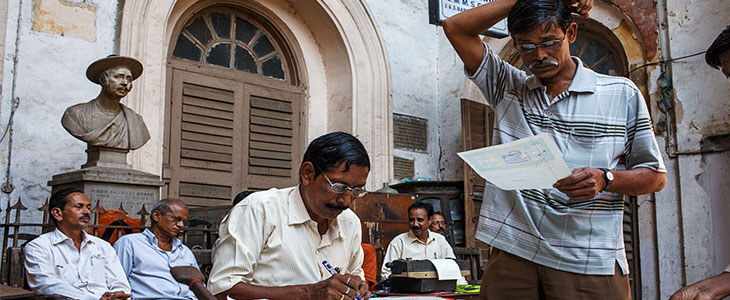
I remember vividly of the resigned helplessness with which a senior district official discussed the case of a young boy whose father’s name had been misspelt on his school leaving certificate due to a typographical error. Carrying a plethora of unusable identification documents, with folded hands, the mother of the boy stood in the office of the district office with her child, requesting him to approve the scholarship grants that the student had been denied as a result of the situation. With the father having passed away a few months ago, there was no way to establish the identity of the boy without going through a gamut of legal jargon and bureaucratic red tape. Unfortunately however, there was not much that the official could do, as the correction was outside his authority.

While discussing how such trivial things sometimes hold up work unnecessarily in the bureaucracy, he claimed ultimately that the fear of repercussions (being hauled up for questioning by seniors; having a red mark on their permanent record; salary cuts, or possible suspension orders issued against them for deviating from norms) holds most officials back even when they genuinely wish to help.

Image1.jpg

Good intentions are great, but ‘rules’ reign supreme. ‘Majboori hai madam, kya karein jab niyam hi aisa hai’ (We are bound, madam, what can we do when the rule is such) is an oft heard refrain that makes one pause and wonder on the usefulness of a system that ends up disrupting its own efficiency with its  insistence on respecting authority and instructions.

Lack of resources – both financial and personnel related – is another very real issue that holds back basic service delivery. Across departments and states one is frequently met with sights of mid and lower level government officials buried under reams of paperwork in their offices. The initial snappiness and curt reactions usually melt away when one gives a patient ear to the never-ending woes of chronic understaffing in the administration – Baaki sab toh theek hai madam, policy badhiya hai, par log kahan hain? (That is all well and good madam, the policy is great, but where are the people?)

In the next blog, we will discuss the matter of “babu ki kami” (shortage of clerical staff) in greater detail. Stay tuned!

Taanya Kapoor is part of the Public Administration team at Accountability Initiative. Her primary focus is on qualitative research to understand education reforms at the state level.

How to Conduct a Participatory Expenditure Tracking Survey

In 2009, Accountability Initiative (AI) partnered with the ASER Centre to roll out India’s first national citizen-led public expenditure tracking survey called PAISA. The survey focused on tracking government funds for elementary education.

Since 2009, AI has conducted six national PAISA surveys in partnership with ASER as well as three rounds of in-depth district focused expenditure tracking studies across five states in India. More recently, AI has expanded the PAISA methodology to other key social sector programmes including health, nutrition, sanitation and local government financing. Through the PAISA surveys, AI has consistently highlighted the strengths and limitations of India’s public finance management system. In particular, the PAISA surveys point to the consequences of India’s opaque and broken public finance management on effective implementation of social sector programmes and community participation at the grassroots.

An important objective of the PAISA survey is to engage citizens in the processes of governance. This video (above) is a small effort in this direction. It provides a step by step guide on how to conduct PAISA surveys. We hope that this video will motivate you to come out and ask your government where and how it spends its money.

To learn more about PAISA Studies, click here.

To stay engaged with our on-going work on fund tracking for social sector programmes, follow us on Twitter (@AccInitiative) and Facebook (accountabilityindia).

How Open is Open Data?

Even as I was reflecting upon the question as to whether data, when put into the hands of people, would actually lead to greater accountability, I got the opportunity to participate in a workshop on open data. One of my professional assignments is to advise a Swiss governmental agency that works on supporting decentralised local governance in the Central, South and South East Asian region.

The LOGIN network comprises of institutions that work on decentralisation, from twelve countries. The workshop on open data, organised by LOGIN in the Philippines brought together several organisations, both from the government and the non-government sectors that worked towards, or extensively used data on government services and activities.

One of the most useful sessions in the workshop was a session conducted by Michael Canares. Miko, as he prefers being called, works with the Open Data Labs, which is a part of the World Wide Web Foundation started by Tim Berners-Lee, the inventor of the World Wide Web. Miko works in Indonesia and has extensive experience in the manners in which governments make data available to people. In his session, titled ‘Making Sense of Open Data’, Miko explained the classification adopted by Tim Berners-Lee to determine whether any data put out in the public domain was really open (Tim has also explained this crisply on the net at the site – here).

Tim describes five stages of openness of government data, as follows:

Stage 1 is where data is put out in any format, but under an open licence that enables it to be copied and reproduced. For example a PDF document fits the bill quite nicely. However, a PDF document does not allow sufficient leeway for readers to extract data, compare with other documents and undertake numerical analysis.

Stage 2 is where data is made available in a structured form that can be manipulated, sliced and diced. For example a table in Excel format would meet the requirements of Stage 2, whereas a jpeg image of the table converted into a PDF file would not. Being a battle scarred veteran of exhaustive searches on the net for government data, I would be very satisfied with that. But is that open enough?

Tim describes Stage 3, where the data can not only be manipulated, but is available on a non-proprietary software. Thus, while a licenced Windows Office suite is necessary to read an uploaded excel file, any open source spreadsheet programme could read a table that is qualified to have reached Stage 3.

Stage 4 is when the data is linkable through URIs, which is expanded as a ‘Uniform Resource Identifier’. While I do not know anything about the technical details, in IT science, URIs enable a greater degree of extraction and analysis than a document containing data that has reached Stage 3.

Stage 5 is the final stage, where documents with URIs are capable of being linked so that different datasets can be used together. Again, I do not know enough of the technical details of how that’s done, but if the government is able to reach that stage, then it can be considered to have achieved the pinnacle of openness in its open data.

How do we fare in India? For that, I checked out the website of my favourite dart board, the website of the Bruhat Bangalore Mahanagara Palika (BBMP), the city government of Bangalore. A quick check reveals that at best, we can conclude that Stage 1 has been reached. Much of the data is in the form of PDF documents, and worse still, PDFs of scanned pictures. Thus the Mayor’s annual budget speech which has reams of material on the projects sanctioned, are in the form of jpegs; data cannot be extracted except by that time worn method, namely, to print out the whole thing and retyping it. The same goes for most circulars and notifications. But why single out the BBMP? The website of the Department of Panchayati Raj is similar. One finds loads of circulars and instructions (the department is fond of directing a lot of things from above – a strange affliction for a department that is supposed to promote democratic decentralisation) but one cannot search through using key words, for instance, because PDFs of images don’t lend themselves to that.

We have a long way to go. What will be required is a whole bunch of nitpickers, who go through government websites systematically, reviewing data put out in accordance with the following parameters, to determine whether it is really open. These parameters are:

  • Data must be freely accessible; meaning it should not be locked or password protected. It must be reachable easily. Complex or disorganised website architecture detracts a great deal from the intentions of governments to make data open. Ideally, three clicks should get you to where you want to be.
  • Data should be understandable. Faded documents that require experts in hieroglyphics to make sense of them, even after conversion to PDF, do not constitute open data.
  • Data must be downloadable and should be retrievable without filing a request. It must be extractable and machine readable. It must be shareable, in the sense that there must not be copyright restrictions on sharing.
  • Finally, data should be put out by the government proactively, not at the whims of the government, when it deems that it is necessary that data should be shared.

What we don’t really want is for the government to analyse the data. That’s optional, on their part. We, on the outside, will do that.

I hope my old friends in the government read my blogs.