

Blockchain, the next level of e-Governance

This blog is part of a series on blockchain technology, governance and its implications for e-Governance in India. 

I ended my last blog a fortnight back, asking whether Blockchain technology might provide a disruptive breakthrough in reforming governance processes. I had lamented that if most reform suggestions had to go back to the same people who benefit from the lack of transparency in the current system; they would not have any incentive to reform.

Yet, aspirations must be created, if they do not exist. e-Governance is as likely to get stuck in a low level equilibrium if not challenged. So challenge it, we must.

The best way to prove that something can be done, is to find somewhere where it’s done. And that’s where Estonia comes into the picture.

The Baltic nations- tiny Estonia, Lithuania and Latvia- have always had the Russian bear at their doorsteps. For them, defence is an urgent national priority. But defence could cost a great deal for a small country. Since an army might not provide enough deterrence to a large aggressor, so defence by a larger strategic alliance becomes a necessary option. In the case of Estonia, defence cover is provided by the NATO, and the country pays through its nose for it.

All the more reason that the country has to tighten its belt and maximise its efficiency. What better way to do that, than reduce its bureaucracy? On the face of it, streamlining the bureaucracy is no big deal. Countries speak of it all the time – indeed, the same bureaucracy that does not wish to be streamlined, leads the way in streamlining itself. What makes Estonia different is the staggering scale of its vision, as also the steps it has taken to achieve its vision. There are some key principles that emerge from the Estonian experience.

    • First, e-Estonia, sets its sights high. It is not merely about going through a shopping list of disconnected processes and simplifying them; the vision of the government is to transform itself from a state to a digital society. In this regard, it touches everything that has to do with citizens’ lives and in direction, the distinction between the public and the private sectors has disappeared.


    • Second, keeping in mind its ambition vision, e-Estonia has discarded the conventional approach of e-Governance in departmental silo. Instead, it aims to integrate all services with which the government is involved, under one seamless platform. This transcends service delivery to include legislation, voting, justice, banking, policing and taxation, apart from the delivery of public welfare services such as education and health.


    • Third, at the citizen level, the core assurance of the system is the ‘once only’ policy, which lays down that no information should be entered twice. Thus, at the citizen level once basic data is entered once, then there is no need to ‘prepare’ data for individual transactions with the government. No applications for loans, passports, certificates, licences need be written up all over again, because data for these can be automatically pulled from various places in the system. This means that only the barest minimum of transactions will need physical presence. Thus, if Estonians want to marry and register their marriages, they will need to turn up at the marriage registrar. Similarly, if they want to sell properties, they will need to turn up at the property registry office. Nearly all other bureaucratic processes can be done online, including voting, which can be done from the citizens’ laptops.


  • Fourth, while it is inevitable that the system rests on a foundation of personal data of citizens, the state does not own this data. The state cannot manipulate and use this data without the consent of the citizens concerned. Citizens themselves have a two-step access code to look over their data. They have to insert their ID cards into their laptops, and type in their two secret codes, one of which issues their digital signature. This unlocks access to the personal data stored on the population registry of the state. Different boxes contain employment and property information, traffic records, health, education and even pet ownership records. Best of all this data is not centrally held, but is distributed across encrypted pathways. It is the individual concerned that has access to the rigorous filtering of who can access what. Thus, if you were in Estonia, you could at your option, disallow your heart doctor from checking what your dentist has to say. And to seal the security, every time anybody peeps into one’s records, that is recorded and reported. Electronic peeping; checking out someone’s data for no reason, is a criminal offence.

These principles may give the impression that Estonia is non transparent to the extreme. What use is big data capability, if citizens can block access to nearly all data relating to themselves, in a capricious manner? Yet, Estonia is hugely transparent in many other ways.

More of that, in my next blog.

इस ब्लॉग का हिंदी में सारांश आपको यहाँ मिलेगा|
PUBLIC EDUCATION IN INDIA: PARADIGM SHIFTS IN STUDENT ASSESSMENTS

The focus of education policymakers on outcomes, especially learning outcomes, is steadily rising. This is the fourth blog in a blog series to discuss paradigm shifts in the field of assessments in India’s public education system.

2017 was an important year in the field of public education in India. Following the 64th meeting of the Central Advisory Board on Education (CABE) held in October 2016, the Ministry of Human Resource Development (MHRD) recommended two major policy changes, through proposed amendments to the Right to Education (RTE) Act (2009)

These include the introduction of class-wise, subject-wise, learning outcomes for all elementary classes under the RTE Act; and secondly, an amendment to modify Section 16 of the Act by scrapping the No Detention Policy (NDP) for students of grades 5 and 8. The Continuous Comprehensive Evaluation (CCE) pattern of evaluation, mentioned under section 29 of the RTE Act, is also going to be modified, following the decision of the Central Board of Secondary Education to re-introduce board examinations and scrap the policy for grades 9 and 10.

Together, these decisions are poised to have significant implications on how teaching-learning and assessments are viewed and conducted in India. In this article, we shed light on the possible contradictions in these policy changes. Further, we argue that without formally changing the indicators used to hold teachers and schools accountable for student learning and addressing existing resource constraints, it would be hard to expect school actors to change their behaviour vis-a-vis teaching and assessment.

Recent amendments to the RTE Act

Learning Outcomes (LOs) for students of classes 1-8 across all schools in the country were officially codified in the RTE on 22nd February 2017, on the basis of a draft document prepared by the NCERT, subject to state-specific adaptation. Simply put, these are assessment standards indicating the expected level of learning that children should have achieved as they move from one grade to another. What is significant about these outcomes from a policy perspective is that they seek to provide a uniform metric for assessing children’s conceptual understanding of different subjects, by testing their capacity to apply, construct, and build upon knowledge gained inside classrooms.

In the prevailing system, students are primarily tested on retention of facts rather than understanding. By pushing for LOs, the Ministry of Human Resource Development (MHRD) is attempting to fulfil the original vision of the RTE Act of making teaching more student-centric and breaking the cycle of teaching-to-the-test.

On the other hand, there are the decisions to modify the NDP and CCE mode of evaluation. One rationale behind this was to change the way assessments have been traditionally viewed. These policies were expected to promote an environment where students were free from fear, trauma and anxiety induced by examinations, and possibilities of detention and expulsion. Continuous assessments were expected to aid the teacher in understanding individual student progress and tailor teaching methods to suit children’s needs using a mix of activity-based and written tests.

However, the implementation of these policies was not smooth. It was argued that students were disinterested in learning because of the assurance of automatic promotion, absenteeism had increased, and teachers themselves had become lackadaisical about completing course syllabi because of these policies. Moreover, the individual attention the CCE model of assessments demanded was also unfeasible owing to resource constraints in public schools. As a result, student dropout rates increased drastically at the secondary school level, (NDP applies to grades 1 to 8) and the filling of CCE report cards became a purely mechanical exercise rather than the comprehensive assessment it was expected to be. The status report of the sub-committee set up by CABE to review the implementation of CCE in the context of NDP was presented at the 65th meeting of CABE in January 2018.

Implications of the amendments 

The recent developments have given rise to important questions and concerns. Proponents of Sections 16 and 29 argue that the rationale for introducing both NDP and the CCE was sound as it was based on extensive research on the negative impact of detaining students and prioritising test scores over learning. It is the education system which is to be blamed for not preparing schools adequately – be it addressing the resource gaps, adequately training teachers, orienting parents and other stakeholders to the changes, or the design of the CCE assessment tools in themselves which are considered cumbersome by many. This begs us to ask whether the understanding and degree of preparedness is higher now than before as learning outcomes are being introduced in states.

By scrapping the NDP and reverting to the old assessment method and pattern, would it not bring back fear in students, reinforce old modes of instruction and de-incentivise teachers from ensuring students learn with understanding than obsess over test scores? An underlying assumption of the criticisms levelled at the NDP and CCE is that students can learn only under the threat of failure. If that is the case, there is a need to promote an altered understanding of teaching-learning rather than to re-introduce binaries of pass-fail that are bound to strengthen such notions. This would also lay further stress on teachers to focus even more on ensuring high passing rates, on which their performance would be judged, rather than on ensuring that students have learned what is being taught in class.

Question paper setting patterns have also not undergone changes to align these with the goal of testing students for understanding. The RTE Act and even the NCF is largely silent on what it would take to reform test paper setting patterns. In light of the learning outcomes, it becomes more important to train teachers on how to prepare test papers that carry different levels of questions rather than testing students on facts alone. In fact, the purpose of setting learning outcomes would be defeated if test papers do not see reforms in a context where written tests are being re-prioritised.

Next to the written test and test scores, the syllabus is another important feature of education for school actors. Even during the era of NDP and CCE, syllabus completion continued to be a constant for schools. The syllabus acts as a checkpoint for teachers to plan their lessons and as an indicator of their performance. In the limited time teachers get to teach and the wide variation in student learning levels within classrooms, syllabus completion often means teachers end up racing through lessons. In this scenario, it becomes easy to see why students continue to be primarily tested on fact-based questions.

At the Accountability Initiative, our research repeatedly points to the fact that it is naïve to expect school actors to change their behaviour while their supervisors continue to effectively hold them accountable for pass rates and syllabi completion in the name of assessing the quality of teaching-learning. As mentioned earlier, the education system was and continues to cohere around tests, syllabus completion, passing rates.

To conclude, the recent policy changes clearly demonstrates that debates around what are the best means to teach and assess students are far from settled. This, however, does not take away from the urgency of introducing critical reforms in assessment patterns, accountability structures in the education department, improving capacity and addressing resource gaps in order to implement the RTE Act in both letter and spirit. Without these reforms, there is a real danger of reducing LOs to just another marker in report cards, upholding the status quo vis a vis teaching-learning and assessments.

This article originally appeared in IAPS Dialogue. 

Estonia’s experience with blockchain in governance

This blog is part of a series on blockchain technology, governance and its implications for e-Governance in India. 

Does the control that citizens have over the access to their data, undermine the effort involved in transforming Estonia into a digital society?

Not really.

This is because while certain kinds of personal data, like health and educational records are private and access is gained only if the data owner permits it, with alerts to prevent peeping Toms from gaining access, other kinds of data such as business and land ownership records are open by law. Tracking the business interests of people can be done in a matter of minutes. In the case of voting, voters can avoid polling point intimidation; it’s a non-issue if one does not have to go to the polling booth, and if one can vote, and change one’s vote up to the deadline, from home, online.

We often discount the possibilities that such an open transformation into a digital society can offer. However, in Estonia, some of the lines of evolution seem almost natural. For a country of just 1.3 million people, attracting talent to their nation to keep innovation and production high is a real challenge. Typically, nations do this by tweaking their immigration policies; which incentivise and encourage talented people to physically move into their territories.

Sadly, it looks like India took the wrong road on the fork. It has a lot to learn from Estonia, but it seems like that opportunity has been forsaken.

Estonia does this differently. By transcending the conventional thinking of a ‘population’, as large blocks of people who can move across physically across borders, they aim to get talent worldwide, to get virtually connected to their country. So far, under e-Estonia’s e-residency programme, 28,000 people have applied for Estonian residency rights. Most applicants are entrepreneurs and innovators. e-resident growth exceeds the birth rate. And their activities, all across the world, are in a sense, Estonian start-ups. The only catch is that 88 per cent of applicants are men; so there is now an active search for female entrepreneurs to seek e-residency in Estonia.

The biggest impetus for innovation in Estonia, is freedom from fear and obstruction. Here is where the government of Estonia comes in. An example is the way in which the judicial system, notorious elsewhere for delays and corruption, has been reformed in Estonia.  Even as countries like India debate on the increases required in courts and judges, in Estonia, everybody is connected on the criminal justice and judicial system. The police and forensic scientists log into the system and file their reports, as also lawyers and judges. In civil disputes, plaintiffs and defendants log in and make their averments. Prison warders are on the system, thus enabling prisoners to be teleconferenced into the court room, avoiding expensive and risky physical transport. Every single point of delay has been identified and addressed.

While the scale of e-Governance in the judicial system might sound unattainable in India, the health provisioning model is something that we could do. Simple systems enable paramedics to access health records even as an ambulance rushes to the patient’s home, so that they are well prepared to deal with the person’s condition. However, here too, access into the health record is logged back to the owner of the record- the patient. The patient knows who is checking out her health related details, which, though electronic, is still in the private domain.

How did Estonia embark on this journey? How did they get this far? How long did it take?

All countries have to deal with the same set of concerns when they put down the structure of a digital society, namely, privacy, data ownership and safety. Most countries take the conventional route, which even as it speaks of personalisation and anonymity, opts for a centralised data architecture that takes away control over data from citizens and enables it to be sold by brokers. This results in a backlash of citizen distrust, which then broadens into a wider suspicion of all technology. And of course, the actions of most governments justify these fears.

Estonia, on the other hand, has consistently sold the transformation of their country into a digital society as something that does not dehumanise their people and convert them into a set of numbers. This commitment to protection of human values and preferences, even as technology is brought in to transform the lives of people, is a critical emotional cornerstone of their policies. Estonia harks to its past and its culture to position technology as the friend and trusted companion of its people. In Estonian folklore, there is a creature known as the ‘kratt’, which is a set of inanimate objects that the devil will bring to life for you, in exchange for a drop of blood. The kratt then becomes the Estonian’s companion and protector. In today’s day and age in modern Estonia, the kratt could be a robot, or an algorithm that protects and works for the one who gave a drop of blood, namely, the citizen who gained an electronic identity.

In contrast, India seems to have taken the centralisation path, with the Aadhar card. Through increasingly stringent directives and threatening deadlines for linking various services to Aadhar, with the Supreme Court remaining ambivalent in this regard, India is squeezing out the last vestiges of privacy from people. Data security of the centralised database, and whether citizens will have the rights to prevent snoopers from mining this data, is still not certain.

Sadly, it looks like India took the wrong road on the fork. It has a lot to learn from Estonia, but it seems like that opportunity has been forsaken.

This blog has heavily relied on Nathan Heller’s article that appeared in the New Yorker Magazine.

इस ब्लॉग का हिंदी में सारांश आपको यहाँ मिलेगा

The Indian Interoperability Maze

This blog is part of a series on blockchain technology, governance and its implications for e-Governance in India. 

Since my blog of last week, two events that relate to digital privacy have further muddied the waters. The Supreme Court’s decision that one’s Aadhar number need not be linked to every service imaginable, from your bank account to your taxi app, came as a relief to those who worried about protecting their privacy. I, for one, vented my irritation by sending rude replies to all those threatening messages that asked me to reveal my Aadhar number to them or else. Sadly, all the messages came back, undelivered. There must be a law against those who send automated messages that block replies – some of my responses were literary masterpieces!

But then came the Cambridge Analytica expose. Cambridge Analytica, a big data mining firm that was instrumental in strategising electoral campaigns in widely differing democratic contexts, was found out playing dirty, by using data from social media to target delivery of persuasive messages, many based on falsehood and the maligning of opponents. Clearly, it does not matter that we are given a respite by the Supreme Court from enforced transparency of our personal lives. If we are on social media, ruthless big data giants like Cambridge Analytica have us caught naked, in their searchlights and are making money selling our pictures to politicians. It did not come as a surprise that the India branch of Cambridge Analytica, which claims to have influenced elections through their strategies for large, mainstream parties that can afford to pay their costs, is headed by a politically well-connected individual.

The paradox is that even as our personal data out there is vulnerable to cross-linkage to build a complete profile of our lives that can be sold for good money without our knowledge, governments continue to drag their feet on building integrated architecture for the divulging of data relating to its doings.

Let me give you an example.

In nearly all States, a slew of departments that are termed the Revenue system – which, by the way has nothing to do with revenue, but which looks after land administration – has computerised its databases. This is a commendable task and must be appreciated. For example, Karnataka state was one of the first to digitise its data on agricultural land, through the widely acclaimed ‘Bhoomi’ project. This was followed by the Registration department – a unit within the larger revenue set up ‘Cauvery’ project, which computerised the registration process, when immovable property is sold and bought. Yet, for a considerable number of years, Bhoomi and Cauvery did not speak to each other. This meant that if one sold a piece of land, one still had to obtain physical copies of the land cultivation particulars from the Bhoomi system and physically present them to the registration department, which would scan the sale deed and record the registration of property in Cauvery. But then, since Cauvery did not speak to Bhoomi, the buyer of the land would again have to obtain physical copies of the sale document from the registration department and make a fresh application to the Bhoomi wallahs to replace in their land records the name of the seller with the buyer. This took another 45 days.

However, buying and selling of land is not the only transaction that happens with land. The owner of land may like to partition it, sell a few portions and retain the rest. That introduces another complication; the fresh boundaries of the smaller plots of land have to be marked on the drawings of the land. This is done by the survey and settlement department; another member of the Revenue family.

However the survey and settlement department has a backlog of digitisation of records to follow. That is understandable, given that measurement of land and marking their boundaries on the ground is a manual process that still have to be done, even in the age of digitisation. What is not understandable is that more than twenty years have passed since the first steps were taken towards Bhoomi, but there has been little headway in the digitisation of survey drawings on the ground.

When the nature of the land is changed, for example, if its classification changes from agricultural to non-agricultural use, there are further complications in store. Non-agricultural land is taxed by the local governments, namely, the Gram Panchayats and the Municipalities. They do not come under the Revenue system and so, their accounting and database systems have taken a different path.

And you guessed it – the local government software does not speak to Bhoomi or Cauvery, in spite of the government’s claims that they do. So one has to again obtain physical copies of documents from one system and present it to the local government to have the records changed there.

All this could be easily solvable, if they focused their Aadhar style linkages on land, rather than on people. If every piece of land were given a unique number that enabled its ownership records to seamlessly transfer from one digital system to another, life would be much easier for people.

But when was governance ever meant to make peoples’ lives simpler?

विद्यालय विकास योजना प्रक्रिया को पुख्ता करने की एक पहल

नि:शुल्क एवं अनिवार्य बाल शिक्षा अधिनियम (2009) के अनुसार प्रत्ये़क विधालय की विधालय शिक्षा समीति (School Management Committee) द्वारा हर वर्ष विधालय विकास योजना का निर्माण किया जाना है | शिक्षा के संवैधानिक लक्ष्य की संप्राप्ति हेतु यह आवश्यक है कि शैक्षिक योजनाओं का निर्माण विधालय स्तर पर ही किया जाए| लेकिन यह अहम् दस्तावेज़ अक्सर ठीक से जारी नहीं हो पाता | स्कूल विकास योजनाओं का उद्देश्य स्कूल के स्तर पर तय किया जाता है, और फिर पूरे जिलों और राज्यों में एकत्र किया जाता है। हालांकि, यह प्रक्रिया वास्तव में कमज़ोर है |

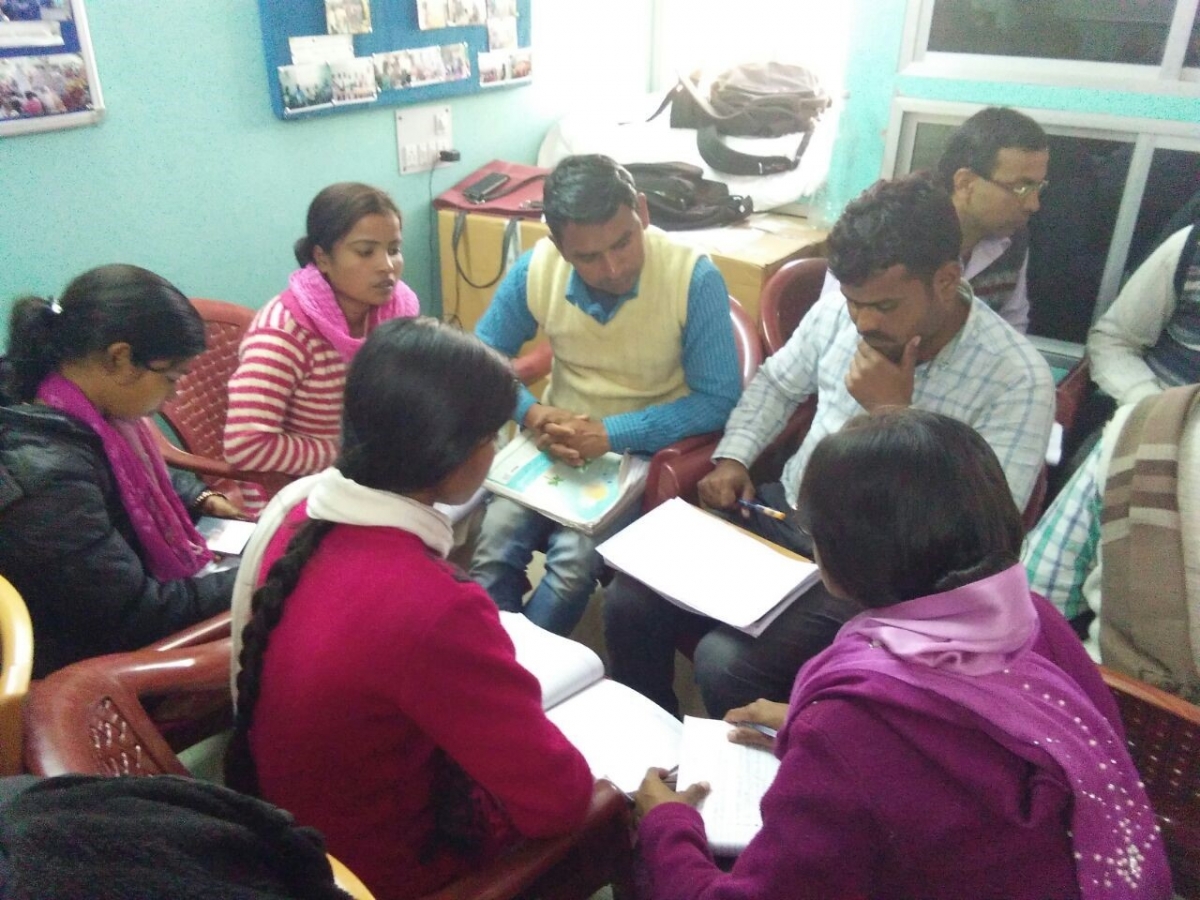
Accountability Initiative ने बिहार के भागलपुर में Nidan संस्था के जिला और प्रखंड स्तर पर काम करने वाले कर्मियों के साथ विद्यालय विकास योजना के ऊपर एक दिवसीय उन्मुखीकरण किया | इसमें विद्यालय विकास योजना की ज़रुरत और उसको बनाने के अन्य अहम् पहलुओं पर चर्चा की गयी |

एतदर्थ विधालय स्तर पर वितीय एवं गैर वितीय रणनीतियों का निर्माण किया जाना अपेक्षित है | इसलिए विद्यालय में आने वाले सभी प्रकार के राशि और अनुदान पर परविस्तृत चर्चा हुई | यह भी अपेक्षा है कि विधालय शिक्षा समीति अपने विधालय विकास योजना निर्माण के अंतर्गत संसाधनों की उपलब्धता हेतु सरकार के साथ-साथ समुदाय का भी साथ ले |

योजना निर्माण में समुदाय,बच्चे तथा शिक्षकों की भागीदारी सुनिश्चित कि जाये तो वे अपनी चुनौतियों, समस्याओं, आवश्यकताओं को ध्यान में रखकर उनके निदान हेतु बेहतर उपाय कर सकेंगे | समुदाय का सहयोग विभिन्न संसाधानों की यथा, मानव श्रम, भूमि, राशि, सामग्री आदि किसी भी रूप में हो सकता है | समुदाय के प्रबुद्ध व्यक्ति शिक्षा प्रेमी पठन–पाठन कार्यों, विधालय प्रबंधन, मध्याहन भोजन संचालन आदि में अपनी महत्वपूर्ण भूमिका निभा सकते है |

विद्यालय विकास योजना प्रपत्र के ऊपर भी जानकारी दी गयी | यह 12 पन्नो का एक फॉर्मेट है जो जिले के सभी विद्यालयों में भरा जाना है |

सभी प्रतिभागियों ने विद्यालय विकास योजना की बारीकी समझी | प्रतिभागि अपने काम के ज़रिये इस ज्ञान को अब विद्यालयों में आगे ले जा पाएंगे |

1_2.jpg

2017 में Accountability Initiative

एक नये साल के शुरुआत में आपका स्वागत है! इससे पहले कि 2018 पूरे जोश व उल्लास के साथ शुरू हो जाये, हम आपको 2017 में अपनी गतिविधियों से परिचित कराना चाहते  हैं। इस वर्ष की मुख्य उपलब्धि यह है कि ए.आई. ने बढ़ चढ़ कर ज़मीनी स्तर पर शासन व्यवस्था में अपना योगदान दिया। महत्वाकांक्षी विकास योजनाओं के नीति निर्माताओं, पत्रकारों और ज़मीनी स्तर पर कार्य करने वाले अधिकारी – सब से हमने कदम से कदम मिलाकर जरूरी मुद्दों पर वार्तालाप की । आपके समर्थन के साथ, हम नए साल में भी इस तरह का संवाद जारी रखने कि आशा रखते हैं ताकि  शासन-प्रणाली को जवाबदेह बनाने वाली आवाज़ को अपनी आवाज़ के माध्यम से और सशक्त बना सकें!

जनवरी

1.jpg

बजट विश्लेषण 2017

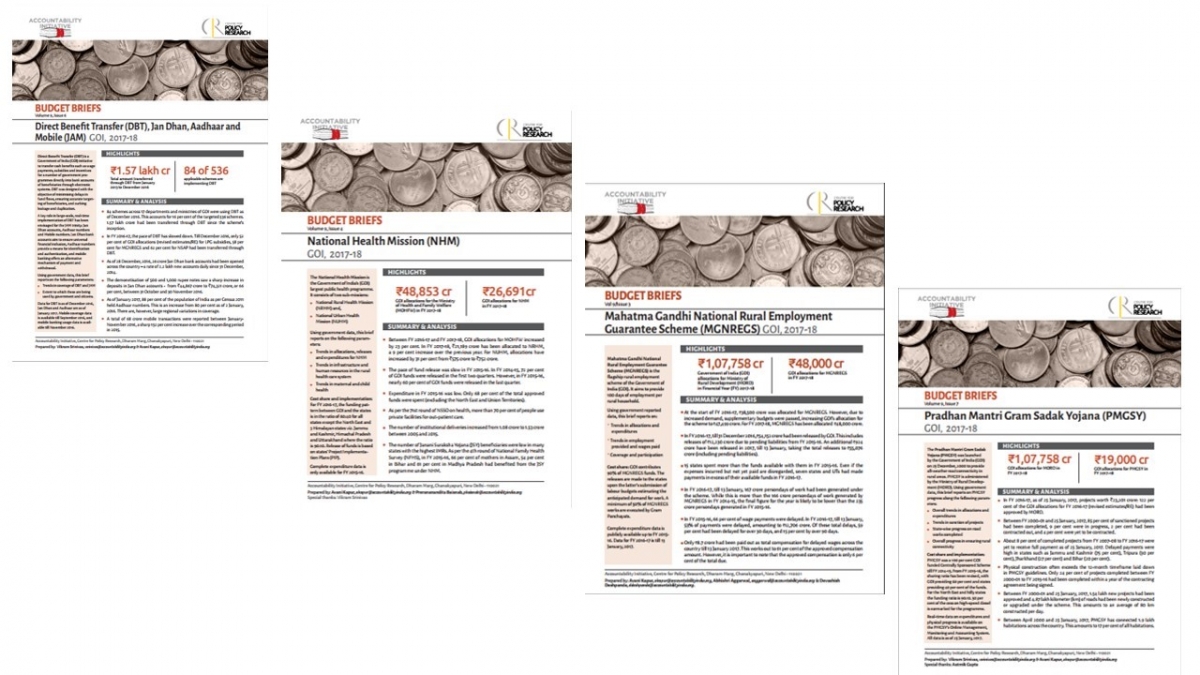
हमारा सालाना प्रकाशित बजट ब्रीफ भारत के केंद्रीय बजट पर विश्लेषण के प्रतीक्षित स्रोत के रूप में उभरा है। 2017 में, हमने सर्व शिक्षा अभियान (एस.एस.ए), राष्ट्रीय स्वास्थ्य मिशन (एन.एच.एम), स्वच्छ भारत मिशन (एस.बी.एम) और प्रधान मंत्री ग्राम सड़क योजना (पी.एम.जी.एस.वाई) सहित 7 प्रमुख सामाजिक क्षेत्रों  की योजनाओं के धन आवंटन, व्यय और प्रगति का अध्ययन किया। वर्तमान में सरकार इस समय पर सीधा लाभ हस्तांतरण (डी.बी.टी.) और जे.ए.एम. (जनधन, आधार और मोबाइल कनेक्टिविटी) पर फोकस कर रही है।  इसी बात को ध्यान में रखते हुए इस ब्रीफ में जन-धन योजना, आधार और मोबाईल कनेक्टिविटी योजना के क्रियान्वन और चुनौतियों का विश्लेषण भी किया गया | आप यहां से पूर्ण जानकारी अंग्रेजी में प्राप्त कर सकते हैं।

फरवरी

मीडिया के समक्ष बजट विश्लेषण के ज़रिये प्रस्तुत करना

बजट दस्तावेजों कि व्याख्या करना एक कठिन काम है। हमने पिछले 9 सालों के बजट दस्तावेजों की समीक्षा एवं सीखों का विश्लेषण पत्रकारों के साथ सांझा किया है। ऐसा करने से पत्रकारों को बजट दस्तावेज समझने में आसानी हुई व उनके पाठकों के लिए भी सरल व्याख्यान हो पाया। आप यहाँ से कुछ महत्वपूर्ण तत्वों को स्वयं सीख सकते हैं।

मार्च

 नए रूप में पैसा एसोसिएट

ए. आई. का प्रमुख पैसा सर्वेक्षण कल्याणकारी योजनाओं के खर्चों एवं निधि प्रवाह को देखता है। यह भारत का सबसे बड़ा खर्च से सम्बंधित नागरिक भागीदारी सर्वे है। 5 राज्यों में स्थित हमारे पैसा एसोसिएट्स ज़मीनी स्तर पर इस प्रयास को सफ़ल बनाने के लिए महत्वपूर्ण भूमिका निभा रहे हैं। शिक्षा के क्षेत्र में काम करने और फील्ड में कार्य करने वाले एक पैसा एसोसिएट के अनुभव को गहराई से जानने के लिए यहाँ पढ़े

अप्रैल

उदयपुर, राज्यस्थान में स्वच्छ भारत मिशन के चुनौतियों की पहचान

उदयपुर में स्थानीय प्रशासन के अनुरोध पर ए.आई. द्वारा सर्वेक्षण की शुरुआत हुई। यह सर्वेक्षण ग्राम पंचायत को खुले में शौच मुक्त घोषित करने और स्वच्छ भारत मिशन के ग्रामीण स्तंभ के कार्यान्वयन में चुनौतियों को समझने की कोशिश में किया गया था। तीन महीने के अध्ययन से ग्राम पंचायत को खुले में शौच मुक्त करने के लिए एस.बी.एम. अधिकारियों के कामकाज पर अंतर्दृष्टि मिली और अध्ययन के बाद इसे प्रशासन के साथ साझा किया गया। अध्ययन निष्कर्षों की एक रिपोर्ट 2018 में उपलब्ध होगी।

मई

बिहार और उत्तर प्रदेश में परिवार नियोजन के प्रशासनिक ढाँचे  को समझना

2012 में भारत ने एफ.पी. 2020 पर हस्ताक्षर किया, जोकि परिवार नियोजन (एफ.पी.) के आवंटन बढ़ाने और गुणवत्ता वाली परिवार नियोजन सेवाओं के दायरे के पहुंच को मज़बूत करने के लिए प्रतिबद्ध था। एफ.पी. गतिविधियों पर आवंटन, रिलीज़, व्यय की प्रक्रिया, एवं यह समझने के लिए कि क्या परिवार नियोजन 2020 लक्ष्य से तालमेल में है, एक अध्ययन किया गया। यह अध्ययन जनसंख्या फाउंडेशन ऑफ इंडिया (पी.एफ.आई.) द्वारा नियुक्त की गयी। 2 फोकस राज्यों बिहार और उत्तर प्रदेश के सभी स्तरों पर अधिकारियों के साथ 68 विस्तृत गुणात्मक साक्षात्कार किये गए। इस पर लेख कुछ महीनों में उपलब्ध होगा।

जून

भारत में वित्तीय स्वतंत्रता पर विश्लेषण

भारत में केद्र और राज्य सरकारों के बीच वित्तीय हस्तांतरण की जटिलता से कुछ ही लोग परिचित हैं। स्वास्थ्य के दायरे में वित्तीय हस्तांतरण को लेकर पिछले प्रयासों व सबूतों का विश्लेषण करते हुए इस महीने एक पेपर उपलब्ध किया गया। यह ए.आई. और सेंटर फॉर ग्लोबल डेवलपमेंट का संयुक्त प्रयास था और इस पेपर ने काफी ध्यान आकर्षित किया। इसे यहां से डाउनलोड किया जा सकता है।

जुलाई

नागरिकों और नौकरशाही के बीच कि दूरी को घटाना

बुनियादी अनिवार्य चीज़ें, जैसे स्कूल में पानी और आधार से सम्बंधित एक ब्लॉग श्रृंखला लिखी गई। इसमें नौकरशाही एवं सरकार की प्रणालियों से संपर्क से सम्बंधित आम नागरिकों के अनुभवों की कहानियां प्रस्तुत की गई। अधिक जानकारी के लिए इस श्रृंखला का सार यहाँ पर पढ़िए

अगस्त

शिक्षा के क्षेत्र में जवाबदेही के लिए  डाटा

यूनेस्को कमीशन एक अध्ययन किया गया जिसके तहत प्राथमिक शिक्षा में योजना बनाने, मानिटरिंग और जवाबदेही कि मांग को लेकर के क्रियान्वयन में डाटा के उपयोग के बारे में जांच की गई। इस को लेकर ए.आई. द्वारा फील्ड सर्वे किया गया। यह अध्ययन हिमाचल प्रदेश, राजस्थान और मध्य प्रदेश में आयोजित हुआ, यह समझने के लिए कि सार्वजनिक शिक्षा प्रणाली में पारदर्शिता और जवाबदेही सुनिक्षित करने के लिए स्कूल स्तर के डाटा का उपयोग किस तरह से हो रहा है। यह अध्ययन इस बात पर भी प्रकाश डालता है कि अभिभावक, शिक्षक और स्कूल प्रबंधन समिति (एस.एम.सी.) सार्वजिनक रूप से स्कूल स्तर के आंकड़ों का उपयोग जवाबदेही के मांग के लिए कर सकते हैं| इस अध्ययन कि रिपोर्ट 2018 के मध्य तक सार्वजनिक रूप से उपलब्ध हो जायेगी।

सितम्बर

cranium-2099129_960_720_0.jpg
अगली पीढी के नीतिकारों को दक्ष बनाना

ए.आई. विशेषज्ञों ने Indian School of Development Management (आई.एस.डी.एम.) के छात्रों के साथ राज्य की क्षमता पर समझ बनाने के लिए चर्चा हुई। इस नए तरह के कोर्स में प्रशासनिक ढांचों को किस तरह की चुनौतियों का सामना करना पड़ता है, शासन-प्रणाली  के असफ़ल होने के क्या कारण रहते है, और इस तरह की लोक नीतियों के निर्माण का शोध करना जिससे कि इन कमियों को दूर किया जा सके, इन सब पर जानकारी उपलब्ध कराई गई।

आर्थिक रूप से कमजोर श्रेणी वर्ग के लिए शिक्षा पर अंतदृष्टि

शिक्षा का अधिकार कानून के अनुसार निजी स्कूल जो सरकार से सहायता राशि प्राप्त नही करते है, उन स्कूलों  में 25% सीटें आर्थिक रूप से कमज़ोर वर्ग और वंचित वर्ग  के बच्चों के लिए आरक्षित है। ए. आई. ने इस मुद्दे को बेहतर समझने में योगदान दिया। ए. आई. रिपोर्ट “स्टेट आफ दी नेशन : आर टी ई सेक्शन 12(1) (c) ‘State of the Nation: RTE Section 12(1)(c)’ इंडियन इंस्टीट्यूट आफ मैनेजमेंट अहमदाबाद, सेंटर फार पालिसी रिसर्च और सेंट्रल स्क्वेयर फाउंडेशन का संयुक्त प्रयास है। आप इसको यहा पढ़ सकते हैं।

अक्टूबर

दिल्ली के पब्लिक स्कूल के शिक्षकों के दृष्टिकोण को समझना

दिल्ली सार्वजनिक स्कूलों में शिक्षा को लेकर एक नया अध्ययन दिल्ली बाल अधिकार संरक्षण आयोग के अनुरोध पर शुरू किया गया। इस अध्ययन में यह समझने कि कोशिश की गई कि विद्यालयों के विभिन्न गतिविधियों में अध्यापक द्वारा अपने समय का वितरण कैसे करते है, शिक्षक द्वारा किये जाने वाला प्रशासनिक कार्य क्या शिक्षण को दिए जाने वाले समय को प्रभावित करता है, शिक्षण के लिए जो समय निर्धारित है उस समय पर शिक्षको का विद्यालय से सम्बंधित काम में व्यस्त होना आदि। शिक्षक वास्तविक रूप से सीखने और सिखाने से सम्बंधित विचार के बारे में यहाँ पर ब्लॉग पढ़ें

बिहार कि स्कूल प्रबंधन समितियों (एस.एम.सी.) में वित्तीय प्रबंधन की चुनौतियां

ए.आई. ने फील्ड स्तर पर राज्य के पूर्णिया और नालंदा जिलों में स्कूल प्रबंधन समिति के द्वारा वित्त के रखरखाव पर सर्वेक्षण का आयोजन किया। अध्ययन के एक हिस्से के रूप में, हमने जांचा कि सर्व शिक्षा अभियान से प्राप्त अनुदान और राज्य द्वारा संचालित योजना के रिकॉर्ड पासबुक-कैशबुक में मेन्टेन करने में क्या समस्याएँ आती हैं। दो योजनाओं में डी.बी.टी. के क्रियान्वयन की प्रक्रिया का अध्ययन भी किया गया। इस सर्वे के लिए लगभग 590 घर और 1000 ग्रामीण प्राथमिक विद्यालयों के वर्तमान छात्रों को अध्ययन में शामिल किया गया था। इस निष्कर्ष को एस.एस.ए. के प्रमुख अधिकारियों को प्रस्तुत किया गया और उन्होंने भी इसके परिणाम को स्वीकार किया है।

साक्ष्य आधारित निर्णय

हाल ही में आई. सी. डी. एम. विकास व्यवसायीओं के साथ वर्कशाप का आयोजन किया गया जिसमे अनुसन्धान पर अपनी समझ को बढाने और किस तरह से उसे लागू किया जाए, इस विषय पर रोशिनी डाली गई। शोध एक ऐसा महत्वपूर्ण माध्यम है, जिसके द्वारा नीति निर्माण करने वाले अन्य हितधारक नीतियों की पहचान कर सकते हैं और उनको सुधारने के लिए चिंतन कर सकते हैं। साक्ष्य-आधारित नीतियों को वास्तविकता बनाने के लिए क्या किया जा सकता है, इस मुद्दे पर 2 मिनट के लिए अपनी दृष्टि यहाँ डालिए

जवाबदेही के आन्दोलन को मज़बूत बनाना

ए.आई. ने नेशनल कैम्पन फार पीपल्स राईट टू इनफार्मेशन (एन. सी. पी. आर. आई.) के पांचवें राष्ट्रीय सम्मेलन में भाग लिया। ए.आई. विशेषज्ञों ने शिक्षा के अधिकार कानून के क्रियान्वयन, जवाबदेही और पारदर्शिता पर प्रकाश डाला। यहाँ जानिये किस तरह कोई आम व्यक्ति आर.टी.आई. का उपयोग करके प्रशासन को और अधिक जवाबदेह बना सकता है।

दिसम्बर

RaghuBytes-Leadership-2_0.jpg
स्थानीय शासन के रूप को बदलना

हमारे फील्ड पैसा एसोसिएट्स ने  ट्रेनर के रूप में पहली बार हिंदी में तैयार किये नए पैसा कोर्स “हम और हमारी सरकार” को ज़मीनी स्तर पर कार्यकर्ताओं के बीच में का विषय बनाया । यह कोर्स राज्य की क्षमता का विश्लेषण करता है, खास तौर पर स्थानीय सरकार के काम करने के तरीके के बारे में। इस पैसा कोर्स को दो जगह पर पायलट किया गया था। पहला पायलट राजस्थान में नेहरु युवा केंद्र के ब्लॉक समन्वयकों के साथ किया गया, और दूसरा बिहार में जिला स्तर पर प्रथम संस्था के समन्वयकों के साथ किया गया।

स्वच्छता के लिए सामुदायिक ज़रिये तलाशना

सेंटर फॉर पॉलिसी रिसर्च में ए.आई. और स्केलिंग सिटी इंस्टीट्यूशन्स ऑफ़ इंडिया टीम द्वारा एक सम्मेलन का आयोजन किया गया  जिसमें स्वच्छता के क्षेत्र में अध्ययन कर रहे प्रमुख शिक्षाविदों और नीति शोधकर्ताओं को एक साथ लाया गया। यह सम्मेलन सुरक्षित स्वच्छता के मुद्दों पर और स्वच्छता नीतियों के क्रियान्वयन पर केन्द्रित था। यह चर्चा एस.बी.एम. की भूमिका तक ही सीमित नहीं थी। पिछले तीन वर्षो में एस.बी.एम.-ग्रामीण में कितना विकास हुआ है इसको जानने के लिए यहाँ क्लिक करें। सम्मेलन की रिपोर्ट यहाँ उपलब्ध है।

मेघालय में सामाजिक ऑडिट

इस वर्ष का अंत शासन में जनता की बढ़ती भागीदारी के साथ हुआ।  मेघालय राज्य सामाजिक सेवाओं  पर ऑडिट कानून पारित करने वाला देश का पहला राज्य बन गया। सामाजिक ऑडिट पर राष्ट्रीय कन्वेंशन में भाग लेने के लिए मेघालय सरकार ने ए.आई. को आमंत्रित किया। इस कन्वेंशन का उद्देश्य शोधकर्ताओं, कार्यकर्ताओं, CAG और केंद्रीय मंत्रालय के सदस्यों एवं पत्रकारों से सुझाव प्राप्त करना था ताकि इस प्रक्रिया को और मज़बूत बनाया जा सके।

Digitising Welfare: Some Lessons from Rural Bihar

To digitise aspects of public facilities for the privileged is not hard – they have ready access to multiple bank accounts, are web literate, and possess the latest smartphones for instant connectivity. For the poor and marginalised, who depend on government assistance, digitisation presents a different challenge. In rural Bihar, one of the poorest regions of the country, the effects of the government’s digitisation charge are becoming visible.

In September 2017, the Accountability Initiative conducted a survey of 1,055 children to understand how Direct Benefit Transfers (DBT) were being used so that children remain in classrooms and continue their education in Bihar.

The Problem and Subsequent Interventions

India’s public education system has been beleaguered by several problems, not least of which are low attendance and drop outs. Several children enter schools but drop out, or enrol in schools but do not attend classes. In 2015-16, over 14 per cent class V students dropped out in Bihar, despite the implementation of the Right to Education Act, which guarantees that students between the ages 6-14 have access to free, quality, elementary education.

Economic theory would suggest that transfers conditional on attendance would incentivise parents to send their child to school regularly. A conditional transfer makes it cheaper for a parent to send a child to school, instead of sending their children to work. In a bid to improve attendance and to retain students in school, the Government of Bihar has launched several conditional schemes for government school students at the elementary level.

Among these, are the scholarship scheme (Mukhyamantri Chhatravriti Yojana), and the uniform scheme (Mukhyamantri Poshaak Yojana). Students receive benefits only if they attend more than 75 per cent schooldays till September of that academic year. Till 2015-16, benefits (a sum of money) were disbursed in cash – prone to corruption. Benefits are now (2016-17 onwards) directly transferred to the students’ account (or a family member’s account). The process of the scheme is as follows. Schools first make a list of beneficiaries, and collect their financial details. They send this list to the bank along with cheques for the total amount of funds to be transferred and the bank sends the entitlements along to beneficiaries.

To understand the potential improvements in efficiency via the introduction of DBT, we surveyed 590 households in 59 villages of districts Nalanda and Purnia.

Cash transfers have been replaced

Of those respondents that had benefitted, about 50 per cent children received money in their own account, while around 45 per cent went to parents’ accounts, and to other relatives’ accounts in some cases (around 5 per cent). What was noteworthy was that out of the beneficiaries who actually received money, an overwhelming majority (around 99 per cent) got the money via DBT. This was the key finding in our study. While there have been delays, money was transferred in one instalment (unlike the cash system, when money was held back at the school), and only a miniscule fraction of parents faced issues with receiving the money (out of those that actually benefitted).

The condition to avail benefits under both schemes is the same – 75 per cent attendance till September. Needless to say, if a child is eligible for benefits under one scheme, then they are also eligible for benefits under the other scheme. Ideally, if 30 students are entitled to benefits of the Uniform Scheme, then the same number should also benefit under the Scholarship Scheme. Among those that had received benefits under the uniform scheme, only 86 per cent also received a scholarship (ideally, this should be a 100 per cent). This implies that there is some error in compiling the list or distributing the money. One possibility is that the funds for one scheme were delayed, and subsequently the school released money late as well. On average, we found that the money for uniform was released before scholarship, on average, which could explain why all students who benefitted under the Uniform Scheme did not benefit under the Scholarships Scheme. It is also possible that there were errors in compiling the list.

Delays in receiving payments

Prima facie, online transfers seem like a quick and efficient method of disbursing entitlements, but things are not as rosy as they seem. Out of the respondents who said they received the benefits, about half reported that they had received money for uniform within a month, while the corresponding figure for scholarship was higher. Still, several students had not received their benefits, despite schools having cleared the payment from their end. School teachers, parents, and other concerned citizens frequently grumbled that the bank was taking too much time to process these payments, and did not provide updates on when the money would finally reach students.

Digitisation hasn’t been as smooth as imagined

When it was announced that beneficiaries would receive money via direct transfers, parents were encouraged to open bank accounts for their children (not mandatory, as benefits can be availed using an account belonging to a guardian or family member). Our survey found that 56 per cent students had their own bank accounts. When asked, most parents either said that they had initiated proceedings to open an account, or that they did not open accounts as the child in question was too young, and that opening an account for their child was not mandatory to avail benefits. Parents also complained that banks refused to create accounts for students below class V, or would take too long to process the documents for opening an account. We also found that Aadhaar possession was nearly ubiquitous – 96.7 per cent students had Aadhaar cards, now an essential document to receive entitlements. People experienced difficulties despite having an Aadhaar card, which was meant to ease processes such as these.

Awareness generation remains a challenge

In our survey, we also observed that ‘awareness’ amongst parents was particularly low. To get a measure of awareness, we asked parents if they knew how much their children were to receive under the schemes, and less than 20 per cent responded in the affirmative. There was a clear difference in awareness levels by district – while ‘awareness’ in Nalanda exceeded 20 percent for both schemes, it was below 15 per cent in Purnia. ‘Awareness’ was also lower amongst ST and OBC households as opposed to General and OBC households, but there was no difference in terms of gender.

Even if parents are aware of their rights and entitlements, there are no grievance redressal mechanisms. There are no social audits, or there no way for parents to formally make a complaint about a certain aspect of service delivery.

While the introduction of DBT may have curtailed rent-seeking, delays in payments and a lack of bank accounts are some teething issues that need to be dealt with. For digitisation to be truly considered an upgrade on earlier transfer methods, there is a need to improve these mechanisms. At present, the system remains opaque and inaccessible, particularly for the poor who depend on the public education system. The major challenge is to generate awareness amongst beneficiaries and to provide a grievance redressal mechanism for the marginalised, in order to empower people.

‘GRASP’ing the Zilla Parishad

This blog is part of a series on the rollout and progress of e-Governance in India. 

If one individual has to be fervently thanked for initiating a national movement towards e-Governance, it must be Prime Minister Rajiv Gandhi. During his tenure, he ensured that the National Informatics Centre established an office in each district in the country. As Karnataka had established a strong rural decentralisation framework with the Zilla Parishads as the district level rural local government, the NIC office of the districts were not located in the offices of the Deputy Commissioners as done elsewhere, but were attached to the Zilla Parishad offices.

By the time I moved to the position of the Chief Secretary of the Zilla Parishad of Hassan District, Karnataka, Rajiv Gandhi was no longer Prime Minister. But his good work continued; all NIC offices in the districts were connected through satellite with the national office and the capability of data passing upward seamlessly was established – not that data passed that way, but in any case, one could not grudge that the infrastructure was not in place. The world-wide-web was in the future, for laypersons such as us, so the movement of data was still in the domain of the programmer, who all behaved as if they were apostles of God.

But that was not the case with Parasher.

Parasher was a young gentleman just out of college, and had the bounding enthusiasm of an individual who genuinely thought that all of the rest of his life would be like his college days. He was unsullied by government hierarchy and spoke out of turn in meetings – a trait I welcomed, even as I saw the acute discomfiture of those who thought that I must only receive filtered information. Since I was staying alone and the evenings were long and lonely, I spent plenty of time in the NIC centre with Parasher, learning the ropes of the latest in computerisation.

The NIC office was a quiet haven in the hubbub of my office complex. Like a temple, one left one’s shoes outside reverentially, and went into the sanctum sanctorum where a bunch of earnest programmers, under Parasher’s watchful eye, sent data and received instructions from their mysterious masters in Delhi.

In those days when the principle of separation of the budgets of the state and local governments were more strictly followed than today, the government issued an order every month, releasing the Zilla Parishad a one-twelfth installment of its annual budget. This single consolidated order released funds department wise, for each of the 20-odd departments that worked under the Zilla Parishad. My office sent the order manually to the local office of the treasury after the necessary authentication, following which the treasury operated the order and released funds to the departmental heads concerned at the district level.

However, there was a chronic problem that I had to face. The government system of budget taxonomy is a two stage one, with funds being allocated to ‘Major Heads’ of Account, which are then further sliced into ‘Minor Heads’. Thus, the Public Health Engineering Department receives funds for provisioning of drinking water supply under a Major Head, which is then sub-divided into Minor Head allocations, for piped water programmes, drilling of borewells, maintenance works, payment of electricity bills and suchlike. The government, in its release order, only allocated funds to the level of the Major Head. However, if in turn the Zilla Parishad released the funds on that basis alone to the departments, it faced the risk of the money being diverted within the Major head to some Minor heads alone, starving other Minor heads of sufficient money. This occurred usually due to bad planning, but corruption, which drove officers to spend more money on purchases while neglecting maintenance was not ruled out. I therefore needed to put in place a system that would automatically divide the Major Head-wise allocations made by the government to the Zilla Parishad, proportionately to the Minor Head level. Communicating this order to the Treasury would ensure that the Departmental heads could not divert money from one Minor Head to another, thus sabotaging the Zilla Parishad’s implementation plans and leaving it with piles of useless inventories.

It was kids play for Parasher to design and implement a system that would do this. As soon as we received the monthly release order from the government, in a few hours the data was digitised and an automatic release order subdividing the allocations to the level of the Minor Heads was issued to the treasury. Parasher did not stop there; he designed a system by which expenditure vouchers lodged in the treasury by the implementing departments concerned could be tracked, so that we had an idea of who was spending how much, when and for what.

We called our system GRASP – Grant Release and Accounting Software Programme. Over two years, GRASP was able to introduce a level of budget discipline in the departments that executed the plans and projects of the Zilla Parishad. There was resistance as departmental officers lost the flexibility to play around with the money released under a Major Head in the past, as they could not divert money from one Minor to another Minor head now. But in the long term, they saw the sense in budget discipline, as their programmes did not stop and stutter for a surfeit of money locked into useless inventories, while they starved for it elsewhere.

Parasher did not stay long in the NIC. Within a few years, he joined a major software firm; one that would make waves over the next few decades. He is probably driving a Ferrari in sunny California, as we speak. That was another lesson I learnt with e-Governance. The champions of e-Governance have already moved on, even before the systems they develop are entrenched in government processes.

An application that did not go up in smoke – e-Governance and the Tobacco Board

This blog is part of a series on the rollout and progress of e-Governance in India. 

My four year stint in the Tobacco Board as Director (Auctions) was where I finally saw e-Governance making a big difference to the lives of people who dealt with the government.

A few disclaimers, before I begin my story.

The Tobacco Board is a government of India body that assists tobacco farmers to grow and sell tobacco. Before one throws up one’s hands in horror at this, lets dwell on the fact that the government is concerned with all interests of people; so while on the one hand, it actively campaigns against smoking, it also cannot be blind to the fact that considerable numbers of farmers depend upon cultivation of tobacco for their livelihoods. If and when tobacco use diminishes, the farmers will look for other alternatives. However, as long as people do smoke, in the face of health warnings given by the government, one cannot overlook the fact that tobacco will be grown. And if it is so grown, the government takes on the responsibility that farmers don’t get short-changed for their produce.

Indian policy has been that government regulates the cultivation of tobacco, by licencing farmers to produce a limited quantity every year. The government does not take on the responsibility of buying all the tobacco produced; on the other hand, all it does is to run auctions where registered farmers sell to registered buyers. Tobacco is a high priced product and the proper grading and weighing of produce is the key to ensuring that farmers receive a fair price. Auction halls during the season are a hubbub of activity. At least a thousand farmers come to each auction hall daily. The halls open as early as three in the morning, so as to ensure that all the tobacco bales put out for auction are ready for inspection and auction starting from eight in the morning. An early start is necessary to ensure that the auction is finished in the morning light; experienced buyers say that afternoon light is not right for assessing the colour of the tobacco, a key parameter of quality. Usually, by 12 PM, the auctions are over and the sellers wait to receive their payments.

In the early 1990s, the Tobacco Board was one of the first institutions in the government to embrace e-Governance. All bales were physically inspected jointly by the buyer, the seller and the quality assessor provided by the Board. An agreed upon description of the bale; its weight, colour, moisture content and quality, were recorded in a ‘bale ticket’ placed on each bale. The auction proceeded after all bales were marked. After each bale was auctioned, the details of the winning bidder and the price quoted was also entered into the bale ticket. Once the auction was finished, all details on the bale tickets were entered into the auction software, which then proceeded to print out debit notes for buyers, indicating the debiting of their bank accounts by the appropriate amounts and payment cheques that were handed over to each seller. The software also churned out reports that kept tab on all essential statistics on the buying and selling; the quality, the quantities sold, the financial values, all on a daily and cumulative basis.

By today’s standards, the state of the art computing technology of those days was laughable. Simple PCs with no hard discs and minimal RAM were used to churn the numbers. As the auctions progressed, computing times took longer, particularly to prepare cumulative reports. By the end of the four or five month auction season, processing time would be more than three hours. We kept our fingers crossed, because a tiny blip in the power supply could corrupt the calculations and one would have to start all over again. When we upgraded to the latest PC-ATs in 1995, we exulted, because the computing time at the end of the season was reduced from several hours, to a few minutes.

Yet, in spite of the obvious benefits of e-Governance, one could not help but noticing how power equations were changing, due to technology. The computer operator was the key to the integrity of the system and like any other lesser mortal, he could be compromised. Since the system set quotas and imposed upper limits on what a farmer could sell, the software automatically rejected sales where farmers exceeded their set quotas. It took very little time for computer operators to hack the software. Then, for a price, farmers who exceeded quotas would be able to sell their extra tobacco.

The hacking was so elementary, that an equally elementary safeguard sufficed to snuff it out. I got a software written that would automatically scour through the sales and list out all sales where quotas were exceeded. I carried that software on a floppy disc; it was given only to a few senior people. A few random checks discovered the main transgressors. Once caught red-handed, the erring data entry operators were punished. The software soon became an effective instrument of deterrence; merely letting data entry operators know that their bypassing of the quota rule could be instantly detected, was enough to make them cautious.

Like all robust e-Governance solutions, the Tobacco Board’s system continues to do well even today. Regular upgrades have made matters even simpler; data entry operators have very little to do after the introduction of bar coded bale tickets. Cheques are no longer printed; the amounts paid by buyers are transferred to the bank accounts of sellers. The linkage to bank accounts also provides assurance to the Tobacco Board to raise loans on behalf of sellers, to obtain fertiliser and other inputs in bulk and resell them to the buyers.

The Tobacco Board’s system has features that are typical of many good e-Governance solutions. It has kept things simple; it constantly has upgraded itself and it has worked to reduce discretion and effort. Most important, it has kept farmers and buyers at the centre of its focus, not the Board or its data entry operators

The views expressed are of the author. Accountability Initiative does not encourage tobacco use in any way.

ज़रूरतों के अनुसार प्रशिक्षण कब?

किसी भी क्षेत्र में कार्य करने के लिए और उसमे दक्षता हासिल करने के लिए प्रशिक्षण लेना और देना सबसे महत्वपूर्ण कार्य होता है | मैंने Accountability Initiative के साथ 7 सालों में बिहार कि शिक्षा प्रशिक्षण या ट्रेनिंग प्रणाली को बारीकी से देखा है – शिक्षा के क्षेत्र में सभी स्तर के प्रशिक्षण कई बार सिर्फ नाम के रह जाते हैं |

अगर हम एक स्तर कि बात करे जिससे संकुल संसाधन केंद्र (Cluster Resource Center Coordinator) कहते है तो यह बात उजागर होगी | इसका कार्य है विधालय स्तर पर ‘अकादमिक समर्थन’ करने का, लेकिन आज कि स्थिति में यह राज्य और विधालय के सुचना या जानकारी आदान-प्रदान का एक माध्यम बन कर रहा गया है | क्यों?

जब किसी भी अधिकारी कि नियुक्ति होती है तो उस से यह जानकारी नहीं ली जाती है कि उस को किस प्रकार या किस विषय के उपर प्रशिक्षण चाहिए, उनकी ज़रुरत क्या है | उनको प्रशिक्षण तो मिलता है लेकिन यह नए-नए योजनाओं पर होता है | सीनियर अधिकारी को जो लगता है कि किस विषय पर प्रशिक्षण देना चाहिए उसके उपर भी प्रशिक्षण दिया जाता है | यह एक गैप पैदा करता है जहाँ प्रशिक्षण ज़मीनी ज़रूरतों को पूरा नहीं कर पाता |

प्रत्येक महीनें में एक दिन सभी शिक्षकों का प्रशिक्षण संकुल स्तर पर होता है जिसमें जिन शिक्षको को पढ़ाने के दौरान जिस भी विषय में कंही कठिनाई होती है, उसका हल वह इस प्रशिक्षण में निकालते है | लेकिन यह हमेशा नहीं होता – असल में कहें तो इस दिन को ‘बैठक या meeting’  बोलते हैं क्योंकि इसमें भी सिर्फ रिपोर्ट या जानकारी का आदान-प्रदान होता है |

दुखद है की कुछ शिक्षक लोग भी इस दिन जा कर सिर्फ रिपोर्ट देते हैं, हाज़री बनाते है और अपने अधिकारी से छुट्टी ले कर या जो रिपोर्ट देना होता है दे कर निजी कार्य के लिए निकल जाते हैं | ज़ाहिर है सिर्फ नाम का प्रशिक्षण दिवस रह जाता है, लेकिन प्रशिक्षण कुछ नहीं मिलता |

एक हल यह है कि प्रशिक्षण देने से पहले सभी स्तर पर जो भी अधिकारी हैं या शिक्षक हैं, उन से मिलकर पहले यह जानने कि कोशिश कि जाए कि उन्हें किस तरह का प्रशिक्षण चाहिए | ज़रुरत को जानते–समझते हुए प्रशिक्षण दिया जायेगा तो वह अपने रोजमर्रा के काम में इसको इस्तेमाल कर पाएंगे और कार्य में भी गुणवता देखने को मिलेगी | इससे ज़मीनी ज़रूरतों कि भी पूर्ती हो पाएगी |

जब प्रशिक्षण कि यह स्तिथि है तोह रोज़ के कार्य में इसका कितना योगदान होगा यह एक चिंताजनक विषय है | प्रशिक्षण का अर्थ होता है अपने आप को या किसी दुसरे को ऐसी शिक्षा देना कि उनका कौशल का विकास हो | इसकी कामना अभी नहीं कि जा सकती |